
Most of us have heard the story of the poor, ugly duckling that was physically and verbally abused, but later transformed into a beautiful swan and became accepted (and if you have not you can click here for a fuller summary.)
There’s even a term for this phenomenon in people, oh so cleverly referred to as “ugly duckling syndrome.” Essentially, for the beginning of your life you were ugly but have a good heart and after some milestone (usually high school) you get “hot.”
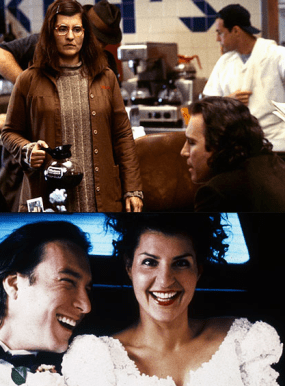
I see this all the time in television and movies, both old and new: female characters become “better,” (i.e. more successful, find love, get a better job, make more money) when they go through some sort of metamorphosis to make them more attractive, as dictated by cultural norms.
This is most commonly in the form of a makeover movie montage- which, by the way, I love. I love to see this transformation process, it’s absolutely fascinating to me, but why is that almost always what happens? Why can the female lead only become successful when she starts wearing a push-up bra and lipstick? And as a woman who wears glasses, I would really love to know why no woman has ever kept her glasses ON during this transformation. Contacts aren’t always fun and I know many, many people who look better with their glasses on so this whole “glasses=ugly” thing has got to go. (Sorry, rant over.)
If you’re having a difficult time thinking of examples of this happening to women in movies, a quick Google search for “movie makeovers” will bring a zillion lists up. Entertainment Weekly had this one: click here.
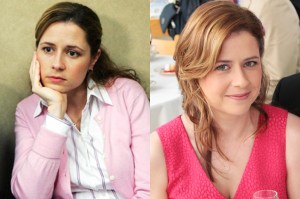
There are also a few television series I can think of that make the female lead characters pretty as the season goes on, although it usually more subtle. For example in the show Parks & Rec, Amy Poehler’s character Leslie Knope gradually gets more “feminine” looking outfits, starts styling her hair in more fashionable ways, etc. to become more attractive. In the U.S. version of The Office, Jenna Fischer’s character Pam Beesly starts off as a timid, sort of frumpy receptionist with frizzy hair and an asshole boyfriend. As she starts to find herself, pursue her ambitions, falls in love with a good man…she starts to have more controlled, styled hair, wear make up and tighter-fitting, brighter clothes. Most of the characters on The Office went through this type of transformation, but Pam’s seemed the most obvious.
There’s, of course, nothing wrong with altering your appearance or getting something to “make you feel pretty.” But I feel like on days when you don’t feel like wearing make up/dressing up, we’ve been taught sort of subconsciously to prepare ourselves for a shitty day. I’ve heard “Ugh, I look horrible today I forgot to put on my make up,” more times than I will ever understand (I “forget” to put make up on most days.)
We’re taught that being hotter means being happier, through television, movies and so many other mediums and it’s really…sad. Finding happiness isn’t only possible when you look perfect.


Wow, I never realized how popular this trope was. But now that I think about it, I can literally think of half a dozen examples off the top of my head where the “ugly duckling” is transformed, and it’s always a really simple change such as she straightens her hair and puts on lip gloss and suddenly everyone realizes there’s this gorgeous person that’s been in their midst the whole time. What’s always interesting for me is that the characters always seem so comfortable after their transformation. There is never a scene where they’re shown struggling to keep up with their new make up routine, or being uncomfortable in their completely new wardrobe.
What a neat perspective of this. I have a secret soft spot for the quintessential chick flick, and much of the plot lines are about this transformation. Much less often, is the story of the guy who goes through this transformation (it does happen, but VERY infrequently). Some movies, the entire plot line is about said transformation! The Princess Diary, Jawbreaker (does anyone even remember that haha), Clueless, she’s all that, never been kissed…this list could go on forever…
I totally agree – transformation is interesting, but this has become such a cliche’d trope that it very rarely interests me anymore. But what I think is most interesting about these narratives in movies and television is their TRUE transformation is always about something else – in My Big Fat Greek Wedding, it’s about standing up to her family and also finding out how much they mean to her. Pam, in The Office, develops professionally, stands up for herself, and leaves her fiancee. But this can’t be done without the physical transformation – it’s like the make-over gives their body more value as a person, so subsequently they develop self-esteem, find love, achieve something. Why does the physical appearance of someone need to change to fit normative standards in order for them to have some sort of inner-personal transformation that so often accompanies the ugly duckling syndrome?
ALSO, yeah GLASSES ARE COOL.
The first movie that came to my mind when reading this was The Devil Wears Prada. Anne Hathaway’s character starts off as a completely unfashionable and dorky (but very intelligent) intern who is completely out of her element and extremely intimidated by her boss and her peers. After a makeover she becomes amazing at her job and her confidence builds; she mentions weight loss, she dresses with the latest styles and trends, is respected by her peers. She started off the running joke at her office and is now taken seriously.
How we present ourselves is directly related to how we are perceived by people around us. The image of a successful/happy woman is always the same; stylish, thin, usually white, attractive, and well dressed.
When people appear to be perfectly put together it’s assumed that their lives are together. Control over our bodies supposedly reflects control over our lives. It’s all an illusion! I agree that happiness isn’t only possible when people look perfect, and I believe that applies to success as well.
I never understood why people need to completely change their image to be considered “hot” or “desirable”. Sure, the makeover sequence (I keep flashing back to The Princess Diaries, actually) is often a time for both comedy and evolution of a character, but it also encourages the “need to be pretty to get anywhere in life” ideology. But something I noticed when writing this is that there’s a difference between existing and being a mess. Now don’t get me wrong, I love nerdy girls and their quirks and whatnot. But if I see you on multiple occupations and the first thought I think of is “Wow. She looks slightly homeless.” when I know she lives in a dorm etc and it’s not finals week, a part of me categorizes them as a bit of a mess.
Girls who exist, however, might not be drop dead gorgeous, but have self confidence, wear things they are comfy in, bathe and use deodorant, etc. I’ve met many of both types so they’re equally common. In movies however, those considered “ugly” and “in need of a makeover” are the ones I’d consider to just be existing. The ugly duckling concept shouldn’t even be a thing. It’s silly that we deem looking amazing and gorgeous those who more successful.