
When I was growing up, my relationship to my asthma entirely shaped my relationship to my body. My body was something that had to be constantly monitored for any sign of symptoms. It had to be regulated and controlled. My body wasn’t a part of me, it was a setting–it was a dangerous situation that I had been placed in for unknown reasons; a house in the path of a hurricane.
My asthma has always been primarily triggered by animals–dogs in particular–and my grandmother used to have a little pug named Sandy. My parents divorced when I was very young, and I would go with my siblings to my grandmother’s house every other weekend to visit my dad there. These visits were a source of constant dread to me. At six years old, I would clutch tight my zip-lock baggie filled with prescription pills, my Advair discus, liquid and aerosol albuterol, the long plastic tubes attached to the soft plastic mask that I would put on my face every four hours, plugged into that loud, humming nebulizer that pumped the clouds of vaporized medicine into my mouth.No one ever commented on my mechanical monstrousness as I sat attached to that machine. No one said a word as I sat uncomfortably close to the TV so that the nebulizer’s plug would reach, drowning out the songs of the Disney musicals with its incessant, droning hum. But I felt the silence. I felt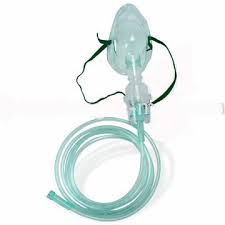 the inconvenience of my presence. When I was older, I would shut myself in a bedroom to avoid that inconvenience; to avoid imposing my treatment on my family. I learned early on that my asthma was my problem. Dad would sporadically ask me if I’d taken my inhaler, but I don’t think that he even knew half the medications I was on. I was the one entrusted with the long note from my doctor, telling me what to do if X, Y or Z happened:
•2 puffs of albuterol every 4 hours
•If peak flow drops below 100, go on neb
•If neb doesn’t work, 1 tablet prednisone with every meal
•If all else fails, call this number
If, if, if. It’s amazing how loaded a little two-letter conjunction can be. The unspoken implication: these medications might not work. The idea that not only my body might fail me, but that medicine might fail me as well was a lot to handle at 6 years old. I remember keenly the sense of isolation I felt. I felt stranded and alone in my body; I felt incapable of protecting myself from it. Asthma is so common that it has become very normalized in public discourse, but I don’t know if most people know exactly how scary it is–that stony panic that I would feel when my throat would slowly begin to close off. It’s painful. It feels as though your lungs have been wrapped tightly with wool–with each inhale, the resistant fibers cut into your expanding lungs as they are forced to stretch. Breathing gets exhausting. You have to move with the rhythm of your breath to try to maximize each inhale. My back will be sore for days after an attack because of the way I have to contort my body–the way I have to pull my shoulders forward and arch my back to make room for my lungs to expand.
But, at least when I was growing up, my instinctual fear of asthma was always competing with my fear of being a bother. That is why, when I was 7 or 8 years old, I allowed my mom to put me to bed even when I knew that I was in bad shape. That is why I laid there and waited as my asthma grew steadily worse (even after using my inhaler), waking my sister only at the point when I could barely get the words “I… Can’t… Breathe” out in short little pants. Only when my mom had to rush me to the hospital. While it may seem silly that I ever let it get to that point, it did not seem silly then. Although people were always kind and sympathetic about my asthma, it felt shameful to me. It was a weakness. And in succumbing to that weakness, I felt that I was letting the people around me down. I was an imposition on my mother and siblings who had to worry about me and help me when things got bad; on my friends, who felt guilty when their pets made me sick. I even felt like a burden to my doctors–like I was letting them down every time something went wrong.
While I won’t paint some rosy picture for you here and pretend that I have come to embrace my asthma as an integral part of me, it has made me a stronger and more self-reliant person. But it has also given me a strange perspective on my body. I feel both keenly in tune with it, and irreconcilably separate from it. I have learned to listen closely to my body, to notice when things are wrong, and to pay attention to what it is telling me. But I have learned to do that with a sort of analytic detachment. I have come to see my body as separate from myself–as a machine that is constantly on the verge of breaking down. But, while this interpretation was certainly an important coping mechanism for me when I was a child, I’m finding that this mode of thinking is no longer useful to me. I’m tired of feeling like a victim of the circumstance that is my body. So, although unlearning a lifetime of bodily dissociation techniques may well be a daunting task, it’s one that I’ll be working at every day. Because this is my body. And sure, it may be flawed–it may ache, and wheeze, and moan–but it is also capable of doing some pretty amazing things. So why not enjoy it while it lasts?


As I was reading this post, I was thinkg about how we treat people who recieve treatment– whether that’s a nebulizer, chemotherapy, or ADHD medication. There’s this weird silence and awkward elephant in the room. It’s a mixture of pity and embarassment that something about you is broken and you’re in the process of fixing it. It seems so strange that we’re supposed to hide or fix our bodies’ flaws as if there is something broken about us, but the process of “fixing” is just as stigmatized as being “broken.” We are only acceptable in our state of good working order, whatever that is, and the maintenance that our bodies require is supposed to be private.
I think it’s so interesting that you say your asthma made you more attuned to your body. I definitely agree; I can tell when I’m developing even the slightest wheeze.
My great-grandmother died from severe asthma; I inherited my asthma from her. My mom always used to tell me that right after I was born I had an asthma attack. I don’t remember how they helped me exactly, but from then on I had asthma. I had a nebulizer and I can vividly remember going to the nurse to use it during school, and I can see it sitting on the top shelf above the main desk at my after-school daycare center. Every couple hours I would have to stop what I was doing and sit in a chair and use my nebulizer. I remember just sitting there and focusing on how the vapor looked on the clear mouthpiece and how the steam felt over my mouth and nose. I remember the separate inhaler I had and using a device that had numbers on it and it measured how strong my breath was; there was a certain number you had to reach to be breathing ‘normally.’ I never quite reached that number. My asthma follows me whenever I try to exercise, even today. I can walk short distances just fine, but as soon as my heart gets going my lungs struggle. My asthma also follows me when I get from regular colds to the flu to bronchitis or any other head/nose/throat problems; when I get them the first thing my doctor tells me is that I should use my inhaler regularly. If I don’t, the cold will last longer than usual, especially if it’s a cough.
I have always felt an extra burden of shame for both being fat and having asthma. As if it ‘makes sense’ for me to have asthma because I’m fat, as if the reason I have asthma is because I’m fat. I know these thoughts are untrue and unhealthy, but I still find myself thinking them. Everything goes back to needing what society says is a normal body, a body that doesn’t get sick, a body that looks the way it is ‘supposed’ to look.