
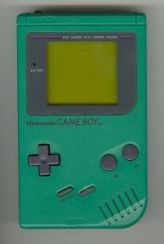
The dinosaur
I play a lot of games. Video games mainly but overall, if it’s a game I’ll try it. This goes back many, many, years to when I was a kid and fascinated by the old brick of a GameBoy I got at a flea market for $5. Despite my long running fascination, I’ve never given much thought as to why I love them so much. There are lots of fairly surface-level reasons, like the characters, the art, the gameplay itself, or the community and bringing friends together. While those are all well and good, I feel like there might be more, especially when it comes to the games that myself and others get really obsessed about.
Specifically, my inspiration came from our class reading of Chapter 2 in The Body Reader. There was a section about a terminally ill man who, after feeling like he had lost control of his body, began abusively controlling his wife. While I am not at all trying to equate playing games to abuse, I do think there is something to be said for the search for control in our lives. We all experience desire, it’s even a foundational concept in human psychology (Source). As people, we tend to seek out and believe that our personal actions are having an effect on the outcome. We can see this everyday with our small, sometimes superstitious habits like crossing our fingers for luck or perhaps some other personal ritual like wearing a lucky bracelet. These things ostensibly have no actual influence on our lives, but if they give us a sense of control then it does feel good to believe in them.
So how does this tie into games? Games are arguably all about control. You make choices about where to go, what characters to interact with and to build a relationship, whether to be violent or non-violent, how to grow the player character, and sometimes even whether or not to invest real-world money into the game. When playing in these virtual spaces, even as an individual character, players gain more control over the world than they could ever feasibly have in reality.
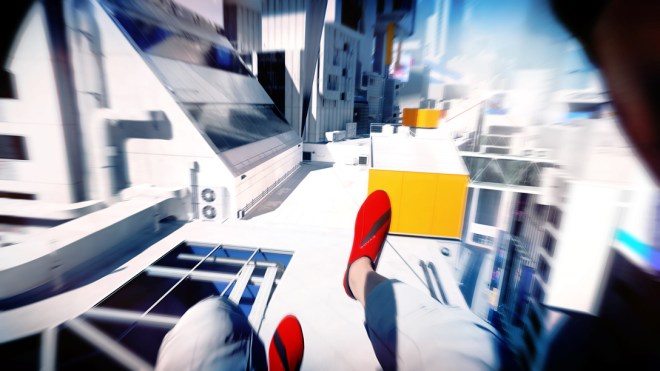
Mirror’s Edge: Catalyst by DICE Sweden, a game centered around body presence
In fact, giving players control or at least a sense of control is an important design tenant for many studios (Source). “Player agency” as it’s called is the idea that it’s important in many games for players to have a sense that they are affecting the world that they are playing in. Without this, players are less engaged and more separated from the experience, which can be an artistic choice but often it’s undesirable. This is an important point if we’re looking at the players’ mentality. I think it’s a telling indicator about why we play games if a sense of control is one of the biggest things people look for in a game. Metal Gear Solid 4 was largely criticized for lacking player agency throughout the game, instead choosing to present exposition to the player through passive cinematics.
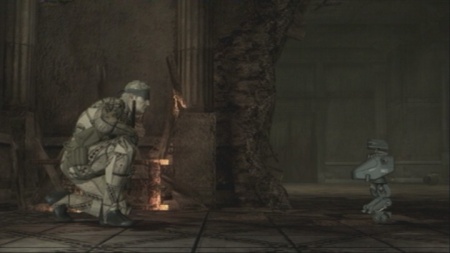
Scene from MGS4, in which the player has no control over the events occurring
Additionally, we can see what happens when players lose that control in other ways. Frustration, and sometimes actual rage and toxic behavior can result when some players feel like their individual control of the game is taken away. This can most easily be seen in multiplayer games, where one person simply cannot have control over the game entirely since they share the world with other players (Source).
In my own life, I know that when life gets hectic I tend to gravitate towards games more and more in my free time. While this isn’t empirical research or anything, I think it’s definitely plausible for people to come to games looking for the ability to control if they feel like they don’t have it in life. There are so many reasons people play, but this is one that I think gets often overlooked but shouldn’t as it reveals a lot to creators and us as players why we do what we do.


I totally agree with the idea that video games can provide you with a sense of control. When I was younger I would often play Grand Theft Auto. It’s a violent game, but the reason I loved it was the open world it created that allowed me to do things I couldn’t do at a young age. I could go wherever I wanted and dress as I pleased. I was always a tomboy and my mother wasn’t a fan of it, the game allowed me to dress boyish as I wanted which I think was the greatest appeal.
I have to agree that games give off a sense of control. However, I don’t think that all games give similar feelings of control. In a Western role-playing video game, the player is given control over the appearance of their character and almost every choice they make. In fact, in those types of games it is odd when the player doesn’t have control over their player. Like when you see a very obvious way to avoid a confrontation, but the developers force you to do it to further their plot. It can be a little heavy handed sometimes.
This perspective helps to explain why people become so invested into games as well. I remember growing up and getting frustrated while playing video games, only to have a family member tell me to relax because its “just a game.” I think that this is a line that many people who have played video games can relate to and can be explained by your observation of video games as a place of control. Especially while a teenager, so many things seem beyond ones control and to have a place where one can exercise control is very important. It is this area of control that explains why we can get so invested into video games when so little in life seems controllable.
As someone who plays video games when I feel stressed or frustrated, I have to agree with your points about how significant the sense of control/agency that a video game gives players can be. For me, I generally play Western role-playing games that let you customize your own character, and I find that cathartic because I do not have to worry about my own body and its limitations – I can be whoever I want to be. This is a topic that I would love to see explored and discussed further, especially because video games have become such a large part of modern pop culture and our leisure time.
Pingback: There’s a Vagina in my Videogame! | Unruly Bodies