You Must Be This Tall to Ride

Content Warning: Height dysphoria, transphobia

I recently joined the millions of users on Tinder, a social networking app that allows for mutually interested individuals to communicate if they are within a predetermined distance. Tinder functions simply. Users are presented one-by-one with other profiles—which include up to six photos, age, distance, and a brief text description—and are given two options: swipe left to “dislike” and thereby remove the profile as a potential match, or swipe right to “like.” If both users have mutually swiped right, the application allows for text communication between the two profiles to occur.

While the app can be used to find friends, Tinder is most frequently used as a dating services app. As I have swiped through profiles and read their short descriptions over the past few weeks, I have picked up on certain trends in the information users present to potential romantic and/or sexual partners. One of the most frequent descriptors used is height, revealing what many view as an important physical factor. This mark of importance ranges from implicit, such as simply listing one’s height, to extremely explicit, in which I’ve seen a profile’s description read, “Do not swipe right if you are under 5’10”.”

A recent national study showed that 48.9% of the heterosexual women surveyed wanted to only date men taller than them (Yancey & Emerson 62). Height preference was important to the heterosexual men surveyed as well, but not as important, with 1.3% wanting to only date women taller than them and 13.5% wanting to only date women shorter than them.

Height is clearly an important characteristic when it comes to choosing a partner, yet there has been some debate as to whether this is due to biological tendencies (evolutionary perspective) or social expectations. Ultimately, these gendered-height expectations are rooted in patriarchy. The women surveyed in the study often listed protection and security as reasons to why they prefer taller men (Yancey & Emerson 62). Others stated that a taller man made them feel more “feminine.” The men surveyed in the study who set upper limits for height were “not considering physical or sexual difficulties but societal expectations” (Yancey & Emerson 66). These men did not explicitly speak on traditional gender roles, but they did convey a desire to avoid possible stigma. Men were “reinforcing societal expectations with their higher height limit just as women reinforced those expectations with their lower height limit” (Yancey & Emerson 66).

Like many gender norms, height expectations have the harshest impact on the transgender community. Height dysphoria, an invasive dissatisfaction and discomfort with one’s height, is a frequently seen dilemma among online transgender support forums. Height is very difficult to amend, and because it is wrongfully associated with masculinity and femininity, transgender individuals suffer greatly. Posts in these online forums express a sense of futility. While it can be achievable to possess societally-deemed masculine traits such as hair growth, muscular strength, and body parts, height is nearly impossible to change. Some responders recommend shoes with platforms or boosters. Others simply recommend an attitude adjustment.

This attitude adjustment should not be the responsibility of the trans community, but rather those who have the privilege to actively challenge gender norms free from danger, particularly white, cis, and heterosexual individuals. It is human and understandable to have height expectations, as patriarchy is deeply embedded and can be difficult to unearth, but I ask the reader to truly consider their own expectations and from where they have been created. Just as we work to untangle the mess of patriarchy in our coursework, conversation, and minds, we must also work to distance ourselves from harmful gendered-height expectations.

Works Cited

Yancey, George, and Michael O. Emerson. “Does Height Matter? An Examination Of Height

Preferences In Romantic Coupling.” Journal Of Family Issues 37.1 (2016): 53. Publisher

Provided Full Text Searching File. Web. 29 Sept. 2016.

The Slaughter House

As I was growing up I went to the farm house every Eid-Al-Adha to make sacrifices of cows, goats, lambs, etc.  This is a religious obligation that every muslim person has to perform. Growing up to this practice it became a norm for me. But for these past couple of years, I’ve come to the realization that this practice is not performed properly most of the time.

Continue reading

How being a waitress made me buff

I’ve had a few jobs growing up and nothing has shaped my body like being a waitress. I worked at a Mexican restaurant and our most popular dish was fajitas. If you’ve never had fajitas you have to know they are served with two plates: an iron plate for the meats (or veggies) and then a separate plate for all of the sides. Being our most popular dish, I would often end up with a table of four customers that would all order fajitas. I was petite, and balancing four iron plates on one hand and a tray stand on the other proved to be a difficult task, especially when I had to squeeze through a crowded bar. I could do it, but I wasn’t as fast as the men I worked with. The men, being taller and stronger, were given sections with up to six tables, I was stuck with three. My lack of strength was affecting my income and I had to take action. I couldn’t make myself any taller but I could definitely get buff. I began lifting weights and practicing after hours with empty plates on a tray until I proved I was strong enough to be given more tables. I wasn’t as strong as the guys, but I could carry my own weight.

Grief never ends… but it changes

Grief never ends… but it changes

My father passed away a few years ago. I have never felt such grief as I did when I received the phone call. It was early in the morning and I was still sleeping. I awoke to the vibrating phone and saw that it was my Mom. I thought to myself, “she never calls this early. something must be wrong.” I could hear her sorrow through the receiver. Continue reading

Just take the complement.

Growing up, I had never been very comfortable with my body, specifically in terms of my weight. Throughout high school I was never the most girly or skinny but I was generally okay with that. Uncomfortable at times yes, but I had friends, I played sports and did generally well in school academically so I didn’t have a very unpleasant high school experience. I enjoyed it a lot actually. It wasn’t until after l left my home town and would come back to visit friends and family that I started questioning the way I viewed myself as well as how others viewed me then and now. Without a doubt every time I go home and see someone from high school, close friends, and sometimes even parents of friends, that I haven’t seen in a while, one of the first things that they comment on is my weight. Usually things like, oh my god, you’ve lost so much weight or you look so good now, have you been working out a lot? What’s your secret? And every once in a while someone will add to the end of the comment “not that you ever looked bad or big, you just look really good now.”  I tell myself to just take the compliment, but it’s hard to just take it when there is an underlying negative aspect that I can’t help but to associate with it. These comments really have me self-reflecting a lot because I weigh maybe five to ten pounds lighter than I did in high school, do I really look that different?

Most of the weight loss is not a healthy weight loss. Which took me a long time to realize. More so result of not taking time to eat properly because of stress and anxiety and a general lack of appetite because of it. But everyone responds to my body like I have lost a drastic amount of weight. This has caused me to think excessively about a time in my life that has long since passed. Was I just the funny fat girl who happened to have pretty friends, and that’s why people hung around me? Or were people friends with me because they genuinely enjoyed my company? Even my mother has made the comment of “she just doesn’t eat anymore” when people comment on my weight loss around her. To everyone else, I have lost weight and that’s such a good thing, but for me the weight loss and comments serve as a constant reminder that I have become temporarily incapable of taking care of myself and body because of the stress, anxiety, and depression that I deal with every day. The past couple years have been the most trying for me mentally so having this constant reminder of that adds another layer to the hardship. Work, school, and other obligations are always put first over making sure that my body is healthy and well taken care of, both physically and mentally.

The Relationship to Labor in Sex Work

13138797_10154183177669252_4861835646042662914_n

When we speak about laboring bodies in class I am instantly aware that my relationship to labor is vastly different than that of my classmates. While I have worked in retail, food service, and other odd jobs, the majority of my work experience has been in sex work. I want to flesh out some of these differences, specifically in my experiences of being a stripper for the past four years. Continue reading

Too early to bloom

As a young girl, I started undergoing puberty quite soon. It began at 8 years old to be exact, such that, without medical intervention, I could have gotten my period by age 10. Alarmed, my parents scrambled to find a solution that would both conserve my innocence and manage the unruly growth that didn’t fit the proper timeline.

Continue reading

Playing Games for Control

green-gameboy

The dinosaur

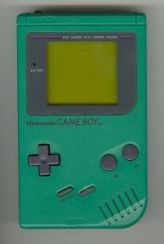
I play a lot of games. Video games mainly but overall, if it’s a game I’ll try it. This goes back many, many, years to when I was a kid and fascinated by the old brick of a GameBoy I got at a flea market for $5. Despite my long running fascination, I’ve never given much thought as to why I love them so much. There are lots of fairly surface-level reasons, like the characters, the art, the gameplay itself, or the community and bringing friends together. While those are all well and good, I feel like there might be more, especially when it comes to the games that myself and others get really obsessed about.


Continue reading