Are Men “Visual Creatures”?: A Discussion on Porn & Bioessentialism

TW//mentions of SA, porn addiction, objectification

One thing that really stood out to me in Throwing Like a Girl is how Iris Marion Young criticizes bioessentialism, which is the idea that men and women behave a certain way because it’s just “biology”. She shows how people explain things like throwing differences as natural, when they’re really learned through social expectations. It is similar to how people perform worse due to the stereotype threat, which is when minority groups tend to underperform on tests because they believe that they are not capable of performing well, leading to a self-fulfilling prophecy. 

I think that same logic of “inherent” or “biological” behaviors can be applied to how men justify watching porn by saying “men are visual creatures”, which is not based in fact at all. That phrase is so harmful because it makes it seem like objectifying women is unavoidable, instead of something that men are choosing to participate in. 

Read more: Are Men “Visual Creatures”?: A Discussion on Porn & Bioessentialism

Porn is extremely dehumanizing because it turns people, often women, into objects meant to be looked at, not individuals with complex life experiences who have their own agency. Young talks about how women are taught to experience their bodies as something to be watched and judged, rather than as something they fully control. Porn takes that even further by reducing women to their body parts and presenting sex as something women exist to provide. It trains people to see women’s bodies as products rather than as a part of an intimate and sacred human interaction.

The idea that porn allows people to “buy” consent is disturbing on its own as well. Consent in porn is always available and detached from real emotional or physical consequences. Sometimes consent can even be depicted as NOT freely given, and disrespected, as part of r*pe fetishes. Humans were never meant to have instant and unlimited access to sex like this, and pretending that it’s just “natural male sexuality” ignores how artificial and extreme this level of access actually is. The harm doesn’t just affect the person consuming porn, it impacts the women in it, who are often exploted, and women in the modern dating world that have to deal with unrealistic expectations and porn-driven violence and entitlement.

Just like Young argues, bioessentialism isn’t harmless. It is used to excuse behavior that causes real harm by making it seem inevitable, and vanishing accountability for those who are engaging in them. Saying “men are visual creatures” works the same way as saying “girls throw like that”. It hides socialization behind biology.
Why are breasts so sexual?

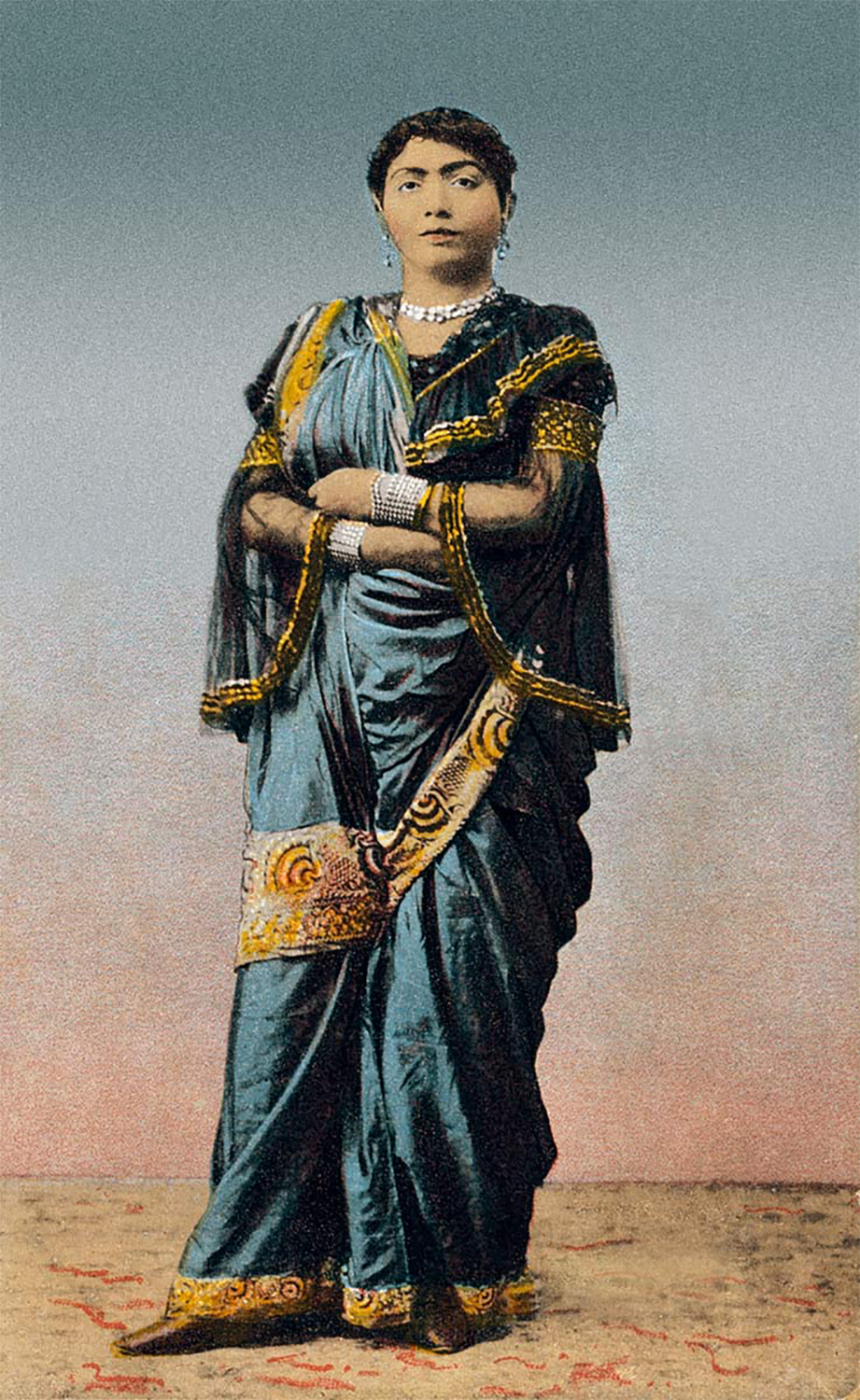
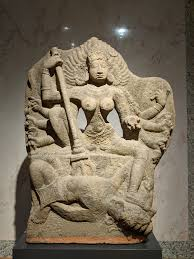
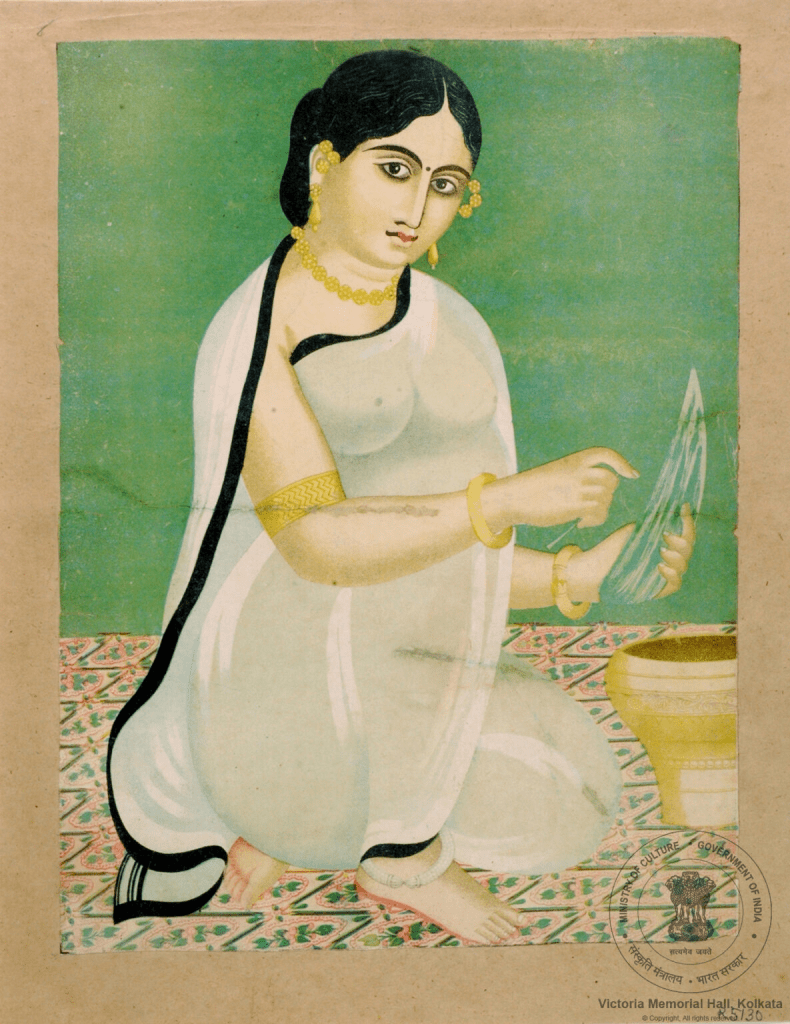
Growing up Baptist, I was always told that my body was to be hidden, especially the breasts. I always wondered why that is. AFAB people have breasts, consisting of tissue and mammary glands to give life, to feed their young. Why is that sexual? As a lesbian, I understand the appeal, but once again, why is there such a deep seated sexualization of these two orbs of tissue? An example of the sexualization of breasts is seen in the change of saree styles pre and post British rule in India. Before the western influence, sarees were often worn without a blouse under it, simply consisting of a long piece of cloth draped around the body. With the British rule came the western ideals of modesty, leading to sarees being worn almost exclusively with blouses in the modern day, ensuring there is no breast visible. I remember being 15, babysitting for an Indian family that taught me this. The mother who is now a dear friend of mine showed me historical portraits of Hindu deities, many of which had breasts visible, specifically the goddess Durga. She is a warrior goddess, seen as a symbol of feminine strength, depicted in ancient sculptures with breasts uncovered, the breasts being a part of symbolizing feminine strength. In this sculpture, she is seen slaying a buffalo-headed beast called Mahisha. (See photo.) Durga was a fierce warrior while simultaneously being a symbol for motherhood and maternal love. She is the Hindu maternal protector of the universe itself.

The first photo is a painting of a woman wearing a saree in the 19th century. The second photo is of a woman wearing a saree in 1910.

Breasts themselves are not sexual, rather they a reflection of the broader societal issues regarding women’s bodies. Sexualizing breasts gives men power over them by making women uncomfortable with them being visible or sexualised, leading to a change in women’s behavior, in this case, covering the breasts. If men are ogling something about your body, you will feel pressured to hide it, therefore the men have the power over what of the body is shown. It all goes back to the patriarchy.

Medical Terminology and the Patriarchy

I learned about this in another class and found it to be very relevant to this class. In general, Emily Martin’s The Egg and the Sperm: How Science Has Constructed a Romance Based on Stereotypical Male-Female Roles, talks about how the language in medical textbooks reinforces patriarchal views of men’s and women’s roles in reproduction. Enjoy!

In Emily Martin’s The Egg and the Sperm, she asserts that even when we learn about basic biology, such as eggs and sperm, these notions from the patriarchy are reinforced. This subtle but very deliberate assertion is intentional. It reinforces gender norms and says that the sperm is dominant while the egg is submissive. The sperm travels through the female reproductive system and penetrates the egg. This is very much a Western idea. Now, modern research has found that the egg is the dominant one. Instead of the sperm penetrating the egg, the egg, “traps the sperm and prevents their escape.” (Martin, pg. 493)

The reason these narratives are so problematic is because it devalues the egg’s role in reproduction and, in doing so, reduces the whole female reproductive system and women in general and vice versa. Other things also reinforce this. Like how menstruation is viewed as a failure. The language medical textbooks show menstruation, “as a chaotic disintegration of form, complementing the many texts that describe it as “ceasing,” “dying,” “losing,” “denuding, “expelling. ” (Martin, pg. 486) As if a women’s role is purely reproductive and she is deemed useless or otherized when she is dealing with a completely normal biological function.

Reference

Martin, Emily. “The egg and the sperm: How science has constructed a romance based on stereotypical male-female roles.” Signs: Journal of Women in Culture and Society, vol. 16, no. 3, Apr. 1991, pp. 485–501, https://doi.org/10.1086/494680. 

You Must Be This Tall to Ride

Content Warning: Height dysphoria, transphobia

I recently joined the millions of users on Tinder, a social networking app that allows for mutually interested individuals to communicate if they are within a predetermined distance. Tinder functions simply. Users are presented one-by-one with other profiles—which include up to six photos, age, distance, and a brief text description—and are given two options: swipe left to “dislike” and thereby remove the profile as a potential match, or swipe right to “like.” If both users have mutually swiped right, the application allows for text communication between the two profiles to occur.

While the app can be used to find friends, Tinder is most frequently used as a dating services app. As I have swiped through profiles and read their short descriptions over the past few weeks, I have picked up on certain trends in the information users present to potential romantic and/or sexual partners. One of the most frequent descriptors used is height, revealing what many view as an important physical factor. This mark of importance ranges from implicit, such as simply listing one’s height, to extremely explicit, in which I’ve seen a profile’s description read, “Do not swipe right if you are under 5’10”.”

A recent national study showed that 48.9% of the heterosexual women surveyed wanted to only date men taller than them (Yancey & Emerson 62). Height preference was important to the heterosexual men surveyed as well, but not as important, with 1.3% wanting to only date women taller than them and 13.5% wanting to only date women shorter than them.

Height is clearly an important characteristic when it comes to choosing a partner, yet there has been some debate as to whether this is due to biological tendencies (evolutionary perspective) or social expectations. Ultimately, these gendered-height expectations are rooted in patriarchy. The women surveyed in the study often listed protection and security as reasons to why they prefer taller men (Yancey & Emerson 62). Others stated that a taller man made them feel more “feminine.” The men surveyed in the study who set upper limits for height were “not considering physical or sexual difficulties but societal expectations” (Yancey & Emerson 66). These men did not explicitly speak on traditional gender roles, but they did convey a desire to avoid possible stigma. Men were “reinforcing societal expectations with their higher height limit just as women reinforced those expectations with their lower height limit” (Yancey & Emerson 66).

Like many gender norms, height expectations have the harshest impact on the transgender community. Height dysphoria, an invasive dissatisfaction and discomfort with one’s height, is a frequently seen dilemma among online transgender support forums. Height is very difficult to amend, and because it is wrongfully associated with masculinity and femininity, transgender individuals suffer greatly. Posts in these online forums express a sense of futility. While it can be achievable to possess societally-deemed masculine traits such as hair growth, muscular strength, and body parts, height is nearly impossible to change. Some responders recommend shoes with platforms or boosters. Others simply recommend an attitude adjustment.

This attitude adjustment should not be the responsibility of the trans community, but rather those who have the privilege to actively challenge gender norms free from danger, particularly white, cis, and heterosexual individuals. It is human and understandable to have height expectations, as patriarchy is deeply embedded and can be difficult to unearth, but I ask the reader to truly consider their own expectations and from where they have been created. Just as we work to untangle the mess of patriarchy in our coursework, conversation, and minds, we must also work to distance ourselves from harmful gendered-height expectations.

Works Cited

Yancey, George, and Michael O. Emerson. “Does Height Matter? An Examination Of Height

Preferences In Romantic Coupling.” Journal Of Family Issues 37.1 (2016): 53. Publisher

Provided Full Text Searching File. Web. 29 Sept. 2016.

Women in Public ≠ Public Property *TW assault*

I’ve been thinking a lot lately about the issue of women’s bodies being viewed as public property. From cat calls to groping, it seems that many men have a clear sense of entitlement to women’s bodies in public spaces. This way of thinking and acting is incredibly prevalent in our society, and the cultural encouragement of this behavior is especially disturbing. I recently watched several videos by Stuart Edge and Andrew Hales that completely condone this type of behavior by harassing women and then playing it off as a fun joke.

Continue reading