
I have recently been spending my spare time sitting on my couch, waiting in anticipation for the new “Resident Evil” survival-horror video game to release. I played the demo of the game last week, and it was great! I was tense for many hours after, but it was worth it. I love a good scare, and in video games there is the sweet feeling of starting over again even after failure, so there is usually a feeling of relief. After playing it though, I started thinking about video game characters throughout time, and how they kind of always typically find a way to make everything look good.
I do not mean that just graphically. The video games of the current generation are the realest they have ever looked, and with that in mind, it appears like some developers are pushing the standards of beauty with that reality. In another video game series , “Tomb Raider” that focuses around a female tomb explorer, her looks contribute to her popularity. So, a certain look is thing number one, but then I thought about thing number two. Ability. Resident Evil is centered around solving

Lara Croft. The main character of the Tomb Raider series. Credit: https://www.amazon.com/Tomb-Raider-Anniversary-7-Inch-Action/dp/B000UV6GSY
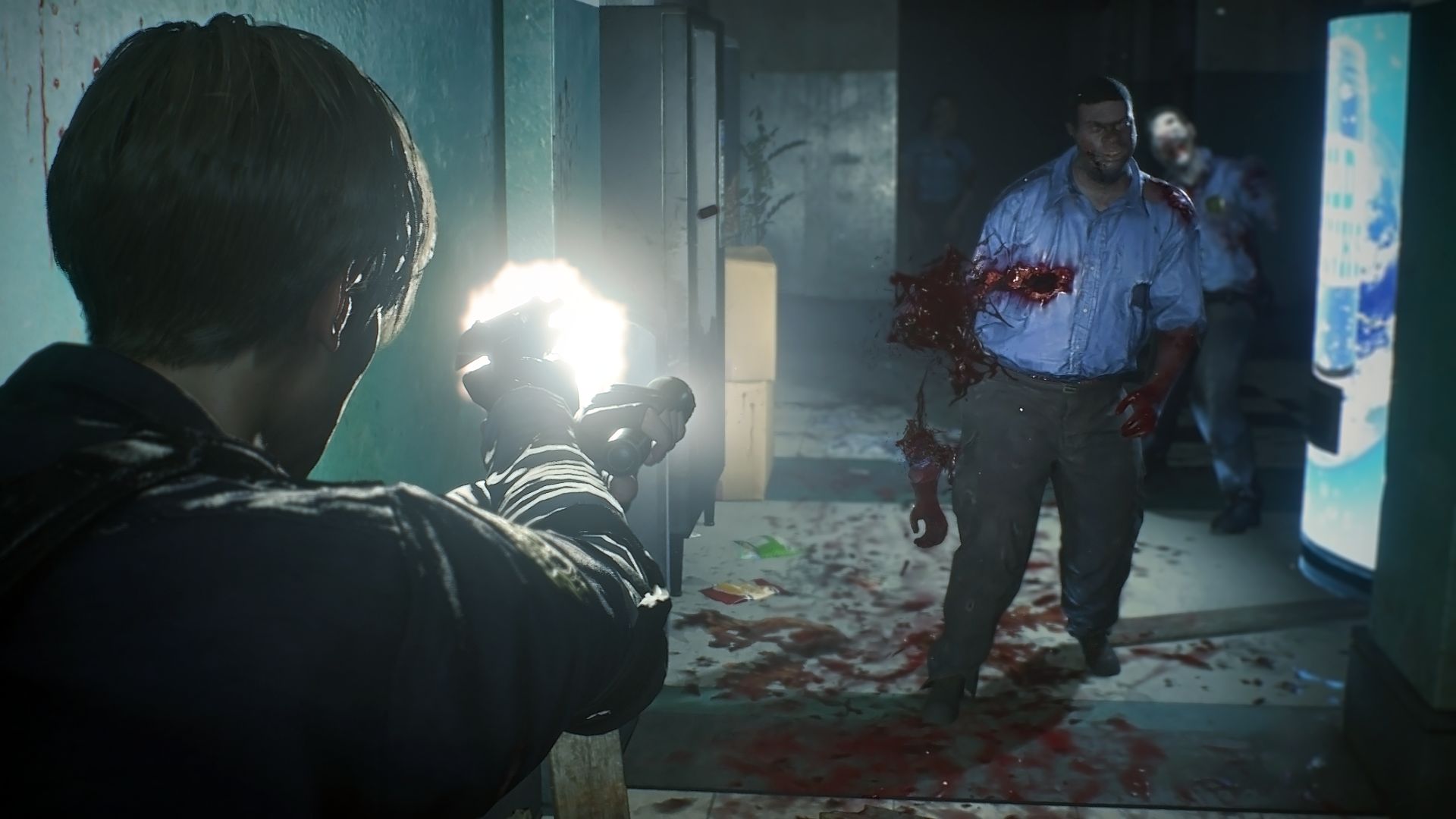
Leon killing zombies in the latest Resident Evil game. Credit:https://wccftech.com/resident-evil-2-remake-story-lenght/
puzzles, killing zombies, and looking good doing it. What I am thinking about is similar to an article by Douglas C. Baynton titled “Disability and the Justification of Inequality in American History.” Baynton writes about how for hundreds of years, disabled people have been made to look like the number one thing not to be. There is a section in the article that writes about immigration inspectors in the 1920s and how the inspectors would mark immigrants with letters on their backs if they had something off about them, with each letter meaning something different. Fast forward to 2019 and I’m playing an able-bodied, handsome, young police officer who is shooting slow, stupid, strange-walking zombies. If my young police officer, aptly named Leon, is hit by one of these zombies, he is hurt, but never hurt as badly as the zombies since he can recover. The mission of the game is to find the cure to whatever created the zombies and to cure them so they can go back to normal.
“Normal.” The more I think about it, I can see how even video games shut disabled people out of the playing field and alienate them yet again. I know this is not the intention of the game, but sometimes the comparisons can’t be overlooked. What do you think?
For years people have been debating on whether games are too violent, or too this or too that. What I am wondering now is: are they too exclusive? A lot of people can play them, but how many people are the video games encouraging to say, “I can do what that protagonist does because I have the body for it” and “I am forced to do what that antagonist does because I have the body for it.” One last thing I leave you with is a link to disabled video game characters, Take note of how many of them are physically disabled, which also excludes any other sort of disability, once again leaving people out.

