
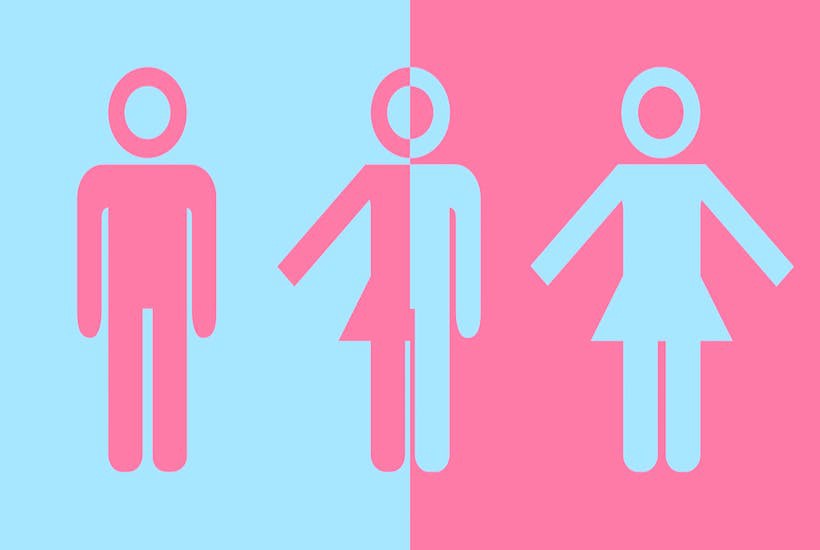
Image Source: https://medium.com/@queerquill/what-its-like-living-with-gender-dysphoria-as-a-non-binary-person-81054795a2bd
As a non-binary person, I am locked in a constant and overwhelming struggle of feeling comfortable in my own body. Embodiment theories tell us that our physical body impacts our emotional well-being, and I feel the effects of this phenomenon daily. One tangible representation of this struggle is my experience with binding.

Binding is the practice of compressing one’s chest to be flat using tape or a clothing article called a binder. Binders come in many forms, but one popular kind of binder is a half-length binder, as illustrated in the image here. A half-length binder looks similar to a sports bra, but flattens the chest, minimizing the appearance of breasts. Binding is most commonly used by gender non-conforming and trans-masculine people.
Image Source: http://www.binderdrive.com
I present myself differently every day, and my gender expression is constantly changing. Some days, I want to look feminine, and wear a pretty dress and heels. Some days, I want to look masculine, and wear a button down and boots. But most days, it’s a lot more complicated than that. Most days, I spend most of my time getting ready looking at my closet, then looking at my mirror, then immediately starting to tear up.
The mirror can be my worst enemy as a non-binary individual. Seeing my cleavage often feels like a hole is being ripped into my gender identity. My brain and my body are consistently out of sync, and it doesn’t feel great. Taking up space in a shape that often doesn’t match my identity and how I feel that day is an overwhelming task.
Binding is simultaneously a chance for me to feel like myself, and a trap for me to feel like I’m in the wrong body. On one hand, binding is an incredible opportunity to see myself as I imagine I should be. The first time I wore a binder, I looked in the mirror and happy tears began to stream down my face. I can’t remember another time when the mirror brought about happy tears. On days when I feel confident that I want to present on a more masculine side of the spectrum, binding is absolutely a lifesaver. However, sometimes I feel inadequate for not binding enough. Not binding as much as I should as a trans person. Sometimes, the mere fact that I need to bind to feel comfortable in my own skin is nauseating. Why do some people get to live like this for free?
Now, I’m aware that some of this thought process is ridiculous. There’s no right way to inhibit your body, and whatever makes you feel comfortable taking up space is what you should do. But, there are a lot of societal pressures when it comes to gender expression and your performance of your gender. I am consistently misgendered more on days I don’t bind than days I do. Similarly, I was misgendered more when I had long hair than now, when I have my hair cut short.
So, I don’t have a real conclusion on my relationship with binding. Overall, it’s more helpful than harmful by a long shot. Being able to reshape my body and exist taking up space in a form that is comfortable for my emotional state is a gift. However, there are a lot of undiscussed struggles that come along with this practice. Binding, for me, is not a complete cure-all, and sometimes is the spark of a breakdown. I’m still learning how to inhabit my body while being non-binary. I’m still learning how to bind without making myself feel bad for having to. I think I’ll always be learning.
 Unruly Bodies
hello .i get your blog. i am disabled .I WOULD SAY NOT BIND .will corse lot more issues …my blog.http;//mark-kent.webs.com twitter,supersnopper MARK
Thank you for disscussing your experience, this is very powerful. I think what is interesting is it seems that most people think that non-binary people only differ with the use of pronouns that they prefer. While in all actuality it is much more than that. Esspecially through tiktok you see the exclusion of non-binary people as “not trans enough” because non-binary people do not conform to the gender binary. I think this in many ways is interesting as cis people see not existing on the binary as an unknow territory.