
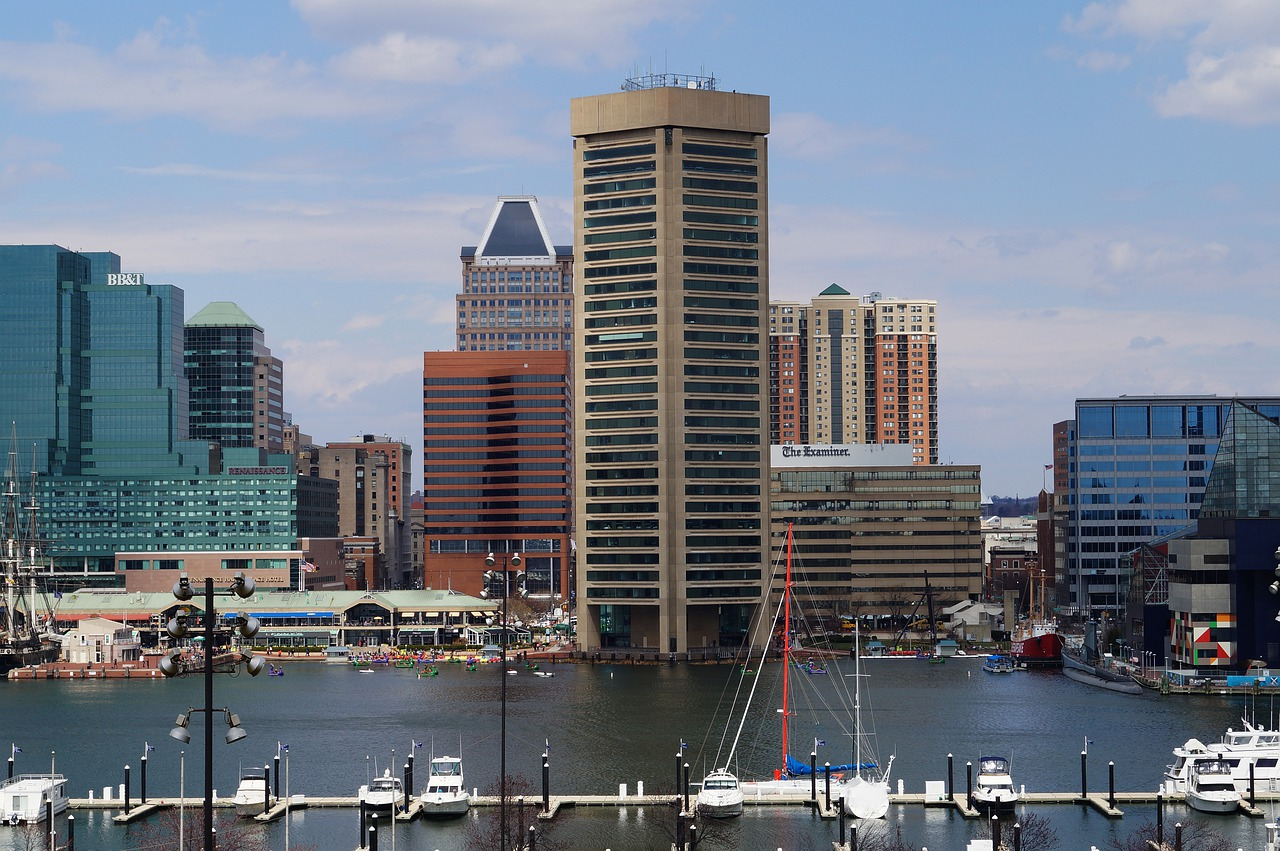
I grew up here and have never lived anywhere else. The house I was born and raised in is about ten minutes from UMBC. Catonsville’s reputation precedes it–telling others from the county where I’m from, Catonsville conjures the immediate image of overwhelming whiteness. I remember as a kid spending the longest time being unaware of whiteness, of my own existence and participation in it, because it was almost all I saw. To me, at an age where my brain had not developed enough to conceptualize a world beyond the five-mile radius within which my home, school, and all of my friends lived, this was the world.
Baltimore itself is incredibly segregated. This is no secret. The county, too, is sprawling and deeply varied in its socioeconomic contents to an extent I did not realize was exceptional until I understood that most counties elsewhere differ from it in this respect. Telling someone you’re from Catonsville means something significantly different than, say, Dundalk, Pikesville, Owings Mills, and on and on. My elementary school–reported to be 68% white–is only about 5 miles from my best friend’s elementary school in Windsor Mill, an area with a high Desi (members of the South Asian diaspora) population and he tells me he went to school where almost all the kids were Desi like him. He and I didn’t know each other as children, and despite living so close to one another, there was almost no way we could have met.
With regards to racial phenomenology and race as a result of perception and a visible phenomenon, Linda Alcoff says that “A reduction of racism will affect perception itself, as well as comportment, body-image, and so on. Toward this, our first task, it seems to me, is to make visible the practices of visibility itself, to outline the background from which our knowledge of others and of ourselves appears. in relief.” I can’t help but wonder what would have happened if the plan to better integrate schools in the Catonsville area, an effort that was dually also meant to solve overcrowding, had been actually put into effect; would the realm of the visible impact the children from the school I grew up in (and the ones around it) in such a way where they would not grow up to become their parents, vehemently protesting the proposal to try and fix our problem with modern-day segregation? To be a child is to only know what you can see. The phenomenology of children is predicated on what is visually and socially available to them in the most basic sense, and they are still in many ways attached to their mothers; their first-person experience of the world is a world that has been carefully (or carelessly) curated by their parents. Making the practices of visibility appear visible means lifting whiteness out of its “default” positionality; for kids, everything they see appears intentional and salient, representative of the world at large. Failing to account for this and making invisible the experience of racial embodiment, my town is overrun with ghosts, with specters of possibility. Something could have been done. Something has not been done.


i really enjoyed your blog post! i relate to your story, but a little differently. i completely agree that school’s in baltimore are segregated. i went to an elementary school in baltimore city where the population was probably 99% black. it wasn’t until i moved to harford county in 6th grade that there were more people in school that did not look like me. like how we discussed in class, it is very important to be in diverse environments, especially in school.