
So all my life I’ve lived with this one question: “What are you?” Whether it came from people I didn’t even know, or it came from my friends, they all had the same question. And I understand to some degree. I am pretty ethnically ambiguous looking and sometimes I straighten my hair which further confuses people. It still doesn’t make it okay though.
In my family, my mom has a different father than her siblings, causing her to have a different skin tone than them. This lighter skin tone carried on to my siblings and I. Among other things, this caused a quiet rift between my siblings and I and our cousins. We didn’t really look like them and that was something that was never addressed, it just created an invisible tension.
When I was reading Alcoff’s “Towards a Phenomenology of Racial Embodiment” she brought up Richard Rodriguez’s book, Days of Obligation. After analyzing his text, she talked about the mixed identity. She said something that really resonated with me: “The mixed person, unless she or he declares in her self-representation as well as her everyday practices to be identified with one group or another, feels rejection from every group, and is ready to be slighted on an everyday basis for presuming an unjustified association. She is constantly on trial, and unable to claim epistemic authority to speak as or to represent.” That is a really long quote but it pretty much perfectly summarizes what life is like as someone who doesn’t clearly present as a specific race. For me, I identify as African American but still feel separate from the culture I identify with. Something that I’ve said ever since I started understanding what race is is: I’m too white to be black and I’m too black to be white. My skin tone is very light and because of that, members of the African American community don’t treat me the same as they would with someone of a darker skin tone.
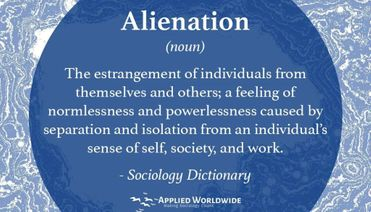
Being a mixed presenting woman in today’s society comes with its sets of trials. The sense of alienation from your culture is strong, and is perpetuated by some of your peers. It often feels like you can’t advocate for your culture because people might invalidate your experiences. That rejection from such a young age has carried into my adult life. I sometimes feel uncomfortable with large groups of people from my race. I am very self conscious of the way I act, I am hyper aware of the fact that they may not realize that I identify as African American, and I just feel a general sense of otherness. On the other side, I grew up in a primarily caucasian community and I was very aware of my race in a very different way. The freedom of childhood afforded me a buffer from the realities of the world but that can only last so long. I distinctly remember a time when I was about 11 or 12 when my friends met my father. My father is very clearly African American and I could feel my friends re-evaluate their assessments of me. It made me feel self conscious about their opinions of my identity and then guilty for feeling self conscious about it.
A couple years ago, I was in an African American Literature class and one of the readings was about colorism. It really showed me the privileges afforded me for just being born with a lighter skin tone. It provided me with a term to apply to the terrible practices that started back during slavery about how lighter skinned slaves were house slaves and darker skinned slaves would be made to work in the fields. This terrible practice has carried into modern times with people with lighter skin tones being considered to be more beautiful and getting unearned preferential treatment over their peers.
The last thing I want to talk about is an experience that has happened recently which has affected me pretty heavily. I had experienced racism before but nothing near as personally. I was supposed to meet my partner’s mother on a specific day. At that time I had my hair braided with beads and was as African American presenting as I’d ever been. I had been told by my partner beforehand that she was a very traditional Caucasian female who was hoping that he would marry a blond hair blue eyed girl, but I tried to come into the situation with an open mind. My significant other introduced me to their mom and she was clearly disinterested in my existence. She treated me with indifference and was borderline rude. I was told later that she only said one sentence about me afterwards, and it was to clarify my race. I have since separated from that partner but the sting of such blatant disrespect because of my identity is something I’m sure I’ll feel for a long while.
So I guess the point of this all is to say: I admit that certain privileges have been afforded to me over my peers of a darker skin tone because of mine, but I am also trying to bring light to the alienation I have experienced from my peers because of both sides of my heritage.
Citation:
Alcoff, L. M. (2006). The phenomenology of racial embodiment. Visible Identities, 179–194. https://doi.org/10.1093/0195137345.003.0007


Reading this really hit home for me. I also identify as mixed with a European dad and an East African mother. I always felt like I was too black for my dad’s side of my family but also too white for my mom’s side of my family. I also naturally have wavy hair but when I straighten it, I get more questions about where I’m from. To make matters worse, I grew up in a predominantly white neighborhood so I’m constantly getting called “white-washed” for the way I talk. It’s hard because you’d think that by being mixed you’d have more options to be a part of different communities, but the options actually lessen.
This is an interesting story. This is like where albinos consider themselves as white, African American, asian, etc., but others don’t seem to accept that which makes you wonder yourself what you should consider yourself as.
i love your blog post! colorism and mixed-ness, especially in the black community, unfortunately are sometimes used to divide us further. it is very important to recognize that alienation and overall sense of “different” that mixed people experience are real. racial constructs have developed a misconception that we must fit ourselves into these boxes. that is obviously not very feasible for people who are mixed because there is no one “box” to fit into. like you described, this would create a feeling of separation for the cultures you identify with.
Your post is very eye opening, I never realized how big of a difference being of a lighter skin tone made to societies treatment of an individual. I am very surprised to hear that an issue like this causes a differential treatment by family members who are likely aware of where your mothers lighter skin tone comes from. I am sorry to hear about your recent experience and I hope you are able to recover from the pain.