
Content Warning: Mentions of Self-Immolation
The thing that’s so substantial about fire is that *everyone* has access to it. Anybody who’s sufficiently determined could choose to burn a tower to the ground, incinerate a datacenter, self-immolate, etc. Much like the enabling conditions of a combustion-reaction, our society is built on unstable energy potentials that when subject to enough agitation will react with devastation; it could be anything from a recession, to a famine, to our ultimate mutually-assured destruction.
It still takes someone an enormous amount of pressure to commit an act of arson or self-immolation especially. It happens when the situation *truly* become so dire that an accelerated collapse or martyrdom might feel like the only solutions. Despite the temporary periods of stability in society, the potential of incineration and uprising always lurks under the icy layers of stability and concessions from the ruling-class to the masses.
Pure destruction, immolation, is one of the greatest signs of the desperation of humanity.
Arson
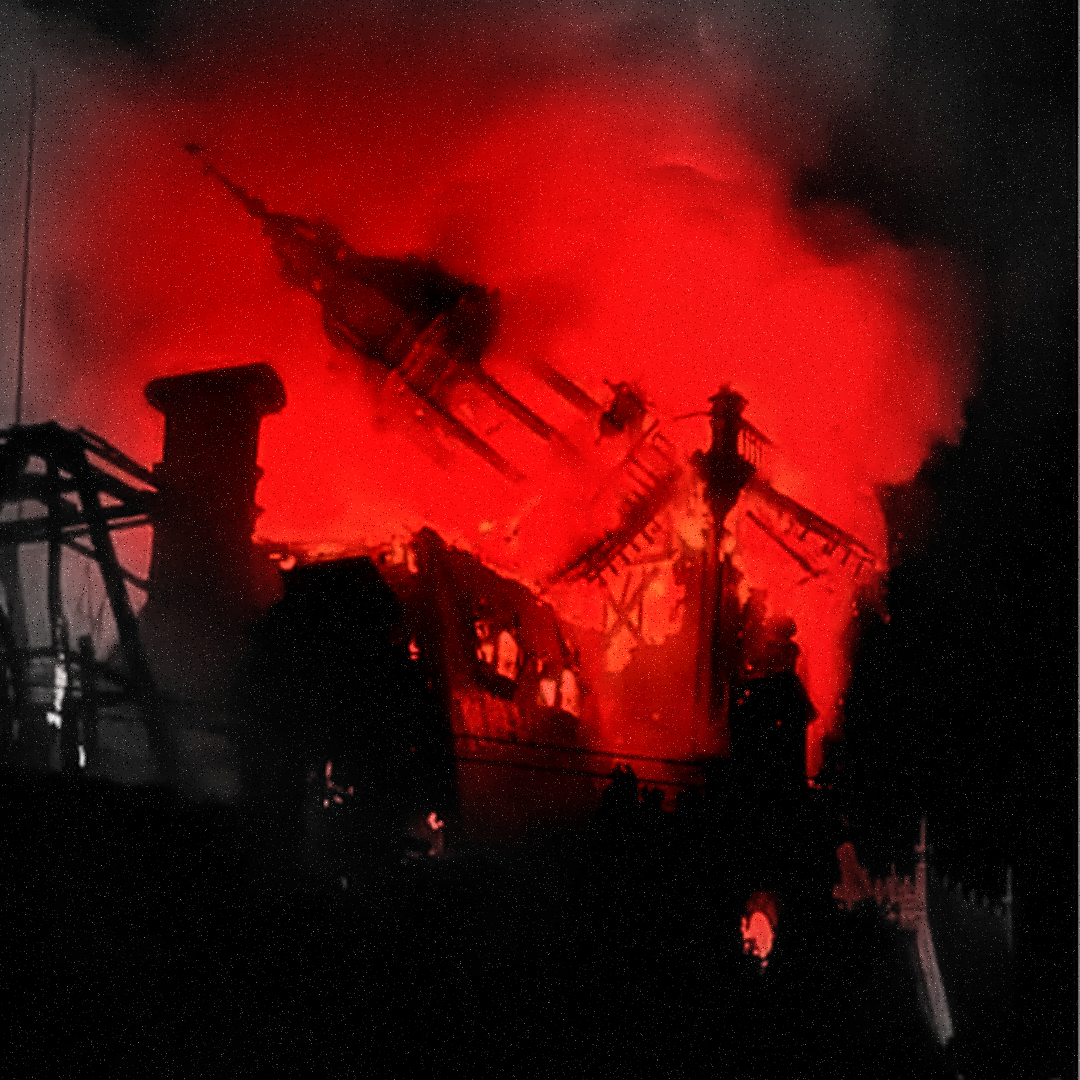
A few weeks ago, the Hôtel de Ville in Limoges, France was set on fire during the October 17th (2026) riots.
The spire atop the building collapsed in flames (pictured on the right).
Perhaps this was meant as a message, perhaps it was done for the thrill of the destruction.
In either case, it serves as a reminder to the ruling class that the masses could at any point decide to cannibalize them and themselves.
Every day, somebody feels desperate and disenfranchised by the powers that be.
One day, another tower will be burnt to the ground.
Self-Immolation
The self-immolation of Thich Quang Duc in response to persecution of Buddhists in South Vietnam utilized the spectacle of destruction, specifically, the destruction of oneself, to create support for his cause. The immolation was photographed and then circulated amongst the public. The shocking and somewhat horrific display inevitably drew attention to the issue. Duc’s willingness to destroy himself pulls the viewer into that mindset of desperation, that everything is not okay, which motivates further action.
Fire is a tool of the disempowered, a resort that can be turned to when there is enough desperation. When used for destruction, whether intentional or not, fire demands we acknowledge and nurture the links between us or succumb to our own destruction. If the masses become an endangered species, fire is a reminder that society becomes endangered with them as well. If the masses become an endangered species, the risk for society’s own self-immolation increases.

