Higher The Competition= Less Fun :(

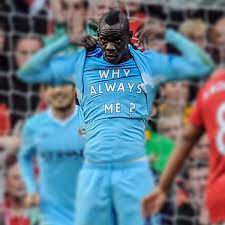
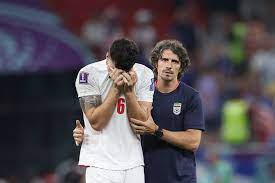
In its simplest form, soccer is a joyful and expressive game, especially for young players between the ages of 6 and 13. Carefree practices marked those early days, when the main objective was to enjoy yourself and the pure joy of playing with friends. The teams were chosen by us, and halftime snacks consisted as much of eating orange slices as taking a breather. When the game moved into the collegiate and professional levels, it changed dramatically. Soccer transformed from a hobby into a career, requiring a level of commitment that was unthinkable in the carefree days of childhood. Turning in phones the night before games and arriving hours before a game were part of the preparation rituals. retaining strict bedtimes. During training, the intensity increased dramatically, and friends turned into rivals as they competed for a desired starting spot. Managers upheld a no-nonsense personality by carrying severe expressions. Coaches had little patience and their window for players to make mistakes narrowed as players advanced to higher levels. The significance of roles and the seriousness of competition gradually stole the shine from the game, which had once been a source of pure joy. On the field, there was less freedom to express yourself and more pressure to live up to high standards. In this journey from youth soccer to profession, soccer underwent a change, leaving behind the joy of youth in exchange for the demands and pressures of the elite levels, ultimately transforming the beloved game into a serious business.

I remember in class we talked about how at some point when we love something I think someone mentioned dance and how they started to hate it because it became much more serious than dancing. So I thought of this because when I played, I just remember how serious the game became the higher the level. My coach would stop the entire session during a drill if you made a mistake. He would say things like “Immaturity you’re 20 years old making mistakes my youth team makes. USE YOUR BRAIN AND PLAY!” it would get to the point where you would doubt your own skills. But off the field he was calm and cool. I know it’s constructive criticism, but sometimes it would get so serious you ask yourself “how is this fun?” Overall I just think sometimes people never understand how sports become the older you get. Theres no longer any fun, it’s a business and competition.

Can Anything Be Considered a Disability?

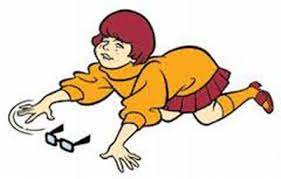
In our culture, the word “disability” frequently evokes pictures of people who have obvious disabilities or trouble moving around. But the truth is much more complex. There are many different kinds of disabilities, and not all of them are obvious at first. Certain disabilities are obvious, like needing a wheelchair or cane, but others stay hidden, hidden beneath the surface of day-to-day interactions. The requirement glasses is one of the best examples of an invisible disability. Many people deal with vision impairment, that greatly affects their daily lives but is frequently overlooked by others by wearing glasses or contact lenses.

A change in viewpoint is necessary to comprehend the actual nature of disability. It entails realizing that a wide range of conditions can cause disabilities. Not all of which are apparent right away. Consider the experience of those who wear glasses, for example… Even though wearing contacts or glasses may not initially seem like a disability, they are a type of accommodation that is required for getting around. Those who rely on these are aware of the limitations and difficulties they would face in their everyday lives if they did not have them. The usage of glasses is inextricably linked to their capacity to operate well in their surroundings, from reading signs to identifying faces. This highlights how crucial it is to promote a more accepting and compassionate view of disability. It emphasizes how important it is to recognize and make accommodations for all kinds of disability, whether they are obvious or hidden. By extending our senses.

Being African Is Now Cool!


I’ve noticed a significant shift in recent times where many people of African descent are embracing and celebrating their African heritage. When I was younger, identifying as African was often met with negative stereotypes and misconceptions. People would associate Africa with huts, monkeys, and wildlife, and I’ll never forget the hurtful term “African booty scratcher,” which was used to devalue and ridicule Africans, likening them to monkeys.

Furthermore, there was a time when having dark skin was stigmatized, almost akin to the discrimination faced by people of color in the 1950s. In the past, women within my own community often favored lighter-skinned individuals, desiring men who resembled figures like Chris Brown. I recall my high school days when those of us with darker skin were mocked and made to feel inferior. Now, it’s astonishing how the tables have turned. Today, I can’t go to a club without receiving compliments on my skin or appearance, as dark skin is now considered a desirable trend.

In the world of music, artists like Burna Boy, Wizkid, and Davido have risen to prominence, with Afrobeat becoming a dominant force in 2023. These artists’ music is frequently played at clubs, reflecting the broader shift in cultural preferences.

Overall, it’s remarkable how perceptions have evolved. In the past, being African was met with fear and shame to the extent that some of us would even pretend to be Jamaican or Dominican to avoid the negative stereotypes. Today, many people are eager to engage with African culture, whether it’s through Afrobeat music, adopting accents, or showing an appreciation for dark-skinned individuals.

To Be Accepted, Must I Be Fake?

In the world we live in, the mantra often seems to be “Fake it till you make it.” However, reflecting on one of the readings about Serena Williams led me to ponder many incidents beyond the realm of sports. I feel that in our society, people of color often find themselves compelled to suppress their true selves and hold back their authenticity.

I remember a particular incident at an airport lounge. I was dressed comfortably in a tracksuit and sneakers when I entered, amidst mostly Caucasian individuals. As I approached the front desk for check-in, I consciously altered my way of speaking, adopting a more proper tone. Even before I reached the desk, I could sense the judgmental glances directed towards me, as if I didn’t belong or appeared lost. The looks from the others sharing the same space with me were palpable. Nonetheless, I continued to enjoy the amenities I had paid for, just like everyone else.

As I exited the lounge to board my flight, they announced, “Accepting group one passengers at this time, you may use lane number one.” I promptly joined the line, but a crew member approached me, saying, “Sir, this line is for first-class passengers only. Could you please wait until they call your group number?” I felt embarrassed and questioned why I was subjected to such scrutiny. I was no different from the other passengers, except for the color of my skin. I showed her my ticket, and she seemed embarrassed in return. She began to interact with me differently, striking up a conversation about my destination and such. I held my head high and continued to fake it just to board the flight.

Once on board, I noticed that I was the only black person in the first-class cabin, and I still didn’t feel like I truly belonged. It wasn’t until I encountered a flight attendant of color serving me that I felt at ease. We shared a laugh and discussed our destination, creating a sense of comfort.

Throughout the flight, I relaxed and enjoyed myself. However, twenty minutes before landing, while in the bathroom, I heard a knock on the door. The flight attendant outside accused me, saying, “Sir, are you smoking in there? It smells like smoke, sir!” I exited the bathroom, and he continued, “Sir, you cannot smoke on board; it is illegal.” As a black man in front of a cabin full of Caucasian passengers, I maintained my composure and remembered my surroundings. I politely responded, explaining that I had not been smoking, and someone before me might have sprayed something. I found it rather absurd but chose not to react further. After apologizing, the flight attendant mentioned that he was just doing his job, clarifying that only flight attendants were allowed to spray in the cabin. In my mind, I couldn’t help but think this was an unreasonable situation. He then mentioned the possibility of reporting the incident and opening a case, emphasizing that it could jeopardize either one of us.

I remained unfazed by the situation, but I couldn’t help but wonder if a Caucasian passenger would have received the same treatment as me. This brings me back to the reading about Serena Williams and how she had to navigate her reactions when competing. As a black man in first class, I believe that had I reacted negatively, I would likely have faced more severe consequences, possibly involving the involvement of the Sky Marshal, and being unfairly labeled as a “typical black man.”

In conclusion, I believe that in the world we inhabit, we often feel compelled to “fake it till we make it.” I’m reminded of the case of a professional soccer player who faced racial abuse, including being called a monkey and having bananas thrown at him. Yet, when he performed well, he received praise. This underscores the notion that, in this world, we must often present a false version of ourselves to gain acceptance. Our true selves can only be expressed when we are at home or among like-minded individuals.