
In the world we live in, the mantra often seems to be “Fake it till you make it.” However, reflecting on one of the readings about Serena Williams led me to ponder many incidents beyond the realm of sports. I feel that in our society, people of color often find themselves compelled to suppress their true selves and hold back their authenticity.
I remember a particular incident at an airport lounge. I was dressed comfortably in a tracksuit and sneakers when I entered, amidst mostly Caucasian individuals. As I approached the front desk for check-in, I consciously altered my way of speaking, adopting a more proper tone. Even before I reached the desk, I could sense the judgmental glances directed towards me, as if I didn’t belong or appeared lost. The looks from the others sharing the same space with me were palpable. Nonetheless, I continued to enjoy the amenities I had paid for, just like everyone else.
As I exited the lounge to board my flight, they announced, “Accepting group one passengers at this time, you may use lane number one.” I promptly joined the line, but a crew member approached me, saying, “Sir, this line is for first-class passengers only. Could you please wait until they call your group number?” I felt embarrassed and questioned why I was subjected to such scrutiny. I was no different from the other passengers, except for the color of my skin. I showed her my ticket, and she seemed embarrassed in return. She began to interact with me differently, striking up a conversation about my destination and such. I held my head high and continued to fake it just to board the flight.
Once on board, I noticed that I was the only black person in the first-class cabin, and I still didn’t feel like I truly belonged. It wasn’t until I encountered a flight attendant of color serving me that I felt at ease. We shared a laugh and discussed our destination, creating a sense of comfort.
Throughout the flight, I relaxed and enjoyed myself. However, twenty minutes before landing, while in the bathroom, I heard a knock on the door. The flight attendant outside accused me, saying, “Sir, are you smoking in there? It smells like smoke, sir!” I exited the bathroom, and he continued, “Sir, you cannot smoke on board; it is illegal.” As a black man in front of a cabin full of Caucasian passengers, I maintained my composure and remembered my surroundings. I politely responded, explaining that I had not been smoking, and someone before me might have sprayed something. I found it rather absurd but chose not to react further. After apologizing, the flight attendant mentioned that he was just doing his job, clarifying that only flight attendants were allowed to spray in the cabin. In my mind, I couldn’t help but think this was an unreasonable situation. He then mentioned the possibility of reporting the incident and opening a case, emphasizing that it could jeopardize either one of us.
I remained unfazed by the situation, but I couldn’t help but wonder if a Caucasian passenger would have received the same treatment as me. This brings me back to the reading about Serena Williams and how she had to navigate her reactions when competing. As a black man in first class, I believe that had I reacted negatively, I would likely have faced more severe consequences, possibly involving the involvement of the Sky Marshal, and being unfairly labeled as a “typical black man.”
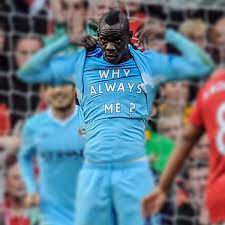
In conclusion, I believe that in the world we inhabit, we often feel compelled to “fake it till we make it.” I’m reminded of the case of a professional soccer player who faced racial abuse, including being called a monkey and having bananas thrown at him. Yet, when he performed well, he received praise. This underscores the notion that, in this world, we must often present a false version of ourselves to gain acceptance. Our true selves can only be expressed when we are at home or among like-minded individuals.


Dearest Friend,
Your blog post is incredibly powerful and a poignant reflection of the pervasive racial profiling and systemic biases that persist in our society. Your experiences, while personal, echo the sentiments and struggles of numerous individuals, particularly people of color, who navigate through a world where they are often subjected to unwarranted scrutiny and bias.
Your recounting of the airport and in-flight incidents lays bare a stark reality: the persistent, insidious nature of racial profiling and the undue burden placed on individuals to continually prove their legitimacy in spaces where they are rightfully entitled to be. Your experiences not only shine a light on the individual acts of discrimination but also highlight the larger, systemic issue of racial bias that permeates various aspects of our society, including travel and leisure spaces.
We must acknowledge that the practice of altering oneself to ‘fit’ into predominantly white spaces is not a reflection of inauthenticity, but rather a strategic adaptation to systemic disparities. It is a form of resistance, a way of claiming space in an environment that, in various subtle and overt ways, signals exclusion.
The articulation of your experiences is a vital contribution to the ongoing discourse about race, belonging, and systemic inequality. By sharing your story, you’ve provided a window into the lived experiences of countless individuals who navigate similar landscapes of bias and discrimination daily.
Your narrative serves as a potent reminder that the journey towards social justice and equality is far from over. It compels us to reflect on the ways in which systemic biases are perpetuated and challenges us to actively engage in dismantling these structures. May your words serve as a catalyst for change, prompting us to collectively work towards creating a society where no one feels compelled to “fake it” in order to exist freely and authentically within it.
Thank you for sharing your story and for contributing to this essential dialogue.
xoxo-Nicole
P.S. Your courage to remain composed and hold your space in the face of bias is commendable. May we all learn and draw inspiration from your strength, creating pathways for more inclusive and equitable futures.