Music and Me

Music and Me

I truly believe that music has shaped my own life for the better, and that I would be miserable without it after being exposed and listening for so long.

When I was a freshman in high school, it was the first time I even thought about getting Spotify and listening to music; all I knew at that point was Taylor Swift and some Coldplay, and any one-off songs that I would recognize from other pop artists. But after getting Spotify, I set myself up to construct a playlist of everything I had ever heard and liked, and now it stands at 1,453 songs and over 82 hours in length. I simply have to press shuffle when I’m in the car and it will always be something I hadn’t heard in a week or so.
Image of a microphone in front of a blurred background.
Photo by Pixabay on Pexels.com

But having the music itself isn’t the only aspect of it that’s changed my experience and connection to music. I’m part of an a cappella group on campus called the UMBC Cleftomaniacs (a fun little pun on the word kleptomaniac because we always steal the show), and performing as part of an a cappella group is not like any other kind of singing; doos and dahs and dms and ohs aren’t exactly solo singing and more choral, but adding the rhythm and the attempts to take on instruments and chords that existing songs have is what brings a kind of thrill and challenge to the singing. Plus, it feels like I’m part of a family; without one section of our group there, our singing would always fall apart. Everyone giving it their best shot and putting a step forward creates a bond and a great composition when we finally take the stage and perform. Phenomenology works in mysterious ways, right?

As a member of the group for almost two full years now, I can’t help but be nervous about my last semester. I’ve never had a solo, and so I fall victim to imposter syndrome regularly even though every other person I’ve heard sing in my life, and more importantly, my group, sounds amazing. I practice and practice and I’ve begun recording myself and even gaining the confidence to share it with the world through a click of the button, so I just hope to get a solo in my last semester with my friends.

P.S. If you would like to see my group’s performances, you can find them at this link:

https://www.youtube.com/channel/UCsauUuU0WoIyw3lC2JKbm7g

And if you like a cappella in general, please, please, please give any of these a listen. It’s worth it:
Intersections: Disability + Sexuality

Intersections: Disability + Sexuality

I remember one day when I was bored scrolling on Twitter (side note: I will die before I casually call the app “X”) and there was this suggested post and creator that popped up when I refreshed my feed. The contents were a Grindr message (Grindr is a gay dating/hookup app) to the post creator saying something along the lines of “I am *** up in the large stall near the Adidas store waiting.” Now, granted, as a first message to anyone on any app, that line is very inappropriate and borderline sexual harassment given the nature of Grindr; however, the reason why the creator posted it to begin with was to make fun of this person with a disability, quoting above the photo with a “lol” and having a second photo within the same post of the profile information of the person where they explicitly state that they are disabled and use a wheelchair.

It was heartwarming to see the comments of the post defend the profile, commenting how insensitive it is to write someone off sexually simply because of a disability. Comment after comment after comment defended this profile.

A reserved parking space symbol in white with a blue background.
Photo by Ann H on Pexels.com

What the entire spectacle of a post did was trigger a dialogue within me; disabled people often get animalized or othered by society, making them unhuman. As is the case with the post, the disabled are deemed unsexy and incapable of sexual activity, scrutinized by an abled person for behavior that many others partake in. Being sexual is not confined to a binary or any other limiting factor, which the creator seemed to be trying to push, especially as he continued to defend his post in the replies.

In a way, it forces thought about the ground the foundation is built upon; if abled people are a majority and do what is best for them and decide what is best for them, then the accommodations that they make for disabled people are few and far between (and this isn’t even touching the number of people with invisible disabilities and neurodivergence). But how do we change the foundation so that it works with the predetermined ground?

In my mind, the answer comes down to education. How many disabled kids, kids with invisible disabilities and chronic illnesses, and kids with a form of neurodivergence are separated from abled kids and kids that are neurotypical as they progress through school and life? We don’t teach basic empathy and love in school, and so people see those different from them as Other.

Is it Possible to Feel Life Burnout?

Is it Possible to Feel Life Burnout?

When watching Aftershock in class, I couldn’t help but feel hopeless after a certain point; I felt as though the statistics and facts being presented to the audience were just doubling down on people’s ideas of institutionalized racism, police brutality, and now I learn about the issues around childbirth for black mothers. There’s always more and more that keeps piling on, and after a certain point, I stop and ask myself if this is really what life is. It shouldn’t be. But it is.

My connection to motherhood and childbirth as a gay man is really adoption as it feels like my only option if I were to ever decide to be a father with a future partner. I know that there are other options out there and I know they work but it all involves the same dilemmas and ordeals but with more paperwork and more money. I don’t know how to feel about that; childbirth is really something that white, straight men have control over ever since taking away the midwife in favor of the doctor and OB-GYN. The movie in class was eye-opening and made me think about my own relationship to childbirth and the struggles that my peers in the LGBTQ community face every day regarding the adoption process and laws and regulations about adoption. So many babies for adoption can’t be loved by a gay couple because they are gay, and at some point, I will have to face the same issues because being a parent is in the “straight world” so-to-speak.

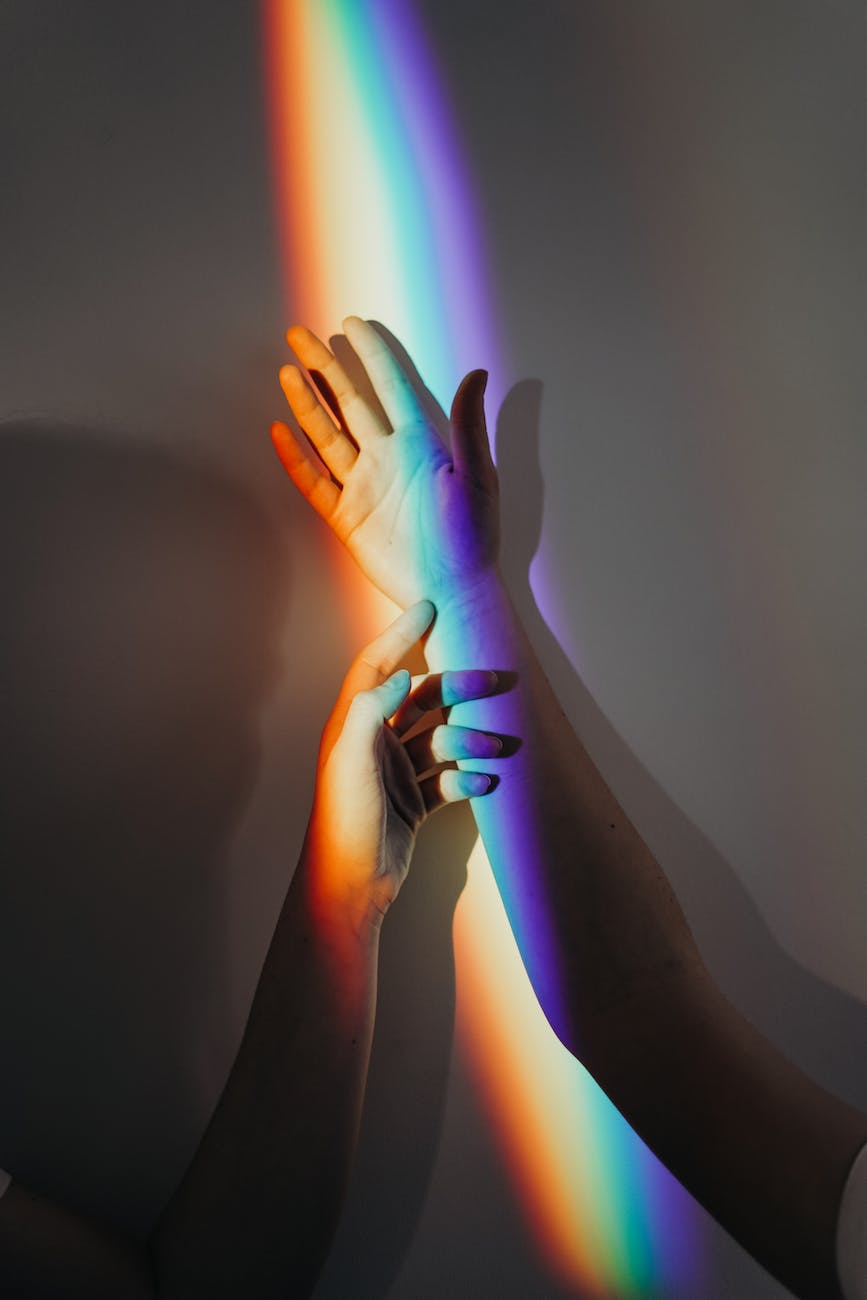
Image showing two arms reaching out in a dark room, with nothing but a rainbow cast on them.
Photo by cottonbro studio on Pexels.com

This brings me to my question of life burnout; disabilities, sexual minorities, gender, race, and so much more just all gets so jumbled and oppressed and underrepresented and killed and hated and feared and stereotyped and the list goes on. Everything happening in Israel and Palestine adds to it and amplifies the hate that is going on in our life right now. I’m lethargic, tired; why can’t people just see other people and be positive or indifferent instead of choosing hate? And if choosing hate, why do people have to kill? It makes no sense to me and on top of having to find a career after graduation, pay a mortgage and insurance, and actually grow up and get old terrify me and I just feel stuck. That’s my experience right now. I know it will come to pass but having these negative ideas and events pushed and pushed and pushed onto me don’t help and only make me more upset as a human being.

Crocs: Come as You Are

Crocs: Come as You Are

I don’t think it was until the Covid-19 pandemic that I first gave RuPaul’s Drag Race a watch through (of course I had to start with season five, because Jinkx Monsoon is a literal legend). I remember hearing about how much drama there was, I’ve known a couple of the winners through the avenues of Twitter or Instagram, and I always thought that drag as a cultural phenomenon in the LGBTQ+ community was insanely unique in the way that it distorts the socially constructed concept of gender and makes fun of the social expectations of both men and women in their outward representations.

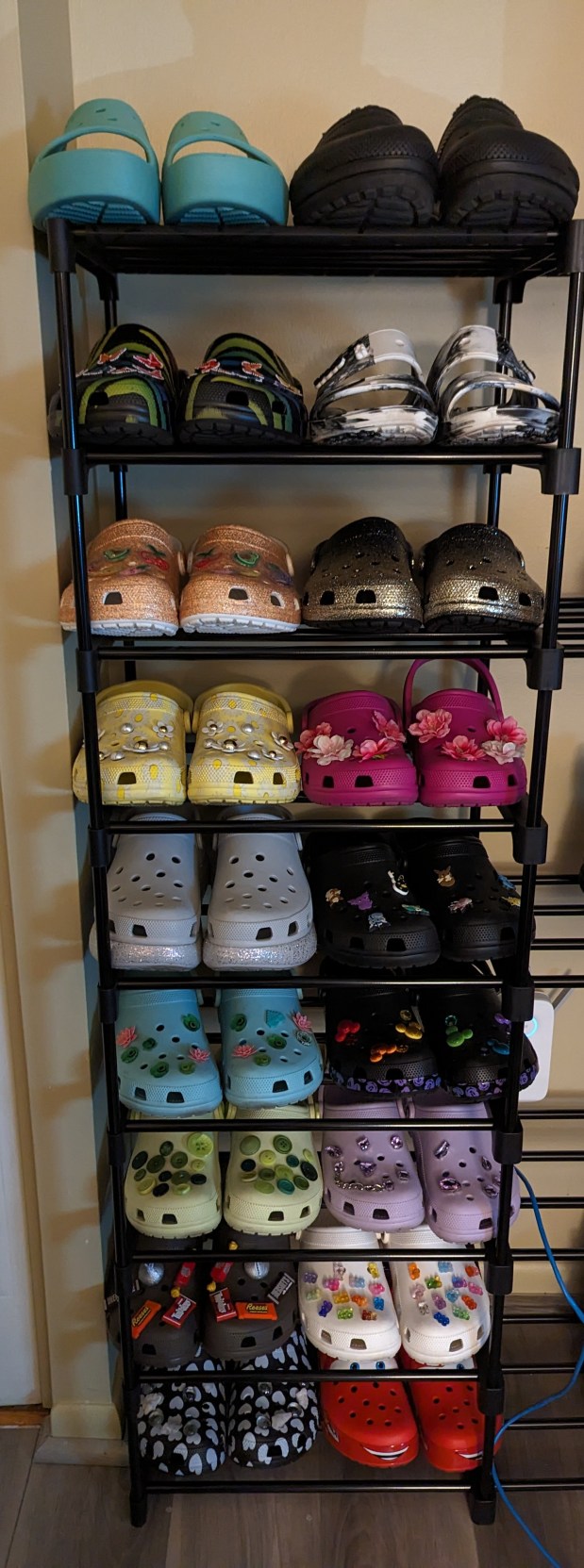
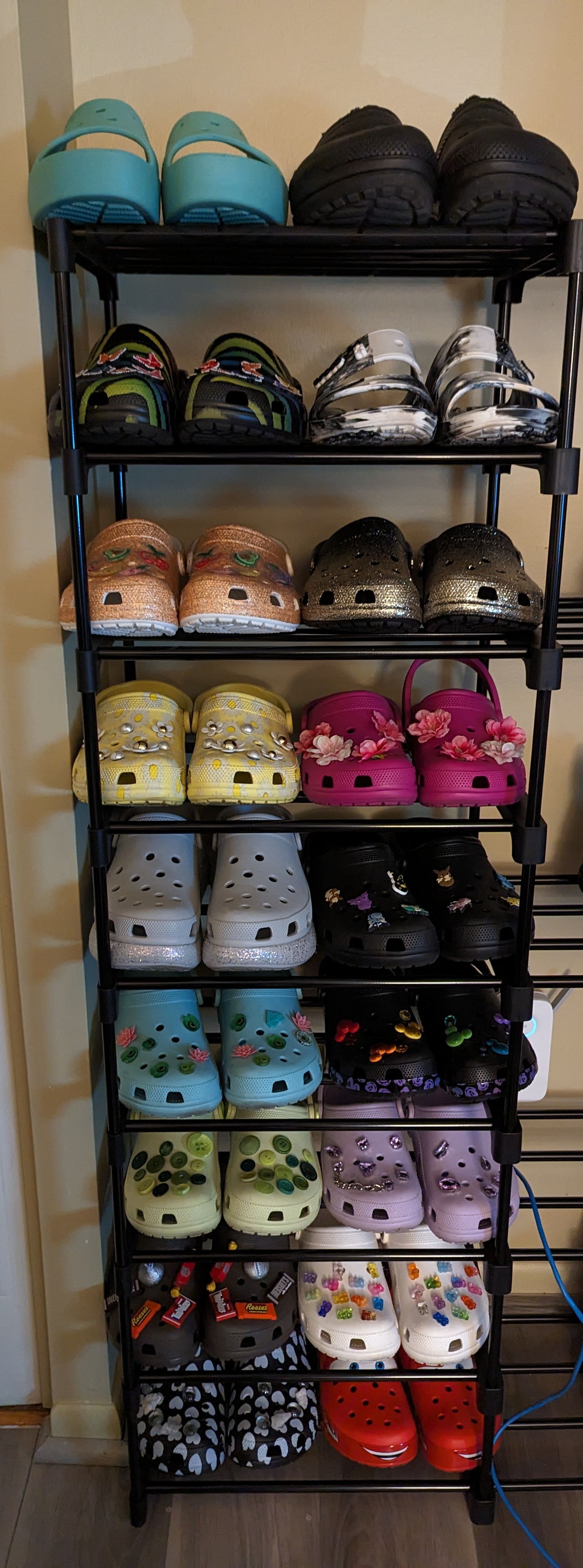
After I caught myself up with the American seasons of the franchise, I explored the ways that I feel and express myself outwardly, and while I don’t know makeup or walking in heels, that’s where the Crocs slogan, “Come as You Are,” emerged as my segway into my own form of drag that I continue to own to this day. I own over ten pairs of Crocs since I work at a shoe store, and I tailor every single pair to a color or style or concept. Just look at the image below:

18 pairs of Crocs arranged on a shoe tower, with different colors and accessories for each. Meant to supplement the reading.

Ranging from gummy bears on my white Crocs as a low-key form of gay Pride, fake cherry blossoms on my magenta Crocs, and green buttons scattered around on my lime Crocs, the way that I choose to decorate my Crocs with the best invention in the world, Jibbitz (that I only order custom ones of since they are cheaper) gives me the option and mobility of being me and allowing my creative side to flourish.

And I think that’s where I connect with phenomenology; when I wear Crocs with the pieces that I got to choose or make and I know no one else probably has, I feel independent. I feel happy. I feel energized and enriched. I see others look at my Crocs. I see others judge my Crocs. But I do not care. 

The feelings I feel and the experience of how I came to try on my first pair to owning over ten pairs is different than any other person’s experience with Crocs. Most people compliment them, and it only makes me happier because I put a lot of work and care into how they are presented with tailored outfits or shirts to match. It became my sense of style and how I express my ideas to the world around me, allowing others to see me in the context of fun or creative.

Drag is hard: wig glue, wigs, heels, corsets, dancing, singing, comedy, splits, dips, makeup, names, eyelashes, dresses, earrings, jewelry, custom outfits, and energy; but with me, my drag is in the Crocs of it all, and I hope everyone around me sees that.