The Sound of the Soul

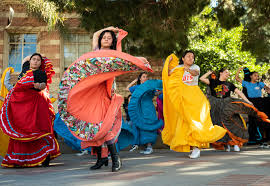
I often lose myself to music, let the song pick up and carry the emotions I don’t have the words for, allow my mind to drift and my body to move in whatever way feels best for it in those moments. With joy, excitement, sensuality, silliness, vibrancy I may dance. A simple sway to carry my sadness, yearning, heartache, hope into the world. Jumping, yelling, crying, shaking the walls of my home in vengeance, anger, reclamation. And sometimes absolute stillness, a quiet rest for my body while my mind runs through the world of the song and creates the movement and emotion and expression behind my eye.

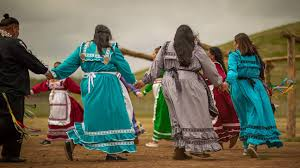
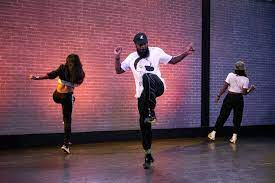
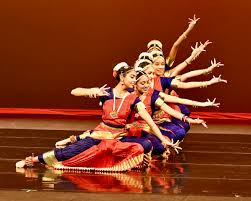
Songs, I truly believe, are the sound of the soul. The way our spirits communicate the things we know but can’t explain, the lessons we internalize and let spill out with our voices and bodies. The communion between ourselves and those we love. What feeling is better than the one we share when enjoying music and dance with those we love. Driving with the windows down screaming lyrics at the top of our lungs, choreographing stupid little dances to a favorite tune to share with the world, learning the steps to a dance number for a celebration or just for fun, going out for a night of karaoke or dancing at the bars. These are the moments that feed our soul, that relieve the burden of living for a moment and lets us fly. This is what music and dance is to me. My friend, my comfort, my dictionary. The catharsis of movement, of sound, is healing. It is why we listen to sad songs, to angry songs, to happy songs. The range and depth of music tells so much of its own story and purpose. It is art. It is life, in its many forms. It is history.

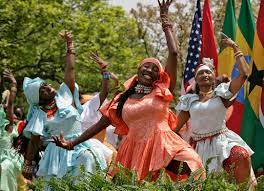
The form and matter of dance tells us so much about who we are, where we come from, how comfortable we feel in the world, how we feel in time. It is a diary of who we were, who we are, who we want to be. Without song and dance, the world would be dull and lifeless, empty of that magic that makes life worth living.

Brain dump

These last few weeks of topics have been incredibly hard-hitting, drudging up many of my own experiences and frustrations, as well as igniting my excitement to share what I do know or hear what others have learned. Neurodivergence, disability, chronic illness, depression, bodies and their accepted forms. It has been overwhelming at times.

I often find my brain caught in a loop trying to process the emotions of my own experiences, trying to process the experiences of others, trying to find an answer, a solution to this fucked up world. All I can come back to is There is no winning. It is a phrase that I first iterated as a teenager, and have never been able to let go of. At that time, it was in reference to toxic parental relationships (still is sometimes haha). But I have found it over and over again in so many different aspects of life. Medically, for me there is no winning. If I am right about what is going on with me, my body is broken, sick, abnormal. If I am wrong, it is all in my head and everyone was right, I am just anxious or need to eat better or need to just toughen up and push through and “learn discipline”. When it comes to the world and its flaws, there is no winning. I can’t fix the socializing factors that create the horror that is racism, misogyny, white supremacy, genocide, ableism. I can do my part to not contribute, I can do my best to combat the systems in place that create those, but there isn’t enough time in my life nor energy in me to truly fix it, change it permanently. It can’t be done in one lifetime. And it breaks my heart over and over again. We’ve discussed recently how even in a small scale, adjusting to accomodate and correct for one person or experience can have a negative impact on another. We can’t create a space where every individual person is able to be comfortable and free and happy at a basic level–depending only on physical and emotional needs, spaces with lighting levels and seating and maneuverable space and learning formats or communication formats suitable to every person, where stims of any kind are acceptable. The alternative is creating separate spaces for different needs and desires, but to me that borders on segregation and isolation once again. We move all the people who can’t function in the “common” way into a new space but isn’t that the same as just telling them not to come at all. And that is before thinking about the resources that would require, the infrastructure, the training, the social relearning and culture shift that would have to occur. And how do we globalize that? Is it even possible? There is no winning. We can’t force entire cultures and countries to alter their traditions and ways of life, and so many of those are firmly and strongly holding to the truth and righteousness of their beliefs and thus the wrongness of any others and how if it is wrong it cannot be tolerated.

I suppose that I would at least like to start. I want to create one place in this world where some semblance of balance and peace and compassion can exist, where the voices of the wronged are heard and reconciled, where people are respected without a question or hesitation. I want to live in a world, or at least a country, where the focus isn’t on how much we can squeeze from someone, how much we can get away with doing the bare minimum for those around us so as to avoid punishment and consequences, but rather focused on how we can serve and support the people around us. A communal world, not a individualistic world, where differences in mind body and soul are valued and honored and treated as opportunities to learn and grow rather than as challenges to overcome.

I am so sick of existential crises. I am so sick of being sick. I am so tired. I just want joy to thrive. There may be no winning, but it doesn’t mean I can’t keep fighting to create that world.

“Wish I’d known it was just our turn (we just got by)
Being blamed for a world we had no power in (but we tried)
You and I had nothing to show (we didn’t know)
But the best of the world in the palm of our hands (anything, darling)”
This line is one that plays over and over, capturing that feeling of helplessness but determination to make the best of it. Each turn around the sun gives us a chance to leave it a little better than we found it.

My job isn’t to convince you (Why I shouldn’t have to explain myself):

Whose business is it if I decide to get medicated, ask for a diagnosis, seek resources & aids to make my life easier & more comfortable to live? If I decide to avoid certain kinds of movement or exercise (even if they’re “healthy”)because it hurts me or makes me sick? Who gets to decide whether I’m telling the truth or not? I’m too young to be complaining? I’m too fit to be sick? I’m too functional to be in pain? I’m just lazy, or looking for an excuse, looking for attention? Am I still just looking for attention when I’m home alone, curled in my bed & unable to sleep due to pain? How about when my bones pop or roll or twist with a simple movement? Do the digestive issues only occur when its convenient for me? The migraines you never hear about? 

These are the thoughts that cross my mind whenever conversations around work, disability, and mental or emotional health come up. I remember the first year I really started to pay attention to the pain. I was so confused, so stressed & frustrated. What was wrong with me? I couldn’t believe I was truly that out of shape. I was training every day! I was working my ass off to keep up. Everyone else was doing just fine, maybe struggling, but managing, getting better, stronger. So was I just weak? Did I simply lack the mental toughness and willpower to be better? They tried to convince me that if I just worked a little harder, wanted it a little more, took a little more care of myself that maybe I would be fine. Told me I just had to change my attitude, change my diet, push myself harder. So I did. And I got worse. And worse. It didn’t matter how much or how little I ate, how “healthy”or “unhealthy”. I lost almost 25lbs in a 10 day period. Still couldn’t run any faster, still felt so much pain, still was injured. My ankles couldn’t bear the intensity of the training, my wrist was crumbling, my lungs couldn’t give me enough air even with months of conditioning, my brain tortured by migraines that lasted weeks at times. My commander said it was just me, my peers said it was all in my head, my parents asked me if I just didn’t want to admit that I didn’t really want to be there and just needed an excuse to leave, my doctors told me everything was normal. So I just pushed through. After all, if even my doctors are saying nothing is wrong then there must be nothing wrong, right? So I pushed through. I pushed & trained & restricted & ignored the cues of my body because how could I trust myself when everyone else doesn’t?

I stopped getting a period. I ran on shin splints and sprained ankles. I developed an eating disorder. And I got worse. And worse. Until I had had enough. I began demanding to be heard, to be helped. Began telling my parents to take me seriously, to believe me when I said that I wanted to be there, I just didn’t want to be in this kind of pain all the time. It took two years to eventually get one issue diagnosed. A hormonal problem, impacting my body’s cortisol & functionality. It’s taking even longer to get to the root issue, though I’ve long suspected the truth. Chronic pain, stress, fatigue, emotional turmoil. I am disabled. I am disabled? Such a simple declaration that comes with so much attached. Am I allowed to claim that before I am officially diagnosed? Does my condition count? If nobody sees it, is it real? If it only bother me, does it matter? And what of the social & professional consequences of disability? That is where my mother has begun to focus now that she understands I am not just weak or faking it. Being disabled has made it difficult to work, and I do worry about applying for jobs post-diagnosis, about requesting accommodations. I don’t want to disclose my condition prior to onboarding lest it does impact my hireability. It’s infuriating at times. Being around new people, talking to friends or my family about what I’m experiencing, what I’m trying to manage, the appointments I have coming up, trying to explain WHY its so important to me to be believed, to be diagnosed. So many aspects of life are impacted by having a disability or disabling condition. It is neither purely medical, purely personal, nor purely social.

And so I ask. Whose business is it?

These songs make me think a lot 🙂

The Body as an Entity

There is something strange and unsettling about living within a body and at times being so keenly aware of that body, and at other times observing this thing from the outside. One moment, feeling every nerve, every joint, ever stretch and tensing of the muscles. The next, existing solely as a hypothetical. Understanding that there is a body in which you are tied, but not having any real sense of what that means.

I often struggle to feel control of my mind and body. Between chronic pain and fatigue, grueling mental stress, and an innate distrust of my own perceptions, there is no wonder why I journey through these phases of sensory overstimulation or complete dissociation. My body often feels not like a safe haven or a medium through which I can experience the world, but like a thing that I must manage and shape and drag through the day with me. To me, my body has rather become like an entity. A thing of its own, with its own experiences, goals, abilities.

Young writes, “We often experience our bodies as a fragile encumbrance, rather than the media for the enactment of our aims” in Throwing Like A Girl. And how true these observances ring for me! As a child, I had trusted my body so much. I hiked and climbed and ran and I was a gymnast, performing stunts that required so much control and trust in my body. But as I grew older, I was cautioned and held back and encouraged to be less rambunctious, to be more ladylike, to be safe, calm, quiet. I was inundated with the fears and anxieties of my mother, with the expectations of politeness from my church and school community, with the judgment from the other children at school, encouraged to become something digestable, something other than the rowdy and adventurous child that I was. I tried desperately to be what everyone wanted me to be, to be likeable, to escape from the constant deluge of opinions and rules and admonitions. I ran away into my mind, focused on school, read books, read people, became a chameleon. I stopped running, playing. Had to quit gymnastics as we moved, and never joined another sport, lost touch with my body. I became so lost, so depressed. I wasn’t myself, didn’t know who “me” was or could be, didn’t know how to find her. I was terrified of being perceived yet so vastly lonely and desperate to be seen. I didn’t know how to reconcile these opposing needs, and my brain learned how to just turn off, to walk away from it all while my body went through the motions of the day. I was not living an embodied experience, in the way that Kosut and Moore describe, or really even living at all. I simply existed.

It took me being harassed and assaulted to hit my limit, to decide that I needed to be present within my body, to be a person again, or at least try, before I really went off the deep end. An intense anger fueled me for two years as I worked to learn who I was, what I thought and believed, gave me strength to shed the skins I had grown to disguise myself, to shed the need for approval, to be willing to stand as a person outside the expectations of my parents, of my peers. It took another two years to realize that part of why I had struggled so much in the first place was that I was raised and expected to behave and think the way a neurotypical person would, but I wasn’t neurotypical. Definitely ADHD, most likely autistic, my brain functions so differently from what was seen as “normal” and when I expressed those traits it was labeled as weird or defiant or annoying. I learned to mask those traits, my body learned to turn itself off and dissociate in order to fit into the expectations of those around me. When I realized those things, I finally began to come back into my body, to feel as though it were MINE. And then the consequences of long term shut down and chronic stress began to take effect. Chronic illness struck, pain and hormones and fatigue combining to make this body that I had once trusted my enemy. I sought the things that had brought me a sense of joy and freedom and belonging in my childhood, ran back into nature. But now, I was living in a body I didn’t know, one that had changed with age and had betrayed me. I monitored myself constantly, hedging myself, not taking any risks lest I create more pain for myself. I lost my sense of wonder. Like Young, hiking across a stream was not something I could do without thinking, without planning, it was something to assess, to plan. I needed a safeguard, that branch from the tree to balance me. I had spent so long not using my strength. my balance, my physicality to exist in the world, that to do so now required energy.

I miss myself sometimes, that young girl who might have made a game of jumping from rock to rock to cross a stream, who would have climbed to the top of the pines and swayed in the wind with them, who might have sprinted across a field without fear of rolled ankles or a migraine that lasts a week. I grieve the woman I could have been without fear, without the strain of existence weighing her down, that caused her to lose herself so thoroughly in her youth. I wonder what it would be like to live fully within my body, what it would have been like to live without pain and fatigue, had I had the chance.