
MENTAL DISABILITY

MENTAL DISABILITY

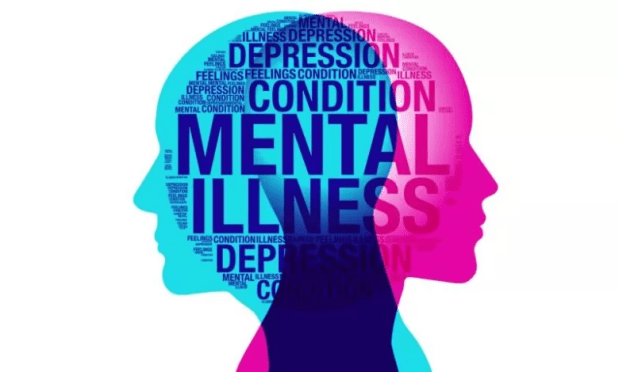
A mental disorder is characterized by a clinically significant disturbance in an individual’s cognition, emotional regulation, or behavior. It is usually associated with distress or impairment in important areas of functioning. There are many different types of mental disorders.  Mental disorders may also be referred to as mental health conditions. The latter is a broader term covering mental disorders, psychosocial disabilities and (other) mental states associated with significant distress, impairment in functioning, or risk of self-harm. (n.d.). Mental disorders. World Health Organization. Retrieved December 9, 2022, from https://www.who.int/news-room/fact-sheets/detail/mental-disorders 

In 2019, common mental disorders around the globe include depression, which affects about 264 million, bipolar disorder, which affects about 45 million, dementia, which affects about 50 million, and schizophrenia and other psychoses, which affects about 20 million people. Neurodevelopmental disordersinclude intellectual disability and autism spectrum disorders which usually arise in infancy or childhood. Stigma and discrimination can add to the suffering and disability associated with mental disorders, leading to various social movements attempting to increase understanding and challenge social exclusion.

Today, there are multiple dimensions or types of mental health-related stigma, including self-stigma, public stigma, professional stigma, and institutional stigma. People who suffer from mental health issues are considered MAD. For people with mental health issues, the social stigma and discrimination they experience can make their problems worse, making it harder to recover. It may cause the person to avoid getting the help they need because of the fear of being stigmatized.

Personally, I work at a mental health clinic where alot of people are being judged, stigmatized and discriminated by both family and friends. This stigma makes it hard for them to cope, and believe in them selves. Many people with serious mental illness are challenged doubly. On one hand, they struggle with the symptoms and disabilities that result from the disease. On the other, they are challenged by the stereotypes and prejudice that result from misconceptions about mental illness. As a result of both, people with mental illness are robbed of the opportunities that define a quality life: good jobs, safe housing, satisfactory health care, and affiliation with a diverse group of people. Examples of these stigma or misconceptions include; persons with severe mental illness should be feared and, therefore, be kept out of most communities;  persons with severe mental illness are irresponsible, so life decisions should be made by others. All of these are very inaccurate.

However, understanding, being non judgmental and supportive is key to developing a healthy space for people with disability.  Joining a mental health support group either online or in person can help you deal with feelings of isolation and make you realise that you are not alone in your feelings and experiences. Also, Do not define yourself by your illness as other people might. Instead of saying ‘I’m schizophrenic’, say ‘I have schizophrenia’. because you are not your illness. Lastly, Remembering that you are not alone: Many other people cope with similar situations. People commonly struggle with depression, anxiety, substance abuse, and other mental illnesses.
ADULTS AREN’T “AUTISTIC”

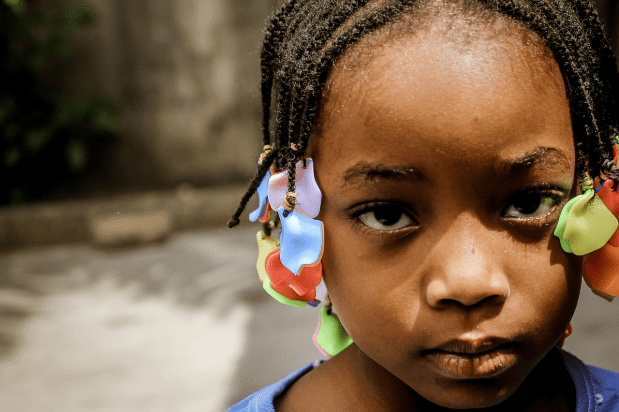
Autism spectrum disorder (ASD) is a developmental disability caused by differences in the brain. People with ASD often have problems with social communication and interaction, and restricted or repetitive behaviors or interests. Autism is so predominantly considered a childhood disability that some autism “advocates” claim that autistic adults do not even exist. Alot of person with autism are Infantilize and reason being children are not able to tell their stories and the adults/organization/media who tell the stories, tell these stories how they’re deem it necessary. Shocking fact is ” DO PEOPLE ACTUALLY AGE OUT OF AUTISM” When I hear people say autism is a child’s disorder, it is really weird.

I listened to a podcast by Lyric Rivera, an Autistic self-advocate from Texas, who shared her personal experience of being considered a child because she is “autistic”. She stated that one of the most gross experiences she had with being infantilized as an Autistic Person, specifically, was when she was traveling in an airport. She stated was asking for help on how to find her flight and needed the guy behind the counter to help her out but this person was getting very snippy and impatient, “I said, I’m sorry. I’m not trying to be difficult. I am Autistic and I am struggling to hear what’s going on in this environment”. Immediately, this person stated giving her directions like a 2 year old and started treating her like a lost child. She said it felt really terrible.

The press/media today, shows mostly pictures of children with autism. because parents of autistic offspring promote children, rather than adults, as the face of autism, charities limit much of their discourse to child-based references, and the entertainment industry restricts autistic characters to mostly children. Additionally, When writing news articles about persons with disabilities, reporters historically focused on the emotional aspects of disability, utilizing belittling language (e.g., “suffers from”). Labels like “the naughty child”, “the disruptive one” or “attention seeker” is put on children with autism or any other disability or impairment because we are not all the same. Also, labeling the individual with the disorder like saying ” an autistic person”. This is really sad.

There are lots of effects/ consequences on adults with autism. Firstly because of the perception that adults do not suffer from autism makes it difficult for them to have support. We need to see more autistic adults. We need to use that phrase until it stops being weird to hear it. Infantilizing autism hurts everyone who is part of the equation. Parents, who live with perpetual feeling for their children seemingly uncertain future. Autistic kids, who grow up without being exposed to proper representation. Autistic adults who, since for some people don’t even exist, might not receive the support they require.It is time to bring all autistic people into the conversation. After all, who better to provide the story than those who have survived the judgment of society. Autistic men and women have a lot to say. The true harm comes from not listening and putting an end to segregation and discrimination that occurs up till date.

Maternity mortality and Morbidity

Maternal mortality refers to the death of a woman from complications of pregnancy or childbirth that occur during the pregnancy or within 6 weeks after the pregnancy ends. Maternal morbidity describes any short- or long-term health problems that result from being pregnant and giving birth. Approximately 700 women die in the U.S. each year because of pregnancy or delivery complications, but an estimated 60% of these are preventable. Maternal morbidity affects approximately 50,000 to 60,000 women each year, and the numbers are increasing The United States which is one of the most developed countries in the would have such high rates in maternity deaths and there are extreme racial and ethnic disparities in rates of pregnancy-related death. Women of color especially black women are four times more likely to die during or after childbirth than their white women. 

Women of color are often not taken seriously when they talk about being in pain or discomfort. In addition, birth options are not even offered so, and these women have no choice but hospital delivery which usually tends out to be a C-sections. I would say as a black woman I haven’t had a child yet but when I hear experiences of black women during pregnancy and after childbirth it is really scary. My coworker shared her experience having a baby where more than 15 resident doctors where in the delivery room. She stated that up till date she experiences PTSD on the situation and even when she complained about being in pain, they weren’t taken seriously and was told she didn’t need pain relief and black women can handle pain very well. I think black women should be given the options and talked about these situations, because pregnancy and childbirth can be a traumatic experience and it is important to make this experience less traumatic. 

After watching the documentary “Aftershock” there is a lot I learned and took into consideration. Black women in between 845 and 1849 were used as experiments. Sims the father of gynecology used enslaved black women to develop his techniques for surgical repair and these surgeries were done without the use of anesthesia. This is really sad to know how much pain these women were in. 

Mothers who use midwives and doulas are more likely to experience physical, emotional, and informational support during labor, birth, and in the immediate postpartum period. Women of color should be given more birth options as to whether they would like to have a hospital birth or have their child in a birth center. Personally I would like to experience giving birth at a center and having a midwife and doula throughout my pregnancy.

IMMIGRANTS AND RACISM

IMMIGRANTS AND RACISM

The history of migration and immigration in the United States is one of the dominant forces shaping our experience of race today. Race does not biologically exist, yet how we identify with race is so powerful, it influences our experiences and shapes our lives. In a society that privileges white people, whiteness, and racist ideas are considered normal throughout our media, culture, social systems, and institutions. When someone makes a racist comment toward you and you are able to point it out, they are so fast to be justify their actions or explain why they said what they said. As an African, from Cameroon, West Africa, it is hard to ignore these issues. I remember my experience going out one day with my uncle when I just moved to the United States and meeting this “White lady” who completely assumed that, because I was from Africa, I couldn’t speak English, which was a stereotype. It is quite unfortunate that people stereotype others based on what they look like and where they come from.

Racism however, is the unfair treatment of people based on their skin color. Although, racism is an individuals mindset and actions. Racist policies can also contribute to historical oppression of what black people are experiencing today. I would also say feeling empathy for black people is okay but as black people we are able to share similar stories and it is easier to share our experiences of racism. As an African, I see and experience racism a lot, at work, on my regular day-to-day life and a lot of other scenario. According to Linda from the text, As of 1992, black and Latino men working full-time in the USA earned an average of 68 per cent of what white men earned, while black and Latina women earned 59 per cent. As of 1995, Latino and black unemployment rates were more than double that of whites.5

Racism takes different forms like individual racism when someone makes racists jokes like hiring a black person doesn’t feel like. Interpersonal racism​ occurs between individuals. These are public expressions of racism, often involving biases, or hateful words or actions. Institutional racism​ occurs in an organization. A school system where students of color are focused in a particular school or crowded in a particular classroom. Structural racism​ is the overarching system of racial bias across institutions and society. This is stereotyping people of color especially black people as criminals. The most important way to resolve these issues is ” IF WE SEE SOMETHING, WE SHOULD BE ABLE TO SAY SOMETHING” even to the people we love. These biases wouldn’t die if we are not willing to say something. We should be willing to tell people “they do not call people that anymore, or say someone deserves to go through that experience”. We as a country have made progress but we need to do better, because our children are watching and listening to every conversation. We still have these old stuff about white superiority and it is causing us to embed in our society-and it is making despair, causing disparities and devaluing of black people. I’ll also say the main focus here is not to be racist or not racist but identifying racist and antiracist. Because saying “I am not racist” is being in denial.