Disability: What is it?

Disability: What is it?

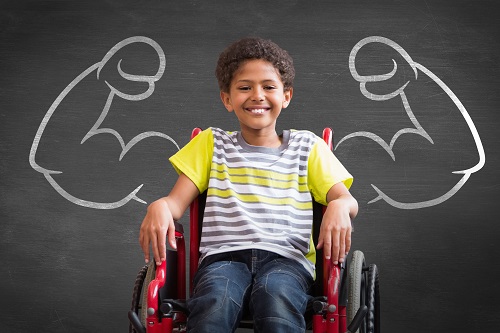
Is disability truly disabling? Is it something that our society has deemed a burden? Because when I hear, and frankly the experiences that I have witnessed, of disability, one of the things that I haven’t seen in our times is the ability to communicate exactly how disabling it is to be labeled as disabled. We focused on the studies of disability, disability justice movements, and a host of other things that affect those that have been diagnosed with visible and invisible disabilities. This blog will be more personal for me and as I share some of my deepest moments, the main takeaway that I want you to receive from this blog post is to continue to stay positive – to make a change for those that you may never encounter, but that might need your voice, words, actions or even kindness.

            Over the last few weeks, we have studied a range of topics from Stigma and illness to Autism and Neurodivergence. Sadly, I have experienced a new understanding of disability as of late. My brother recently had some health implications and has suffered from a major debilitating event that has left him with a type of impairment. It sucks. Nah, that doesn’t describe it well. It. Fucking. Sucks. I can’t make that up and act like it doesn’t because all I can remember is an annoying younger brother. Granted, he’s still annoying (lol) but it’s different from our childhood and his diagnosis has taken a toll on our family. I am grateful that he is still around, don’t get it twisted. I just know that he’s changed; I would argue that it may have been for the better… I shared this with you for a multitude of reasons, but the biggest one is to inspire you to make a change.

            Within the disability justice movement, there are active movements that focus on actionable attempts to support those people with a disability. I think the most noticeable changes we have seen over the last 20-30 years would be the implementation of accessible sidewalks, wheelchair access, and even brail lettering for those with vision impairments. I think this shows that our society is moving towards a more positive environment and losing the influence of the social model of disability. In return, I challenge the reader to take a step to aid someone with a disability. Be kind to those that you meet. Advocate for some type of change in your realm of living that could positively influence those that have some version of impairment. Connect, talk, and be with someone that may be dealing with something you have ZERO knowledge about. Those moments might save their life and give them a greater sense of purpose.  
“You’re Really Good At Taking Everyone’s Sh!t”

“You’re Really Good At Taking Everyone’s Sh!t”

Whose Fault Is It?

Emotional labor is the act of “regulating or managing emotional expressions with others as part of one’s professional work role”. For the context of this blog post, I will also be referencing emotional work as well, which is the role people use in any social context.
RANT: Every post, YouTube video, and link that I looked at typically focused on the emphasis of how women have been the brute focus of emotional work and often, labor. WHAT ABOUT THE MEN?!
BLOG: Ideally, men have been the focus, but in our current generation, I am starting to wonder if men are becoming the scapegoat for blame. There are good and bad things to this, but I can only share my experiences. From growing up in a household as an adopted child to working in hospitality at some of the best hotels in the Houston area, to coming home and being expected to “clean up everyone else’s shit” (one of my ex’s fathers literally told me this and suggested I work for some type of plumbing company) to experiencing my own version of emotional labor is…exhausting. As a recommendation, if you’re dealing with being the emotional laborer of your family or workplace, I suggest counseling, good friends, hobbies, and money.
Now that I have your attention, the emphasis on emotional labor during this period of the class was for women. Honestly, I love that. Often, the strongest women in my life have carried the emotional labor of EVERYONE in the family. My Grandmother (capital G, because she truly is a G), and my Aunt (who raised me, God bless her soul) have not only raised multiple members of the family but have guided others and influenced people for generations to come. I can endlessly explain what they have done for everyone, including my impaired brother (this falls into the disability category of the past few weeks, but I decided to not go in-depth with these issues and instead focus on emotional labor…anyway) My Grandmother has done amazing things as a widowed woman, and when my grandfather was alive, what I recall of him, he was a remarkable man, veteran, and overall generally good person. In order for him to be that he needed to have an even stronger woman there to not only support him, but to motivate and guide him. We so often focus on a certain gender, but I think its vital to focus and include everyone because we cannot physically do it all on our own – even if social media suggests that we do.
When it comes to emotional labor for myself, as an older male, I grew up with the family vibe of “you want it? Do it yourself” This mindset has its own version of toxic masculinity and it worked for a time, but as I have grown older and started practicing gratitude, meditation, and fitness, I have learned that kindness is the key to growing. However, that is also the curse of being easily manipulated and being the scapegoat out of a lack of emotion – if you allow yourself to be. When working as a hotel supervisor, I found myself taking on the emotional verbal abuse of people that travelled so far and attempted to check in, but one minor inconvenience (Well…one time there was a major inconvenience, we sold out and by the time they got there…the people didn’t have a room… and they were diamond members which is equivalent to being a traveling version of Karen) set them over the top, and I had to apologize profusely, make up for their issues by giving them a free nights stay at another hotel, etc… all while keeping a smile on my face. So dumb, but it was vital in learning how to maneuver around people when they are angry and teaching myself how to stay calm in the face of disappointment. That’s an invaluable trait and lessons/memories that I am grateful for.
I don’t know, I am a believer in the idea that everything happens for a reason. Maybe I should allow myself to be the gatekeeper of my own “shit”, to be more selfish and selfless at the same time, and to lack the attempt to understand everything and everyone around me but I cant do that shrug. In essence, I think all of us must have some type of role in emotional labor, but please, don’t forget to take care of your mental, physical, and financial well-being. Your family, friends, and pets will thank you for it. (I will always choose to be kind and thank you to all of the people in my life, wouldn’t be me without YOU).

“I’m Not Racist, I Have a Black Friend”

“I’m Not Racist, I Have a Black Friend”

For years, I have heard everything under the sun when it comes to being one of the “only’s” in my group. As an adopted and mixed biracial child (27-year-old kid at heart currently), who lived in the mountains of Maryland as a teenager, coming to grips with how the world might view me and my curly-headed naivety was rather unnerving. I came to understand the reference of being the token black friend that allowed for the N-word pass or in other cases, being the only black friend in the class, group, seminar, etc. These experiences heavily shaped my perception of what it means to deal with race.

Personally, I am under the belief that Racism and Phenomenology go together and proclaiming to not see racism or ignoring the effects of racism on our current/past generation(s) is just downright sad. Phenomenology, or in my opinion, the study of the first-person point of view, can contextually be used to define how one person may “feel” in multiple facets of life. Regarding racism, are we to ignore any subject or mention of race, because it did not directly relate to our own lives? Or is race completely made up, and another reason for people to divide themselves from another individual or group?

The biggest change in my feelings of being different, and knowing that I was one of the only’s, came to me when I first heard the N-word, with a harsh r, referenced by a classmate in 9th grade. While it wasn’t said to me directly, it made me immediately focus on the issues behind the people who cannot or will not, for the lack of a better term, filter between what is racist and what may just be an awkward-ass conversation. Being raised within a school that was predominately 95% white was different, but fitting in and being myself was never an issue for me. Hearing the term, “I’m not racist, I have a black friend!” or “you’re not a black person, you’re white” was all predicated-on ignorance and a lack of socialization. I didn’t understand at the time, the importance that we placed on color, but I know what I experienced can be directly linked to misguided views and the sum of young adulthood. Looking back, it’s comedy. Which leads to my understanding of what phenomenology is. Color me shocked after spending at least – 30 minutes thinking deeply about what this long word could be condensed into, but I think the first-person point of view is a great example of what this study means.

When it comes to my personal experiences with racism and bigotry, I feel as if the instances I experienced as a child paled in comparison to others. While extreme to some, I would classify these lessons as just that – lessons. I fall somewhere beneath the idea of creating your own destiny and acknowledging the effects that racism may have had on our entire society. Personally, these instances did not break me and made me even stronger. Hell, now that I am slightly older and have experienced a gumbo-sized stew of diversity in Texas, race means nothing to me. We’re all different and accepting people as different is the key.

As a child, I “felt” as if what I experienced was profoundly true. Even if I was the black friend, call it racist or not, what did that other person feel when they muttered the N-word? If it was of no malice, it’s hard for me to take that comment personally. If I meet someone from a completely different location, that had a different lifestyle than I do, how can I not look at them and wonder where their family tree stems from and how that influenced them today? Asking these questions and looking deeper could 1000 percent be me overthinking, but I think that’s exactly what the study of the phenomena is; putting yourself in another person’s perspective and “feeling” (or at least attempting to understand) why they feel the way they do. Hoping for awareness, I have faith that talking and sharing our experiences as a society can aid in the attempt to ensure blatant racism does not continue to effect generations to come.