
Parallels Between Dance Expectations and Society

During class, we talked about dance, and one of the things that was brought up was that dance in other countries (specifically in Europe) is funded by the government. It made me wonder about the traditional (ballet) aspects of dance played a role into how dance is now as an artform. We could even look at societal standards and see how that plays out.

First off when ballet was created, only men could perform, which is so funny to me because ballet is so feminized now. But I believe that dance and hierarchies and such are exactly the same. Back then, women were expected to be modest and be elegant “garden fairies”, which is accurate to their expectations at the time. Think of Snow White, and that’s who women were expected to be like. Very “men save the princess”. Female dancers were only supposed to look graceful at the time in society, and men were supposed to be suit and armor knights. That is just gender roles alone.

Looking at the capitalist structure of our government, dance is also a pretty accurate mirror to corporate society. For example, the large companies are considered the representation of dance, such as Alvin Ailey, New York City Ballet, and some other bigger ones. Dancers fail to think about the smaller companies and projects that are more inclusive and overall better work environment. It’s the same as the government in that aspect. People think of the corporate organizations such as Starbucks first before considering local coffee shops. That is very much the exact same way it is in dance. Dance has it’s own little structure that matches exactly how corporate America is ran. That is crazy to me.

Because of that way of thinking, that makes a career in dance a lot more viable than what people originally thought. It is still going to be hell to find a stable job, but thinking about smaller dance companies makes things a lot easier as an adult.
Being Neurodivergent in the Dance World

I feel that being neurodivergent in any and every environment is way harder than it should be, but being in a disciplined environment such as dance, can be excruciating for a neurodivergent person. In that world, it is near impossible to unmask for a minute and express yourself. The fact that dance is an art form makes this fact ironic, but true.

One of the issues I have ran into being both neurodivergent and a dancer is that we are told when we are allowed to step out of the room and/or take a water break. I need to be able to step out of the room, or I run the risk of my emotions becoming something I cannot mask and control. It’s extremely unprofessional to melt down or not giving 100% all of the time. For me being neurodivergent as previously mentioned, if I am told I am not allowed to step out of class, then I will start shutting down, which looks horrible. Even if I am allowed to step out, it is STILL unprofessional because it has been ingrained in everyone’s heads that we shouldn’t step out of class for any reason.

There are multiple traits in neurodivergency that are frowned upon in dance. We have to be able to pick up choreography fast, I need to work at my own pace. We are told to dance freely, except it’s not actually free, but having to interpret what they want you to dance. I do believe that my opportunities in dance (especially in college) were limited due to my disability and the side effects with that. Dance is a prestigious and overly disciplinary sport, but there is no rhyme or reason for that other than that it is encouraged to have that harsh environment. It’s an unfortunate tradition.

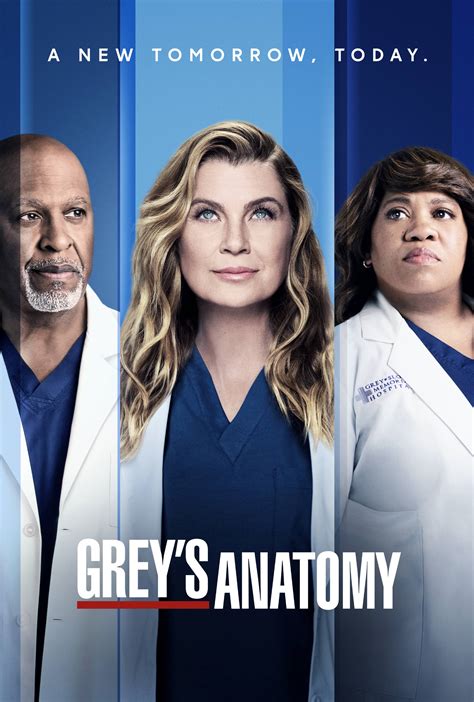
Grey’s Anatomy’s Representation of Black People

I have been on a Grey’s Anatomy binge recently, and as the class was progressing talking about medical neglect people of color have consistently received, Grey’s Anatomy was actively covering it on their episodes. I believe it was on like season 17 during the George Floyd protests. Since those episodes, coverage continued, more representation for other races and their struggles came out. And I was able to learn from those episodes. Their was an episode about a 12 year old kid who came in because he got shot by police at his own home. The kid had lost his key and was trying to climb in using the window. The police saw him and shot him. The kid was conscious at the hospital but died later in the episode. Afterwards, the doctor spoke with a couple of police officers, and the officers claimed that it was a judgement call, which pissed the doctor off (understandably so) because it was not a judgement call, he made a choice to kill that boy. Overall, they do a decent job covering racial issues on the show especially in later seasons, where they show how big events in the real world can affect people. There is another part where a lot of black people were going to protests after George Floyd got murdered. At the end of that episode, a bunch of the patients coming into the hospital as well as the black doctors showed off their scars from past protests and movements. However, they weren’t victimizing themselves, it was powerful. There is a lot more I can add, like there was another episode about an Asian patient who came into the hospital and died because the disease he had wasn’t common for white people, but moreso for Asians. They went into the detail the idea of the importance of considering race when it comes to medical evaluations, there isn’t a textbook method to diagnose and treat someone.

Bodies and Intersectionality

There are so many ways and things that a body represents. For starters, a body can be seen as an object, something that people use for artwork, such as dancing, an inspiration for a different form of art, etc. Also, they can be seen as something sacred to others. This can be a thing mainly for religion but for me, I am not religious, but I still view my body as an entity that I want to protect and shield from others. Other people are the opposite of me, and they love to show off their bodies. To a doctor, a body is seen as a system, with thousands of moving parts in it, and different bodily things. I think the perspective of a body is the identity of the person. Someone who is Muslim would view their bodies in a different way versus someone who maybe is Christian, or Jewish. That is just religion though, there are many portions of a persons identity that determines their perspective on what a body is.

For me specifically, I am an agender, nonreligious person who is a dancer. Being in a very biological sex-specific environment while being agender has affected the way I define what a body is. Being put in situations where I have to wear costumes that don’t fit my gender identity and being treated as my biological sex, it’s taught me to be more protective of my body, and not allowing anyone to force me to wear clothes that causes me to experience gender dysphoria, or put me in a position that forces me to represent an identity that I am not. The way that I define what a body is, is something that you shouldn’t take for granted, something that is special to you, something you should protect.

The definition of a body depends on their overall identity, intersectionality playing a huge role in that. I like to say that religion, culture, and gender are the three biggest components for how an individual may define the term “body”. The definition can also include background, career, and life experiences that pertain to the body.