Adding a little sparkle to your genitalia

ImageWhat would you like to accessorize today? Your ears? Your neck? Your wrist?

Perhaps your genitalia?

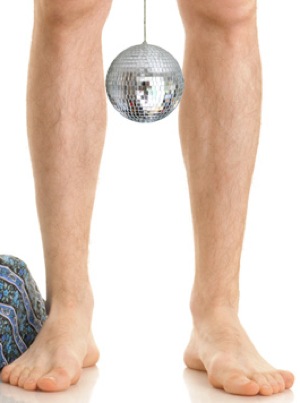
With vajazzling, which is the practice of placing glitter and jewels to the bikini area, and pejazzling, which involves Swarovski crystals being used upon the male genital area, you can now do so.

I recall my initial reactions to the aforementioned practices. I viewed them simply as odd methods of embodiment to engage in, without giving much thought into what they may mean in terms of body-related societal expectations.

While analyzing vajazzling and pejazzling, I wondered about whether or not there could possibly be a link between them and an increasing openness towards body parts that have been considered too taboo to even discuss at times. After all, the method of adding glitter, jewels, and crystals – products that shine, that are meant to be worn in order to increase visibility of oneself – draw attention to the places they are being applied upon. Therefore, it appears as though the phenomenons involve an attempt to incite viewer interest in the genitalia. By doing so, the practices seem to remove the earlier restrictive societal expectations placed upon genitalia (in terms of the encouragement of a lack of thinking about them, discussing them, making them more “apparent”, etc.), and replace them with a more unbarred mindset.

ImageHowever, could vajazzling and pejazzling signal another form of thinking (that may be seen as not so transformative in nature)? Perhaps, they point to beauty standards that are shifting to encompass more body parts (i.e. not just the face) and that delineate that one must consistently change parts of themselves to appear better. In this case, those who engage in the practices could be adhering to a societal ideal that entails they should change their genitalia, or, at least, make it be more visually appealing.

One article states, “following on from the almost cult-level success of the ‘vajazzle’ comes its evil twin brother, the ‘pejazzle'”, delineating that not everyone is all too happy about these forms of embodiment. This may mean that society is still remaining closed-minded about genitalia, that it has not gained much ground in fostering a “need for change” mindset towards the parts, or maybe neither. What do you think?
“Fotoshop by Adobé”, and some discourse on how the media excludes our bodies

I’m not sure how much anyone else has been exposed to people telling them to not trust media images in regards to visual accuracy in depicting bodies, but I have heard that quite often. Speeches on how images of bodies shown in the media have incorporated some form of falseness strike a chord with me, but they often seem to be lacking in one important department: a video representation of how much can be altered, in order to visually prove that manufacturing of a “fake”, so to speak, body in the media is possible with the assistance of technology.

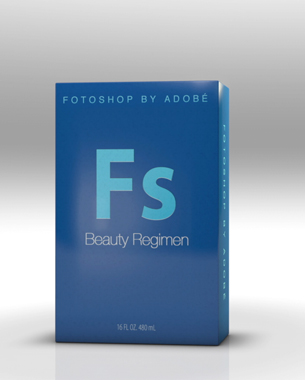
I did not realize this until after I had watched Fotoshop by Adobé”, a video directed by Jesse Rosten that does depict photoshop doctoring of bodies. This editing that is portrayed in the video raises quite a few important points to think about, most generally about the erasure of various bodily features/body types by the media.

Towards the beginning, the video shows a “before” portrait of a female with facial wrinkles (which I inferred to be a depiction of an elderly female), as well an “after” image of a female with no such wrinkles (which I thought was a portrayal of a young female). Clearly, any markings on the face, whether they be natural or not, are subject to censorship. Furthermore, elderly bodies appear to be denied a place in media.

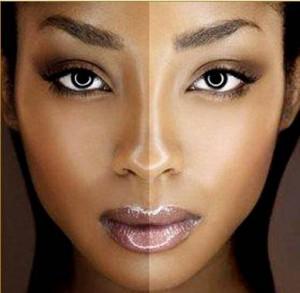
Later, the video depicts a doctoring of a magazine cover that features a female with brown skin into someone with lighter skin. This raises awareness about the omission of bodies with skin tones that are not white/of a light shade from the media. Also, people of color’s bodies seem to be excluded.

Further along in the video, there is a portrayal of the reshaping of a female body from a curvy body shape to one that is less curvier, and once again, the delineation gives attention to the media expulsion of such body types.

It becomes clear, after watching the video, just what the media wants us to see in regards to bodies – and what the media is not showing us. The natural states of bodies continue to be reworked to fit a certain ideal: unmarred, young, light skinned, white, and skinny. In doing so, the “normal” becomes abnormal. The truth about what bodies really look like – that they come in a diverse variety – becomes replaced by a lie that only caters to a certain group.

As one article points out, “…Rosten skewers the breathless tone, too-perfect imagery and dense double-speak of beauty-oriented spots and magazine spreads.”

Bleach is for clothes, not faces (but apparently not to everyone)

I remember hearing about skin lightening over a year ago. I recall being surprised that such a practice even existed, but in retrospect, perhaps I should not have been. The media seems to purport an overwhelming amount of imagery that caters to those with white/light skin (but that’s a topic that may be for another blog post).

Skin bleaching uses chemicals or natural products to lighten skin, and is common in communities of colour. Thus, it is apparent why the practice is problematic: it erases the very aspect of color from people of color.

Interestingly enough, a model who works in Mumbai stated, “obviously what you don’t have is what you want. The Western world, they go in for tans. They want to get a little brown touch to themselves. They think that’s hot…so, what we think over here, since we are brown-skinned people, white is hot.” So, does skin bleaching merely exemplify that people can never be satisfied with their bodies, and that they will always engage in different forms of embodiment in order to change their natural states?

Or, is there a more grim truth?

Lightening the skin can actually be traced back to colonization, when white skin was often preferred. Furthermore, it has been said by psychologists in an article that consumer demand (I assume they are referring to demand for skin bleaching, as the aforementioned article revolves around the topic) can be traced to perceptions that lighter skinned or white people are more sexually desirable, etc. The aforementioned insights appear to indicate that there is a standard of beauty that is playing out here, one that holds that white skin as favorable. Thus, it seems as though skin bleaching is a product of racism.

While thinking about skin bleaching, a few questions came to mind. What if people were to dye their bodies a color that no one was born with (i.e. purple)? What may reactions to that body modification be? Would the modification be considered a product of racism, as it involves a divergence from natural skin color? Also, are there any other forms of body modification that are a product of racism?

Scalpels vs. Needles, and the Body as Art or a Canvas for Art

ImageWarning: this post does contain mention of self-injury.

I recently came across this article on scarification. Scarification is a process that involves using a scalpel to carve patterns into flesh. This may seem gruesome to some, but some who are attracted to it are looking for a way to disguise old wounds. One person who had scarification had been a youth who had engaged in self-injury and said that scarification was a form of reclamation.

What is the purpose of disguising scars with more scars? The idea of putting more scars on top of preexisting scars being reclamation is baffling to me. I can’t help but think that scarification may make self-injury worse, or, at least, make people believe that placing scars on their body is a healthy coping mechanism.

What if someone got a tattoo to cover their scars, though?

ImageWhile scarification carries stigma, the cultural status of tattooing has evolved from an anti-social activity to a fashion statement. Tattooing involves placing needles into the body instead of scalpels. Since both processes involve piercing the body, one may wonder which one is worse – or if they are both processes that are equal in magnitude (i.e. in terms of harmlessness, morals, destructiveness of the body, etc.). To me, tattooing is better than scarification, as in my view, no matter the method, producing a scar as opposed to producing an image that does not resemble a scar (given that one is not attempting to tattoo what looks like a scar onto the body) encourages self-harm. However, I am aware that I can’t speak for everyone.

ImageOn a different note, while thinking about the process of scarification, I wondered about the body as a  work of art, or at least a canvas upon which practices such as scarification, which is done in the name of art may be carried out. Another practice is tattoo art, and one may be able to perceive plastic surgery as a procedure that makes the body a work of art or creates art upon it as it sculpts parts of the body. However, more subtle forms of art/processes that make the body art can be simply applying makeup or combing one’s hair. These processes, although they may be viewed as mundane parts of daily life, all involve “fixing” or “adjusting” the body to create a certain visual image for the viewer (whether that viewer may be oneself looking in the mirror or others). That, to me, is art.

I remain on the fence about scarification. However, I believe the practice can bring about some interesting discourse on what makes a body practice acceptable or not, and on the body as art/a canvas for art.