
Racism is something that has unfortunately been around for centuries. However, with the new breath of the modern-age, it has been argued by many that racism is “no longer a problem”. What so many fail to realize is that racism is embedded in so many things, ranging from popular phrases, to the developments of entire practices of medicine. Because of this, it is impossible to fully remove it, no matter how much of a progressive society we present ourselves to be.
Continue readingracism
The Real Cost of Microaggressions
Constant microaggressions is something that really is a shared experience. My introduction to phenomenology was not that microaggressions takes a large toll. Microaggressions are comments that can be so subtle even I shake it off and disregard it with expression and then internalize it. Whenever I read something in this class, I always find myself reflecting on experiences and realizing how quickly I will “simply” internalize it and not express the discomfort. I put the term simply in quotes because how simple can it be to internalize the feeling of being put in a majority when you are not the same as every person in that majority? For me, the word “simply” in that context is the repeated, chronic discrimination is something that I have had to deal with my entire life. There is never a time when I think about what would be the outcome of this everyday internalized discrimination against myself.
“Perceptual practices can be organized, like bodily movements used to perform various operations, into integrated units that become habitual.”
Alcoff, Linda Martin. “Towards a phenomenology of racial embodiment.”
Alcoff’s article made me critically think about my own and shared experiences with discrimination. In her article, I took away a new perception about microaggressions. I think this shift is because of that “simple” term I mentioned before. Someone in a constant routine usually will start to be able to do those things with so much ease that it becomes automatic. So automatic I never thought about these costs. An emotional performance is put on when faced with microaggressions. An example is suppressing anger. Something you are constantly emotionally performing for is something that takes on the body. That constant suppression can lead to a breakdown and an overwhelming feeling that makes you feel exhausted. Some days there will just be all those performances that take a toll on self-efficacy.


What does an Immigrant Look Like?
After the 2016 General Election in the United States, the tensions between two economically distinct economies have started to rise in the public consciousness. In effect, the perception of minorities, impairments, and any deviation from the cis white heterosexual agenda has been challenged in terms of their acceptance within an American ecosystem and structure.
Bleach is for clothes, not faces (but apparently not to everyone)
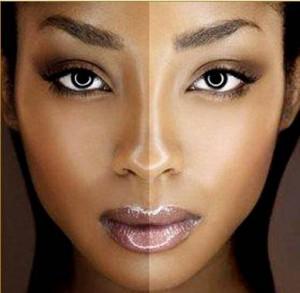 I remember hearing about skin lightening over a year ago. I recall being surprised that such a practice even existed, but in retrospect, perhaps I should not have been. The media seems to purport an overwhelming amount of imagery that caters to those with white/light skin (but that’s a topic that may be for another blog post).
Skin bleaching uses chemicals or natural products to lighten skin, and is common in communities of colour. Thus, it is apparent why the practice is problematic: it erases the very aspect of color from people of color.
Interestingly enough, a model who works in Mumbai stated, “obviously what you don’t have is what you want. The Western world, they go in for tans. They want to get a little brown touch to themselves. They think that’s hot…so, what we think over here, since we are brown-skinned people, white is hot.” So, does skin bleaching merely exemplify that people can never be satisfied with their bodies, and that they will always engage in different forms of embodiment in order to change their natural states?
Or, is there a more grim truth?
Lightening the skin can actually be traced back to colonization, when white skin was often preferred. Furthermore, it has been said by psychologists in an article that consumer demand (I assume they are referring to demand for skin bleaching, as the aforementioned article revolves around the topic) can be traced to perceptions that lighter skinned or white people are more sexually desirable, etc. The aforementioned insights appear to indicate that there is a standard of beauty that is playing out here, one that holds that white skin as favorable. Thus, it seems as though skin bleaching is a product of racism.
While thinking about skin bleaching, a few questions came to mind. What if people were to dye their bodies a color that no one was born with (i.e. purple)? What may reactions to that body modification be? Would the modification be considered a product of racism, as it involves a divergence from natural skin color? Also, are there any other forms of body modification that are a product of racism?

