
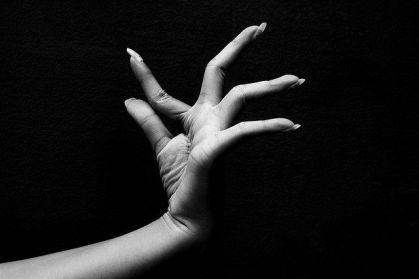
When you think of body modification, what do you think of? Maybe you’re visualizing a person with many tattoos all throughout their body. Perhaps you’re thinking of someone with multiple body piercings in non-traditional places. Or are you imagining someone with different additions to their bodies? Well for me, when I think of body modification I think of dance, specifically Cambodian classical dance.
Being raised in a traditional Cambodian family, one of the many cultural things that I have been introduced to is Cambodian dance. Similar to any other dance, trained dancers have to be extremely skilled and dedicated. For comparison purposes, the intensity of Cambodian classical dance can be paralleled to ballet.
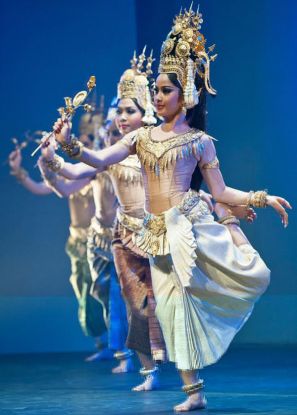
Essential to Cambodian classical dance is the flexibility of the hands, fingers and feet of dancers. Starting from a young age, dancers are taught exercises that allow their body to be very flexible and supple. It could take over 10 years of rigorous training until a dancer is seen as skilled. If seen by a person not used to seeing the dances, many of the dance movements can look a bit unsettling and painful (as I have been told by many of my friends). For example, trained dancers can bend their hands back so far that their fingers can touch their wrists. Dancers are also in high control of their body as they have to move quite slow and fluid.
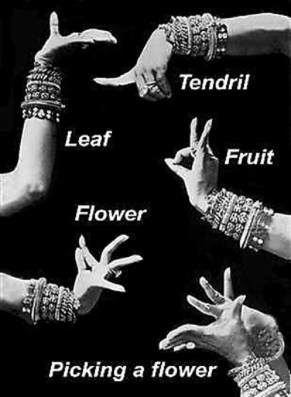 You might be wondering why Cambodian classical dance puts so much of an emphasis on flexibility. The answer is that Cambodian classical dance is basically storytelling through bodily movements. Alongside the songs being played during the performances, dancers interpret the lyrics through their movements. Every hand gesture signifies a specific saying or word. The bend of the fingers, a singular point, or the paring of two hands can all mean different things. Specific dances also represent important stories and legends. Cambodian classical dance is often understood by many Cambodians as a way to preserve our culture and traditions. In my own experience, I can say that when I watch performances I feel an immediate connection with my culture.


Thank you for sharing something that is a part of your culture. I never really thought of dance, especially Cambodian classical dance, as a form of body modification. But it makes sense that some forms of dance can be seen as body modification. With different forms of dance you have be incredibly flexible, have the ability to contort your body in different directions, and be able to stand on the tips of your toes. These are not common things that the body is able to do. It takes a lot of work and pain to be able to do these things. It completely changes the body in new ways.