
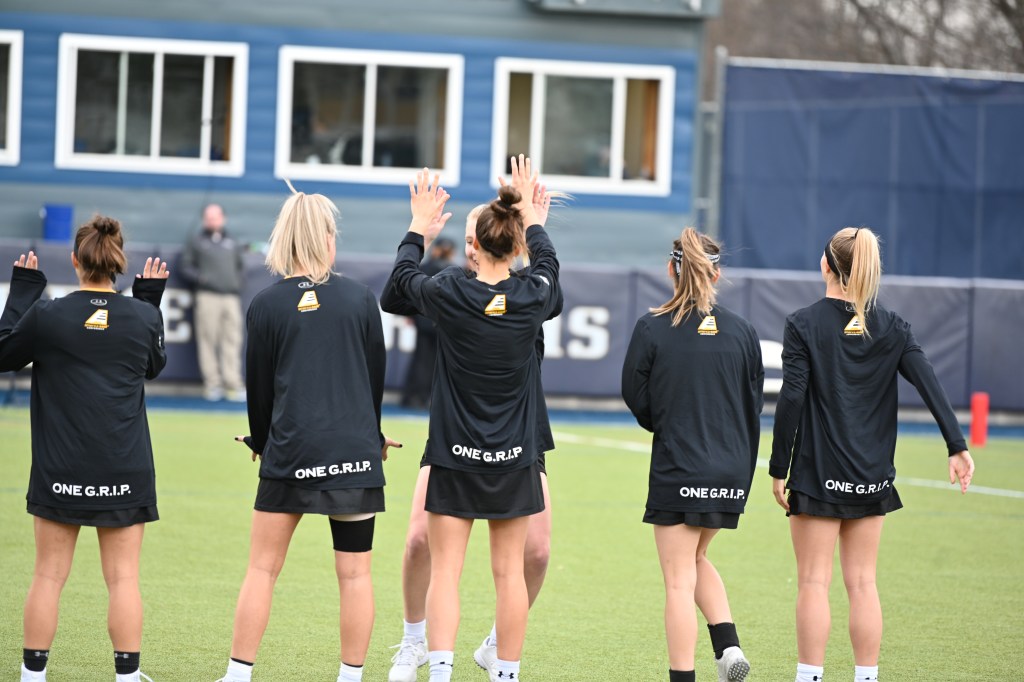
It was the first day of practice and my heart was beating out of my chest. Sophomore year was here and I was even more nervous this time around. I came into my fall season with a different kind of butterflies in my stomach. Yes, I had some nerves about practices and my performance on the field but the root of my anxiety came from my appearance and fitness. “Was I thin enough?”, “Was I fast enough”, “Was I strong enough?”一these questions were constantly floating around in my head.
With a year under my belt, I was determined to get playing time. I wanted to solidify a spot on the field come February when games started. I thought the only way to do that was through my appearance and physique.
Coming into freshman year, I was given words of encouragement from my family and friends but most of their advice revolved around academics. The usual一“College really tests your time-management skills!”, or “Make sure you get a planner and some highlighters!”.
So I went into the athletic side kind of blind, not really knowing what to expect. I was ready for a faster-paced game and a completely new team but I was not ready for the emotional and mental roller coaster that would come as a result of playing the game I loved.
No one had mentioned the mental toll that came with college sports. No one had mentioned the self-esteem and body image issues that would soon take over my inner thoughts. No one had mentioned that comparison was going to be my worst enemy. No one had mentioned that there was going to be an added pressure on my plate to look a certain way.
In a world where I thought supermodels’ expectations were hard to achieve, I had no idea that college athletics came with an overwhelming amount of comparison and standards.
College athletes are compared by their speed, physique, strength, stamina, weight, muscle, fat…and the list could go on and on and on…
The root of this blog post is to show you that bodies are judged and compared, regardless of where you find yourself in life. Our society continues to fight that comparison battle. By identifying more environments where body image issues exist, hopefully we can become more aware of the unrealistic expectations that are out there in this world and work to promote more body acceptance and positivity.


I think you made a great point about how body image issues are universal in life regardless of what particular field you’re operating in. To me, the only difference is the manner in which these conversations and experiences are framed and how much visibility will be drawn to them depending on which particular field you’re in. On the topic of sports, I think body image issues that are brought on by the constant measurement and comparison tend to be overlooked/downplayed because the end goal behind these practices is always thought to be productive rather than aesthetically vain: we are trying to promote optimization of the body in order to perform the best, not look the most attractive. Unfortunately, this still breeds a different but equally debilitating form of insecurity like you mentioned above, and can result in a lot of unhealthy habits that become normalized as “part of the game” (ex. I watched an episode of True Life that featured a wrestling team and the boys were constantly pressured by their coaches and each other to excessively exercise to the point of passing out, deny themselves water, and push through injuries in order to make weight classes, win matches at meets, and not be a burden to their team). Like you said, bringing awareness to body image issues in all of the spheres they exist and the manner in which they operate is so important because it gives us a more diverse conception of body image and how we can appropriately address the issues that stem from such.
Yes! I remember teaching this course at Tulane University. I had several members of the football team in the class, and all of them talked about the challenges of body image in a sport where your “stats” are all about weight, height, and presumed strength. But how are these ideas framed? Great points here.
Hearing how body comparisons are everywhere is both comforting and concerning. As someone on campus who often sees athletes walking around and thinks, ‘it must be nice to feel good about yourself’ it brings things back into reality to hear otherwise. Of course when I am having those thoughts, I understand that always feeling good about your body is most likely not the case. But in my mind at some point of fitness people get to a point of feeling confident with their body no matter if they continue getting skinnier/more muscular or not. Hearing that athletes experience the same thoughts and dread as I do I when I look at myself in the mirror brings things back into a more realistic area. Thank you
This is a very informative post in which many girls are concerned about how they look and if we every look good enough. You made a comparison on college athletics and supermodels, and I have never realized even though they both are completely different topics, they both converge to this idea of having a certain image. In my first year of college, my chemistry lab partner was a swimmer at UMBC. I remember hearing stories of her having to wake up super early to workout and condition, go to practice right after, then attend class all day, and expect to use the evenings for study time, then repeat the next day. I remember thinking “wow props to her for having such a busy schedule and good for her for being able both school and play sports”. Not until I read this post did I realize that we never know what someone is going through until they share. I had this perfect and physically fit image of my lab partner in my head, but I never realized that she may be struggling too.
We never know what our neighbors are dealing with! Great point here!