
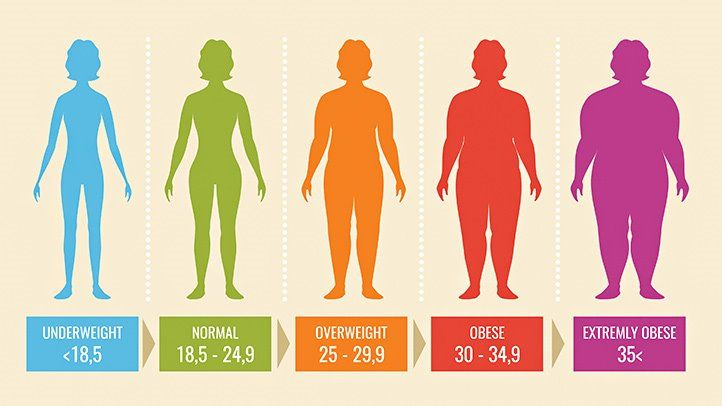
How would you describe a healthy body? Is it thin? Round? Muscular? Lean? Supposedly, BMI can distinguish the healthiness of different body types. The BMI, or body mass index, is a measurement of body fat based on height and weight. To calculate it, you take a person’s weight and divide by the square of height. This ratio suggests weight categories that predict future health problems. Basically, if you are lighter, you have a lower BMI and if you’re heavier, you have a higher BMI. The CDC says, “It does not diagnose the body fatness or health of an individual.” However, most medical professionals treat the BMI as a measurement of body healthiness, regardless of what the BMI was intentionally made for. So, how accurate is the BMI really?
A study performed in 2016 compared weight and physical activity to the risk of cardiovascular disease. The subjects consisted of people who had an ideal BMI but didn’t exercise regularly, people who had an ideal BMI and did exercise regularly, people who had a higher BMI and didn’t exercise regularly, and people who had a higher BMI and did exercise regularly. The results were as follows. Some of those who were thin but were not active still had high risk of diabetes and heart disease. Same goes for those who had higher BMIs and also were not active. The groups of people who had the lowest risk of diseases were those who were consistently active, regardless of BMI.
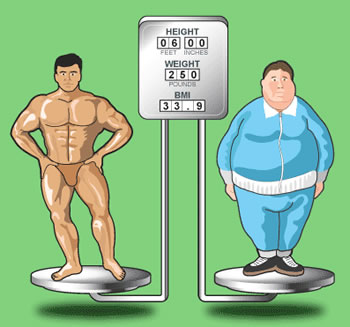
Essentially, BMI did not accurately predict the healthiness of the individuals. Just because someone has a low BMI does not mean that they are free of any heart diseases or diabetes. On the other hand, just because someone has a high BMI does not mean that they are unhealthy and prone to disease. Instead, the physical activeness of an individual is the best determining factor of one’s healthiness.


I think this is very powerful because I have a high BMI for my height. Every time I go to the doctor, I get the spiel regarding the “fact” a high BMI is a health risk. When I go to patient first, they subliminally hand me a piece of paper after my diagnosis sheet about BMI. “You have an elevated BMI which may lead to health risks in the future according to the CDC.”
I feel healthy. I feel happy with my body. I feel mildly comfortable in my own skin for once.
Besides activity level, the diet of an individual also accounts for a person’s health. If you run 2 miles a day but eat fast-food for every meal, you can still end up with high cholesterol.
The more I think about BMI the stranger it is to me that there’s such a massive emphasis. I can’t speak for anyone else, but if I’m eating like shit, or too sedentary my body will tell me. If I’m in constant pain because of an eating disorder, or something like that, someone telling me that I’m not taking care of myself 1) won’t be news to me and 2) wouldn’t convince me seek treatment if I haven’t already.
I’ve never been considered to have a dangerous BMI, but I’ve always been at the edge since I hit puberty. The first assumption that’s always made is that I’m eating too much. If I can convince them I’m not they always say I should exercise more to lower my BMI, which makes negative sense to me because I clearly don’t have a lot of fat on my body, so exercising would make me gain weight. Right?
At this point I feel like the understanding that nominal body weight varies is common knowledge (might be biased there), so I don’t understand why BMI is still held up as some kind of golden rule.
The BMI has been making me angry for 15 years. It does not work on Black people. It is used as a scapegoat to anything fat people bring up to their doctors. It really is just a ploy for the diet industry to get more money. If regular people and undergrads can poke so many holes in its logic, then why is it still being so widely used in medicine? Especially since the CDC has put out other papers and PSAs about how it just shouldn’t be used.
@toomatopanda I appreciate you sharing an abbreviated summary of the study which supports your claim about the BMI being an unreliable source as a tool to messure the actual health of an individual. I worked as a patient care technician for a little while. During that time I’ve met some extremely unhealthy thinly shaped individuals and then also Ive taken care of patients who were technically morbidly obsese but they were not terminally ill at all. Ive known since then of the weird science of the BMI would never see a day of realistic consideration in the world of me. Keep writing about the injustices of society.