
Emotional labor requires managing emotional expressions as part of one’s job. This includes evoking feelings or suppressing them too. A great example would be a flight attendant who gets paid to suppress negative emotions on the job, and instead evoke respectful, positive feelings to all passengers regardless of the situation. Flight attendants are expected to understand that this is part of their job, and they are getting paid to do so, therefore it is emotional labor.
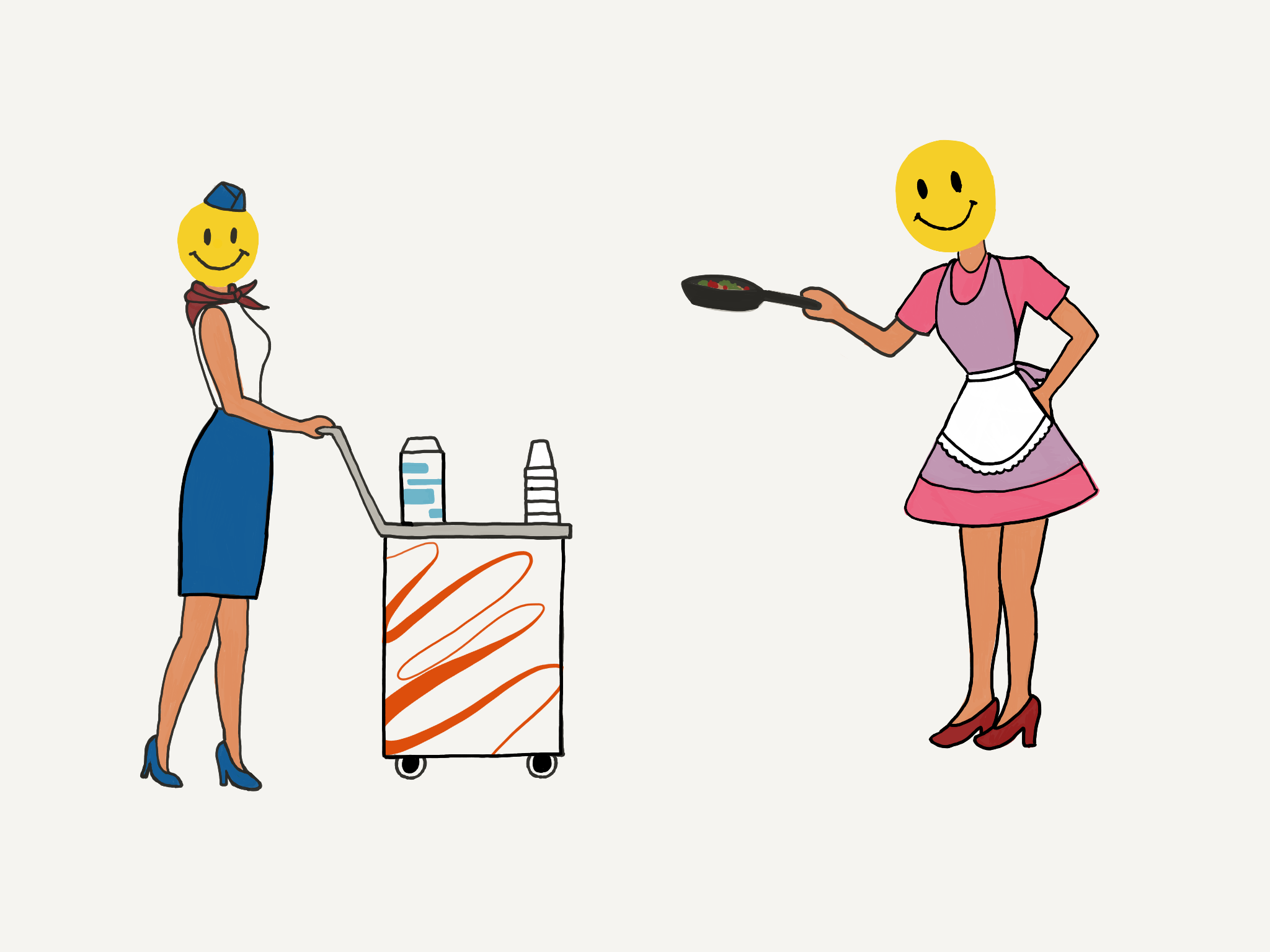
Over the past few years, researchers have studied the people who are responsible for emotional labor in workplaces. Studies have found that emotional expectations in workplaces are extremely gender biased. In general, women are given the role of emotional caretakers while men are rarely criticized for expressing their feelings however and whenever. In an article published by Saint Catherine University, a list is provided of what women are expected to do in the workplace. The list is as follows:
- Not be too assertive or threatening in meetings
- Possess innate skills in dealing with difficult clients or co-workers
- Offer emotional support to subordinates
- Automatically know how to address gender-related problems in the workplace.
These assumptions and demands are ridiculous for women, or any laborer to follow, especially at times when work can become frustrating. Some consequences from obeying these demands are decreased cognitive energy, fatigue, and reduced worker’s output. There can also be long term effects such as insomnia, loss of memory, and hypertension.
This issue needs to be appropriately addressed in many workplaces, especially ones that put more of the pressure on women. Some steps workplaces can take to change include, but not limited to, showing more appreciation to workers emotional efforts, provide training for all workers to practice ways to deal with emotional conflicts, and offer adequate break times for emotional recovery. Not only will this improve individuals’ mental well-being, but it will also enhance the overall work environment by creating a comfortable, positive atmosphere.



Thank You for sharing. I totally agree. Reading the blog, I cant help but to challenge myself to consider the ways in which the pressures of toxic masculinity may create situations where men experience emotional labor because they are expected to be cold, emotionless, or strong when they dont feel strong at all. This is an interesting and thought provoking blog post.
It feels like we have to follow a literal script on how to act in the workplace and it’s so annoying. As a black women I have to make sure my tone is soft and that I choose my words carefully, so I don’t come off as “aggressive”. It makes you feel small and you’re not able to put your true authentic self out. It’s also scary because say if an incident does happen then there’s a possibility that no one will stand up to you.