
Being the youngest person in the company AND being specifically requested by the CEO to attend a conference on the other side of the country sounds impressive. It sounds like a dream. You get to experience the freedom of traveling and staying in a hotel alone. You get to meet dozens of scientists and researchers who are all amazed that someone so young could be trusted as one of only two people to help run a corporate workshop. On top of all of this, you get to carpool with a coworker who has really interesting insights into your field of study. Everything is perfect. Until the group dinner.
Ah, group dinners. They say they’re optional but you know the truth. If you don’t go and interact with the rest of the people from the conference, you look bad. And being the youngest person, there’s no blending into the group. You would stick out like a sore thumb if you didn’t go. So you do it anyway, even though your social battery is way below zero from an almost 12 hour work day. Good for you!
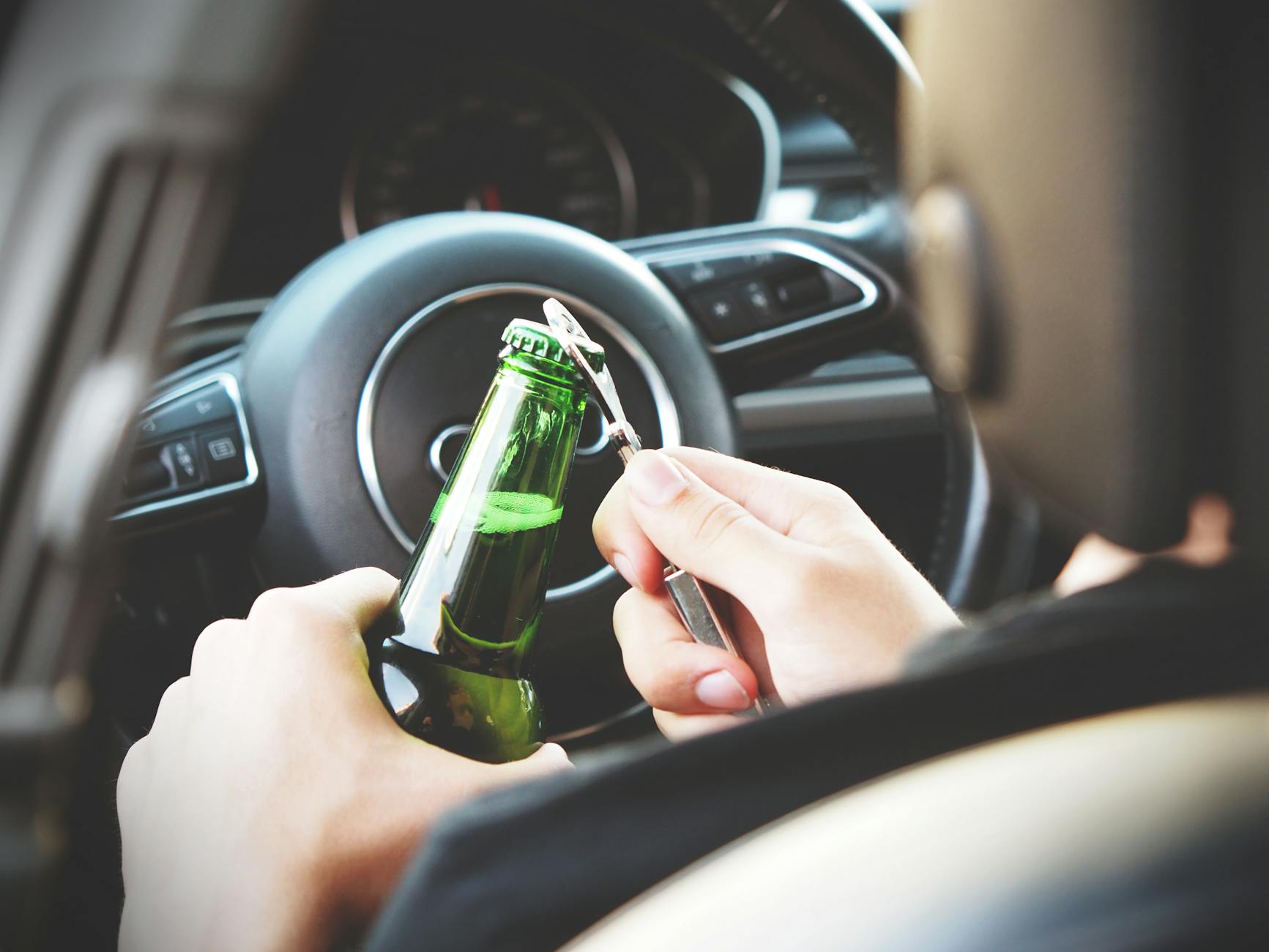
All is going well until you start to notice that the coworker who you were carpooling with is drinking a lot. No one is stopping him. Hell, they’re drinking too. As the night progresses, he gets drunker and drunker. But he’s probably fine, right? He couldn’t be that drunk, right? He wouldn’t do that knowing full well he is responsible for driving you back to the hotel, right? RIGHT? You try to dismiss your worries, so you don’t notice how bad it is. At the end of the dinner, another one of your coworkers asks to ride with you and the man who had been drinking. She had had a couple drinks too. Plus, she probably noticed he wasn’t 100% and didn’t want to leave you alone with him. You get to the car and realize how bad it is. He’s yelling and stumbling around. “Should we Uber?” you whisper to your female coworker. “Maybe,” she replies. But it’s too late. You three are already getting in the car. “Are you sure you’re okay to drive?” the less drunk coworker says. “Yeah yeah yeah I’m fine,” the drunker one responds. And off you go for the longest drive of your life. What should have been a 10 minute drive was 30 minutes because he kept making wrong turns. He was turning around to talk to your coworker in the backseat half the time, not even thinking to look at the road. The car was swerving between lanes as he yelled at her that he didn’t need directions. All the while you are sitting silently in the front seat, holding back the tears welling up in your eyes, trying to put on a smile so no one knows how terrified you are so be the most sober one in a car of the coworkers who were supposed to keep you safe across the country from anyone you knew or could call.
Why didn’t you say anything? Why didn’t you take an Uber? Why didn’t you say you were uncomfortable? Why didn’t you show them that you were upset and that it wasn’t okay? Why did you feel like you were obligated to ride with him in the first place?
Maybe because you were afraid of how they would view you for going against them. You were afraid of embarrassing them for letting this happen. You didn’t want them to feel guilty. You didn’t want to seem like a burden for having standards that are too high. You didn’t want to be known as the kid who dealt with the drunk coworkers. You didn’t want to have to face them the next day with them thinking you were judging them. All these reasons and more are why you got in that car and risked your life. This is the kind of emotional labor that you take on being a young intern. Constantly second guessing yourself and kicking yourself for messing up social interactions. Trying to manage everyone’s emotions and their perception of you. All of that bracing and anticipation and anxiety waiting for those imagined criticisms (Beck 4). Your coworkers probably would have understood if you had decided to take an Uber. But on the off chance that they didn’t, you decided to put your life in danger. When will you unlearn this, and will it be too late?
Beck, Julie. “The Concept Creep of ‘Emotional Labor.’” The Atlantic, 26 Nov. 2018, ht://www.thcatlantic.com/family/acchive/2018/11/arlie-hochschild-bousework-isat-ensotional-Labor/5766371.


I, too, had a similar experience when I used to work as a waitress. Everyone would drink after a shift, especially on a Saturday. Since we had Sunday off, it was the last day of the work week. And everyone would drink and drive home. I had a similar feeling to you. Like not wanting them to feel guilty or like you’re judging them. I did talk to a fellow co-worker about it, and she justified it by saying we’re only drinking one or two drinks and driving, it’s not that bad. There is definitely some cognitive dissonance going on. How do you handle situations where you feel uncomfortable with certain social norms or behaviors? I hope that these people seek the help they need and are safe. And that’s what I hope for everyone.
Unfortunately, I feel like this is a shared experience among many people, myself included. There were instances where I was too afraid to speak up and be a buzzkill while everyone else seemed to not care whether or not the designated driver it actually sober or not. In situations like this, I never know whether or not I should be the one to say something but again that takes courage. The emotional stress that ensues while you sit there and contemplate whether or not you want to be part of this behavior or not is difficult and draining. I hope that people realize the risk they are people other under and reevaluate themselves.
Emotional labor can definitely take a toll on one’s health but can also lead people towards dangerous situations, all for the sake of keeping up positive appearances and perceptions. It is upsetting to think about how people might fall into harmful scenarios just to ensure that they do not face unreasonable scrutiny for keeping themselves safe. There is a stigma around maintaining boundaries in the workplace, especially when you are “new” or the youngest. It is an interesting subject that can be explored more, especially in consideration of emotional labor and how oftentimes work requires a level of emotional management. Emotional labor is not necessarily confined to those who are actively and directly engaged with customers or the public; sometimes emotional labor is required among other workers because if one does not maintain positive emotions, they might be scrutinized and lose their job.
As someone who also works with people who are almost twice my age. It is so uncomfortable being a space where you’re constantly looked down upon and forced to give respect to people who dont even regard you as a adult. There have been many times people at my work have said things that made me uncomfortable and if i saw anything its just “oh hes joking” or something else the amount of patience required to work in that environment is tiring.
I’m so sorry that you had to experience this I know that had to be something very traumatic because you didn’t know what your outcome could’ve been. But I a hundred percent agree with you on being the youngest in a business and just going with the flow of your peers out of fear of them not liking you and causing a rift in the social aspect of your job. And anyone that gets mad at you for making the decision that you made just remember that you were in that position not them so they can give their opinion on it but I believe until you are put into that position you truly won’t know what you will do.
I’m so sorry you experienced that. I think as other replies on this post have mentioned, this is unfortunately a situation that many people have dealt with: Both the pressure to be a people pleaser, even if it means risking your life, and the pressure to stay silent in uncomfortable work environments. The sheer amount of agreement in the replies on this post is evidence of the problem we as a society have with requiring intense emotional labor of employees at the cost of their health and safety. It’s “interesting” to think about the ways in which capitalism is at play here, and nice to imagine a future where these problems don’t exist.
I’m so sorry you had to go through all that, I can’t imagine how terrifying that car ride must’ve been for you. It’s heartbreaking that you had to choose between your safety and worrying about how your coworkers would perceive you. Now one should ever feel pressured to stay silent in a moment like they, but I understand why you did. Because it’s something young people in the workforce have to struggle with. You deserved to feel safe and supported. Thank you for sharing this, because it’s a powerful reminder that we all have the right to protect ourselves, regardless of what others think
This sounds absolutely awful and I’m so sorry you had to go through all of that. I think you speak well to the point of emotional labor and all of the feelings we have to stifle for the sake of others. I don’t think the pain and fear and physical tangible sensations we feel are brought up enough — especially in the case where we’re forced to suppress them. It’s awful to think that showinng face could have ended in catastrophe and I hope you never have to experience anything like this again.