Move Me, Move You

Photo by Luis Gallegos Alvarez on Pexels.com

The universe moves me so I can move others. 

Growing up, my parents put me in every sport imaginable. If my school provided it, I did it. Baseball, basketball, soccer, you name it. And I HATED IT. Running back and forth on the field/court, winning, losing—it all sucked. But there was one sport (yes, it’s a sport. Fight me.) that I actually looked forward to every week, and that was dance. I’ve been dancing since 2 years old. My mom put me in ballet just like every other little girl, and when I tell you I absolutely LIT UP on stage. There are videos of me as a toddler convincing my classmates with stage fright to get on stage and perform. After ballet, I did Irish dance for 7 years. Not my favorite (it was too stiff and strict for me) but I stuck with it so I could take what I learned from class and teach it to my friends at school. At the same time, I did hip hop for 5 years, and that’s where I really started to come to life. I had the most attitude of any 3rd grader on that stage. It inspired me to start choreographing my own dances for me and a couple of my dancer friends to perform and film as part of our own little variety show. Then came tap and jazz class, then musical theater. My love of dance continued through middle school and high school, where I began choreographing for my schools’ musicals. Even in college, I still go back to my middle school to teach kids the dances for their school productions. Every car ride is spent looking out the window, choreographing new dances in my mind. It is a core part of my being. And every step I have taken in my dance journey came with bringing others the joy of dance. It has taken me years to recognize that I was meant to help others move. I live to light up on stage and allow others to do the same. Watching their faces when they finally get a step right that they have been struggling with. Seeing them get excited when they come up with their own choreography and run up to me to show off their new dance. Hearing them telling their parents that their favorite part of rehearsal was dance class. It all makes me feel like I have a place in the world. As Kimerer Lamothe said, “Every movement a human makes animate potentials that them become who that human is—one who made that movement. One who can make that movement again” (Lamothe 127). I was given movement from my teachers from my childhood, and I became the teacher for my friends and students, and they will become teachers for their circle, and on and on. Dance is who I am. It always will be, even if I don’t dance every day anymore. I will never separate that part of me. And that is what I believe I was put on this planet to do. Move others.


Warning: Fat Lesbian. Do Not Touch

I’ve always been weird about physical touch. Even from a young age, I have been hyperaware of my body in relation to others’ bodies. I have also always been fat. I have also always been queer.

In first grade during cheer practice, I was always the base. Everyone took turns being a flyer, but I stayed the base. Even at 6 years old I told myself I was too big to be lifted. Even at 6 years old I saw my weight as a burden. Even at 6 years old I felt like people would be repulsed by touching me because I was fat.

Growing up, I was always the biggest person in my friend groups. Everyone around me was tiny and cute. They would pile on top of each other and carry each other and joke about being “too heavy”. I stood to the side and watched. If they were “too heavy” then what was I?. There was no way they would want to carry me or let me be a part of the pile. 

From elementary school through middle school, I remained the biggest girl in class. Then in high school, I came out as a lesbian. And I was still one of the biggest people in class. And was still in a friend group of thin people. I would look around and see all the (straight, thin) girls climbing all over each other and being all touchy-feely with each other without reservation, meanwhile I was too afraid to even hug a person or lean on them. No doubt my weight would crush them. I was probably disgusting to them. I didn’t want to be the weird, predatory, fat lesbian at the all-girls Catholic high school. I didn’t want people to see me as that fat dyke who stands too close for comfort (think Big Boo in Orange is the New Black). So I once again distanced myself. I never leaned on someone unless they leaned on me first. I overthought every interaction. My mind went into a panic whenever I accidentally stepped on someone’s foot or grazed their hand or bumped into them. How could I? How could I enter their personal space? How could I repulse them by my presence.

It is this intersection of being fat and queer that I think has held me back from so many relationships, familial, platonic, romantic, sexual, you name it. Da’Shaun Harrison said it best in Belly of the Beast: “The feeling that your gut is figuratively and literally keeping you from experiencing what it’s like to wrap your whole self around someone and for them to do the same to you is almost suffocating” (Harrison 22). Who would want me? I can’t go on a date because I’m a fat lesbian. I can’t cuddle because I’m a fat lesbian. I can’t have sex because I’m a fat lesbian. No one wants to touch a fat lesbian. 

This insecurity is why I allowed myself to be in a toxic friendship/relationship. She called me beautiful. She allowed me to put my weight on her. She initiated physical contact and made me feel like my body wasn’t a burden. I saw past all the toxic things she did because of the way she treated my body, even though she just wanted to use me to experiment with a (fat) lesbian.

This feeling, this anxiety that I ingrained in myself from childhood has been nearly impossible to shake. I am still trying to teach myself that my fatness shouldn’t prevent me from living and loving. Starting small with letting my arm touch my friend’s arm if we are sitting close together. Initiating a hug. Laying my head on my friend’s shoulder. Slowly, but surely, allowing myself to just be a fat lesbian.

Okay to Drive

Being the youngest person in the company AND being specifically requested by the CEO to attend a conference on the other side of the country sounds impressive. It sounds like a dream. You get to experience the freedom of traveling and staying in a hotel alone. You get to meet dozens of scientists and researchers who are all amazed that someone so young could be trusted as one of only two people to help run a corporate workshop. On top of all of this, you get to carpool with a coworker who has really interesting insights into your field of study. Everything is perfect. Until the group dinner.

Ah, group dinners. They say they’re optional but you know the truth. If you don’t go and interact with the rest of the people from the conference, you look bad. And being the youngest person, there’s no blending into the group. You would stick out like a sore thumb if you didn’t go. So you do it anyway, even though your social battery is way below zero from an almost 12 hour work day. Good for you!

All is going well until you start to notice that the coworker who you were carpooling with is drinking a lot. No one is stopping him. Hell, they’re drinking too. As the night progresses, he gets drunker and drunker. But he’s probably fine, right? He couldn’t be that drunk, right? He wouldn’t do that knowing full well he is responsible for driving you back to the hotel, right? RIGHT? You try to dismiss your worries, so you don’t notice how bad it is. At the end of the dinner, another one of your coworkers asks to ride with you and the man who had been drinking. She had had a couple drinks too. Plus, she probably noticed he wasn’t 100% and didn’t want to leave you alone with him. You get to the car and realize how bad it is. He’s yelling and stumbling around. “Should we Uber?” you whisper to your female coworker. “Maybe,” she replies. But it’s too late. You three are already getting in the car. “Are you sure you’re okay to drive?” the less drunk coworker says. “Yeah yeah yeah I’m fine,” the drunker one responds. And off you go for the longest drive of your life. What should have been a 10 minute drive was 30 minutes because he kept making wrong turns. He was turning around to talk to your coworker in the backseat half the time, not even thinking to look at the road. The car was swerving between lanes as he yelled at her that he didn’t need directions. All the while you are sitting silently in the front seat, holding back the tears welling up in your eyes, trying to put on a smile so no one knows how terrified you are so be the most sober one in a car of the coworkers who were supposed to keep you safe across the country from anyone you knew or could call.

Why didn’t you say anything? Why didn’t you take an Uber? Why didn’t you say you were uncomfortable? Why didn’t you show them that you were upset and that it wasn’t okay? Why did you feel like you were obligated to ride with him in the first place? 

Maybe because you were afraid of how they would view you for going against them. You were afraid of embarrassing them for letting this happen. You didn’t want them to feel guilty. You didn’t want to seem like a burden for having standards that are too high. You didn’t want to be known as the kid who dealt with the drunk coworkers. You didn’t want to have to face them the next day with them thinking you were judging them. All these reasons and more are why you got in that car and risked your life. This is the kind of emotional labor that you take on being a young intern. Constantly second guessing yourself and kicking yourself for messing up social interactions. Trying to manage everyone’s emotions and their perception of you. All of that bracing and anticipation and anxiety waiting for those imagined criticisms (Beck 4). Your coworkers probably would have understood if you had decided to take an Uber. But on the off chance that they didn’t, you decided to put your life in danger. When will you unlearn this, and will it be too late?

Beck, Julie. “The Concept Creep of ‘Emotional Labor.’” The Atlantic, 26 Nov. 2018, ht://www.thcatlantic.com/family/acchive/2018/11/arlie-hochschild-bousework-isat-ensotional-Labor/5766371.

Shy Girl Workout

Photo by Ivan Samkov on Pexels.com

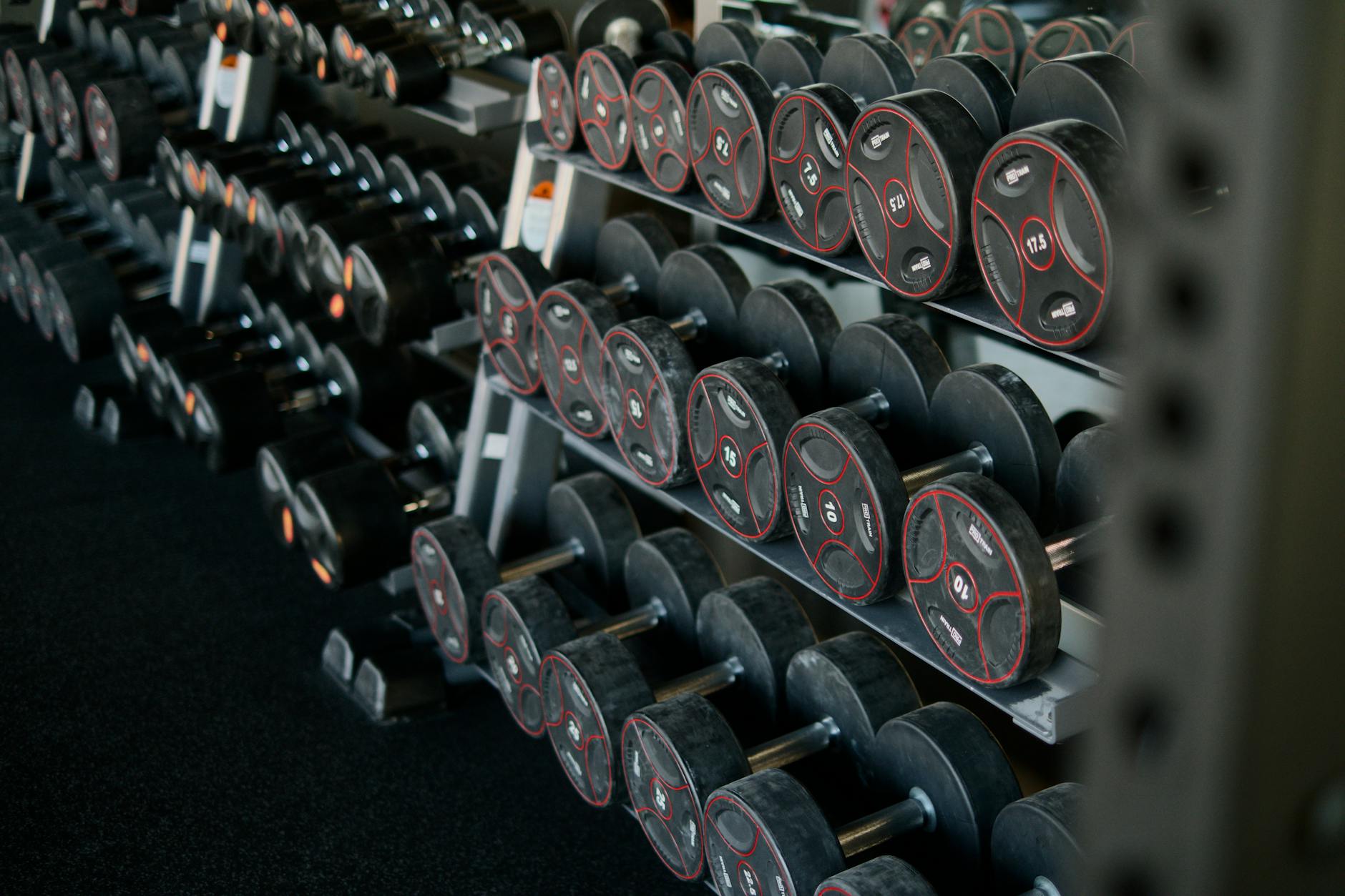
Imagine you walk into a gym, a not-quite 20-year-old feminine presenting person. After months of working out in the peace of your own home and improving your self esteem, you finally build up the courage and confidence to work out in public for the first time. You sign in and find the weight room. You look up and…wow that’s a lot of men. You struggle to even find one girl. Just a bunch of grunting gym bros with all their buddies lifting weights that are probably too heavy for them to safely lift. Not to worry though! You’ve been training for this moment. All the (Instagram) research you’ve done has led up to this moment. You take a deep breath, grab your 2 dumbbells and find a corner to begin your Shy Girl Workout

Your Shy Girl Workout allows you to stay in one place with one set of weights the whole time, taking up minimal space so as not to draw any attention to yourself. To be virtually imperceptible. Invisible.

Continue reading