
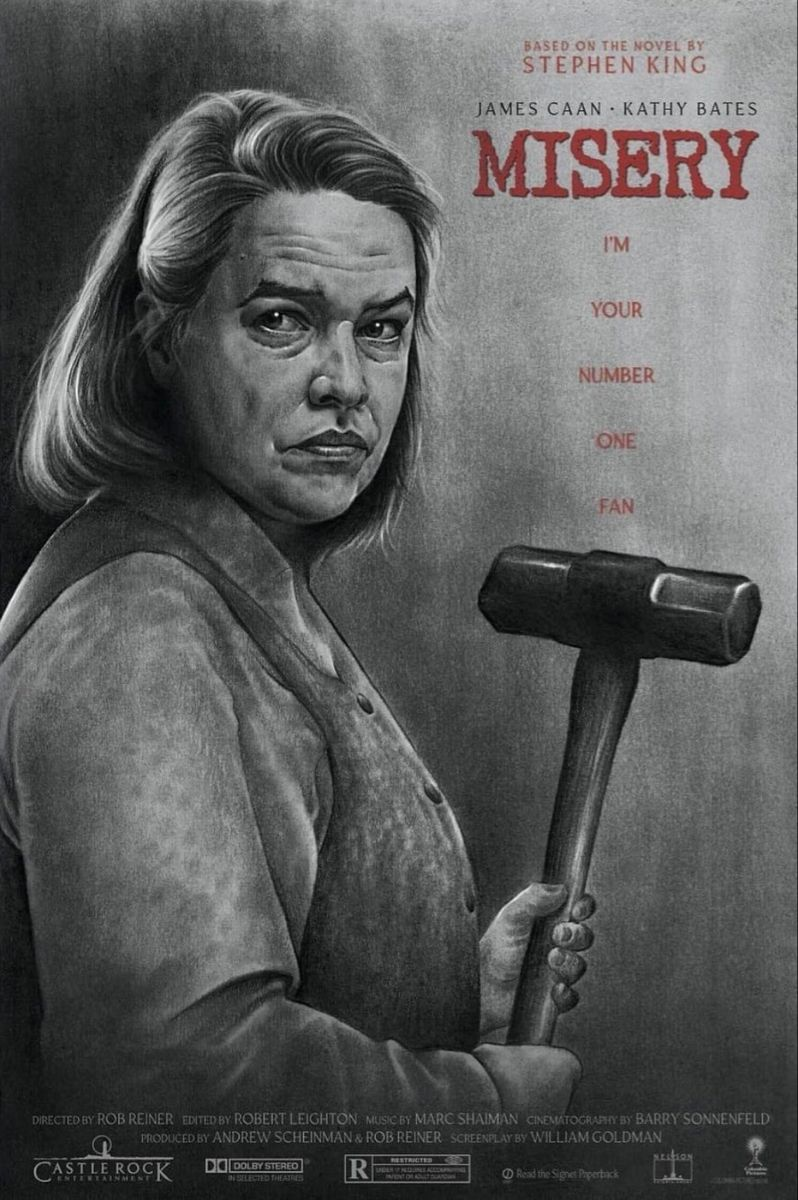
How many horror movies include fat characters? How many of those movies portray their fat characters as people with morbid bodies? Unfortunately, the abuse of fat bodies in horror films is a trend that has been very popular in the movie industry. Blade (1998), is my favorite example of the manipulation of bigger bodies to make it seem like the fatter you are, the grosser you are. A minor character in the movie, Pearl, was a vampire antagonist who got tortured for answers regarding an infamous vampire syndicate. Pearl’s obesity was turned into an instrument of disgust. Her skin was blemished with whatever torture mechanisms had been used. Human’s disgust with skin is also a fascinating aspect in the whole topic. Films oftentimes dramatically stretch, twist, and blemish skin to make a person seem inherently gross. Another example I find myself thinking about frequently is in The Walking Dead. There are a multitude of fat zombies in the series and almost always, those zombies are killed or displayed with the contents of their stomach laying out. These scenes tell me that the stomach is the feature of our bodies that we fear and think to be disgusting. It’s not only TWD that does this either. Every single zombie movie I’ve watched has had at least two fat characters who are either killed in an incredibly violating way, or who are absolutely grotesque zombies. Moving out of the supernatural realm, the antagonist Anne Wilkes in the movie Misery is a bigger woman who holds her favorite author captive so he can rewrite the sequel to her favorite book series. Anne’s body is portrayed as monstrous due to her size which can be interpreted as the masculinization of fat female bodies. Towards the ending of the movie, Anne and the author are fighting each other for the freedom of the author. The author struggles a great deal against the smaller woman (granted, he was in a wheelchair, but he still would realistically be stronger than the woman especially since he had been “training” with a 15-20 pound type writer daily). After multiply bashing her in the head with the typewriter, she kept getting up. These are only a few examples, however, it is important to keep in my mind how often fat bodies are portrayed in this way.


i fully agree with this. every villain, starting from little kid cartoons, portrays the villain as fat, unless they are a man, of course. its mostly women targeted as the fat villain. “Angry because they haven’t eaten their third lunch yet”. this not only affects society but shapes it as children grow up with this portrayal and spew it.
Exactly! Thank you so much for your comment, glad I’m not the only one who finds this weird!
As someone who has watched the majority of the original The Walking Dead series, the treatment of fat characters in that show is kind of insane! Denise, the nurse in the Alexandria Safe Zone, is a fat woman who is treated so horribly both in life and death. She is belittled about her weight to her face particularly by Negan and cries when she has to face him; when she dies, Negan also makes a point of her fatness, saying that the residents of Alexandria should actually thank him because they will have more food to go around. While I’m aware Negan is a villain, it makes me wonder how fat actresses feel when their weight is torn apart in a script.
This is so interesting and I’m glad you brought it up. Fatness being used to make characters more grotesque is everywhere. Something about Misery that’s always stood out to me is the trope of unwanted female to male attention being made “worse” by making the female character fat. Even when they aren’t breaking the guy’s legs and locking him in a room.
Also, what you said about the masculinization of fat female bodies and the comment seeseememe left about fatphobic media starting in childhood got me thinking. I loved the movie Matilda as a kid, but it didn’t escape my notice that the heroine in Matilda is a thin, conventionally pretty young woman and Miss Trunchbull is an overweight, sweaty, middle-aged woman whose body type is exaggerated with camera angles, a fat suit, and a tight belt around her middle. The other adult female characters in Matilda wear makeup and have their hair down or styled to make them look ultra-feminine but Miss Trunchbull noticeably does not have any makeup on and they zoom into her face repeatedly to make sure you know that. When you compare Miss Honey to Miss Trunchbull it’s clear that size and adherence to traditional femininity is being used to signal morality.
I honestly never really thought about this as deeply until I read this post. It made me realize how, even outside of horror, fat characters are often portrayed as grotesque or exaggerated. The trope of the funny fat friend is a bit more popular, but I have noticed this disgusting or domineering depictions pop up in other genres. The character Rasputia from Norbit for example is portrayed as character who is both frightening, disgusting, and the butt of the joke because she is a fat woman. It’s crazy how no matter what form for media you watch, you can never truly escape fatophobia.
Yes! I never even thought of this! Why are we always showcasing villains as fat or disabled in some way? Someone mentioned cartoons as an example and I think it’s especially sinister that we push this stigma on kids. I get disappointed whenever I see this trope in horror media, especially since it’s supposed to, as a genre, make political commentary.
I really love the connection you drew here. It isn’t something I would’ve thought of myself but you summarized it perfectly. I also see the same pattern, now that you mention it, with other “unattractive features” such as moles, bigger noses, crooked teeth, etc. It’s really strange because although sometimes it isn’t intentional, I think many forget that there are people with these features and how awful it could feel for them to witness their characteristics turned depicted in such an awful manner.