
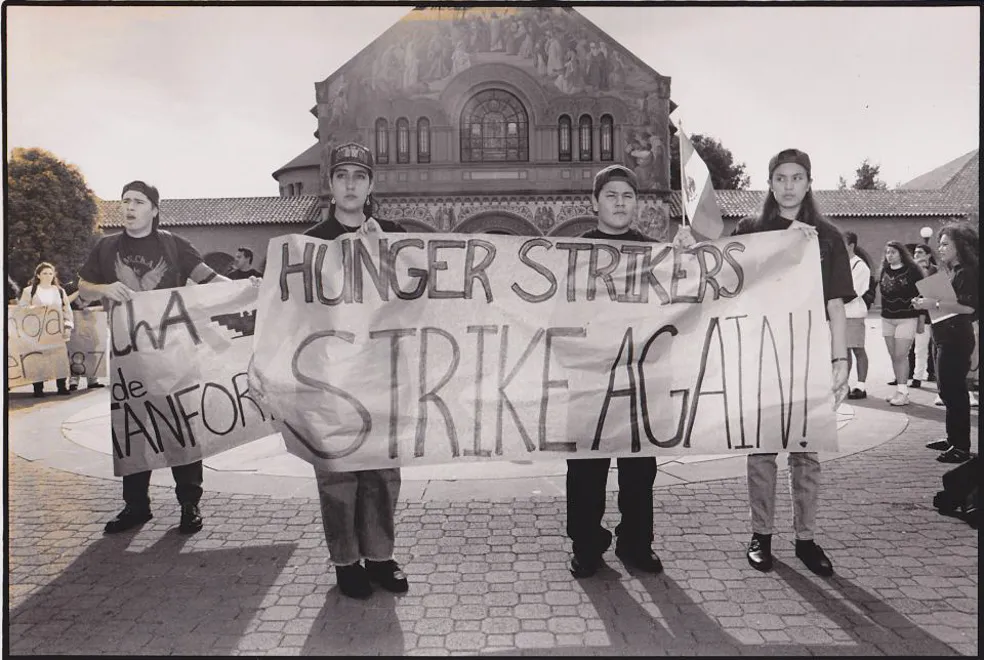
A hunger strike — what is it exactly? According to Google, it is “a prolonged refusal to eat, carried out as a protest by a prisoner.” I find the whole concept of a hunger strike very interesting. Why would we, as humans, intentionally refuse to eat as a form of persuasion or protest? At first, it seems strange, but maybe it’s not as unusual as we think.
Think back to when we were kids. Have you ever had a moment when your parents said, “You can’t leave the table until you finish your food”? That used to happen to me all the time, and I can confidently say that I would stand my ground. I’d sit at the table for as long as it took, not taking a single bite until my parents agreed to let me eat something I made for myself.
Now, let’s go back to the definition. The first part mentions a “prolonged” period of time — would an evening be considered prolonged? Probably not. And the second part mentions a “prisoner.” Would I be considered one? In a way, maybe. I wasn’t locked in a cell, but being unable to leave the dinner table could feel like a small form of imprisonment, especially since I didn’t want to face the consequences of disobeying my parents.
So, considering these two factors, I wouldn’t call an evening of childhood stubbornness a hunger strike. However, this small example might help us understand something deeper about human nature. Even as children, we use our bodies — in this case, refusing to eat — as a way to express resistance and assert control when we feel powerless. On a larger scale, hunger strikes work the same way: they become a form of protest when words or actions no longer seem enough to make change.


Yes! I feel kids get so little autonomy over their own bodies and what they eat. I remember the feeling of having to sit at the table being forced to eat something my tummy didn’t agree with just to leave the table.
The only form of protest I had was not eating. We like to assume that kid’s don’t know anything about their bodies. We like to discount them when they say they’re full or they don’t like something as if they’re making it up to make our lives harder. In reality they have tiny sensitive stomachs that are still adjusting to the world.
I always found hunger strikes to be a form of protest I didn’t quite understand the effectiveness of. In a world where we see governments and oppressors continuously choose power or wealth over the wellbeing of people, why would they care if people are choosing not to eat. I think similarly of self emulation. I think they are powerful actions and very brave of a person to take on, but I am not too sure if they make much of an impact.
This was such a nice analogy for hunger strikes, I read one of the comments talking about how they didn’t understand the effectiveness of them, and so did I for the exact same reasons. Like with the prisoners and their hunger strike, I wonder if they did not have people advocating for them on the outside. The police probably would not have cared, and they would just continue to go about business as usual. I think the part that makes these hunger strikes so important is because it physically shows the public that someone’s life is in their hands and they easily have the power to stop it because the people protesting are often asking for things that could easily be resolved and also optics. This is why it is so important for the public to hold people/orgs accountable; the prison knew that the public would not stand for their non-compliance