
The prison system represents a private monopoly that destroys the concept of rehabilitation because of its power hungry agenda. It is one of the first facilities that blankets slavery under the guise of “bad people doing good work,” but we know that the chances for these individuals at a better life are statistically low. No matter the intention, privatizing a system that is meant to create a better outcome for society, both for the individual and the general public, only pushes us down a deeper path of capitalized outcome. We do not care about the people imprisoned in our jails. We do not think of the long term solutions of their health and ability to thrive outside the system. We simply do not think of them at all.
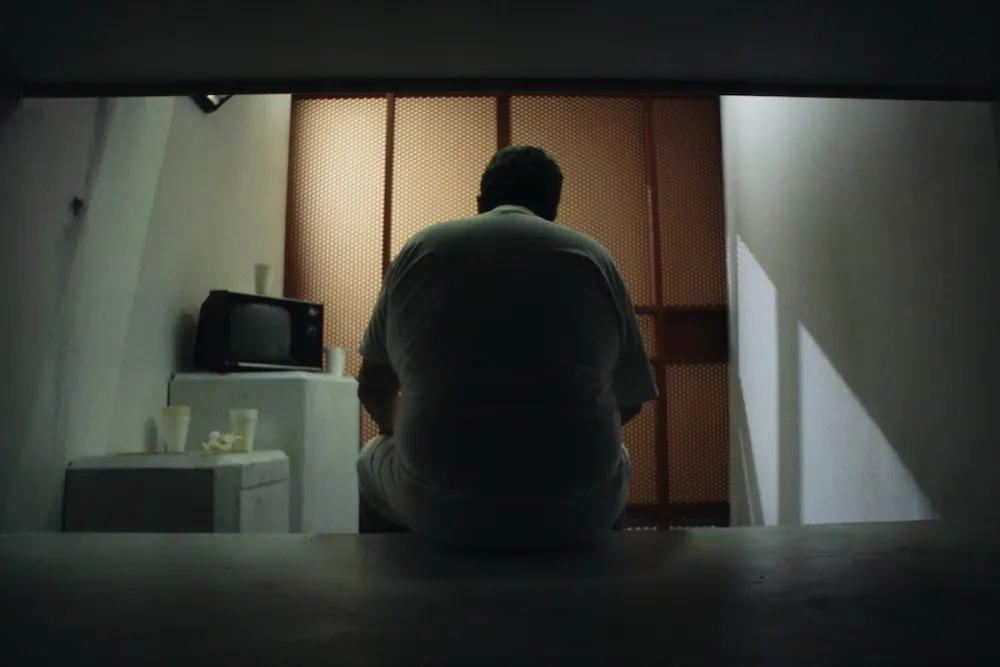
And perhaps this is reasonable, on the surface level. Everything can be dismissed as “reasonable” when we only briefly think of things. But we forget a key aspect of incarcerated people, an aspect you can’t ignore because it is literally in the name: they are people. The Strike, a documentary directed by JoeBill Muñoz and Lucas Guilkey, is a representation of what happens when we forget the human rights of an individual, no different than leaving them to die. We know that 2011 is the first time that Pelican Bay State Prison was forced to change the protocols and procedures after thousands of prisoners (both in PBSB and other neighboring California prisons) protested the restrictive conditions in the SHU with their bodies via hunger strikes. Before this awareness, hundreds and thousands of prisoners spent decades in solitary confinement based on criteria that had no real basis and was presumed based on racial prejudice and stereotypes. Do we erase all forms of morality when it comes to those who are presumed guilty by law? Where do we draw the line if the line has already been drawn for us?
My intention is not to sympathize with the abhorrent crimes that many of these men committed that brought them to places like PBSP, but it is not to reduce them to less than human either. Rather, providing equal rights for the general public of these prison systems allows for these men to have an exponentially better chance at a productive life if they have the opportunity to be released. For those who may never seem to get out, I believe it is still necessary for them to understand that a productive society has safeguards for everyone, even those who deviate from our social code. They must come to their own conclusions on their moral choices, for no amount of restriction can prevent them from resisting.
Even if we are to disregard the potential empathy of solitary confinement, these safeguards protect prisoners from an administrative abuse of power during uncertain times. Mihalovich’s Hunger Strike talks about how the California Department of Corrections and Rehabilitation (CDCR) and 20 of its prisons took advantage of restrictive lockdowns during the COVID-19 pandemic by cutting off all outside communication for over 34,000 prisoners. We’re talking about these things happening less than a decade ago, so what is still happening today that is going unseen because of our public view of incarceration?
Do we ever really know? We the public deserve to stay informed.


This relates a lot to my discussion about harm reduction and seeing people as people and with empathy. As you mentioned, those that deviate from social codes and norms still deserve rights and protections.
I wrote my post on the fact that racism will always be a part of society, and prisons are something that crossed my mind while writing. Incarceration has been weaponized against people of color for years. A strong example is of the introduction of drugs into Black and Hispanic communities, and then the subsequent arrests made on drug charges. Things like this make it hard to alter public opinion of incarceration and incarcerated people due to the idea that they are all “evil” and did it to themselves, when in reality the prison system is a representation of the failures and prejudices by the government.