Bodies, so Unruly

It’s been 2 years since I’ve been to the doctor. 730 days for every part of my body to go wrong. But isn’t it always wrong if I know what I’ll be walking into at that doctor’s office? The wrongness of being fat.

If there is one thing I’ve learned from the discourses of this class, it’s that our bodies will forever be changing. So too will the conversation surrounding how we should exist in our bodies, if we should exist in them at all. Our bodies are marked by the same touch of vitality that gives us life, yet we are all subjected to its rule. Society demands it has the authority to rule over something so changing, so unruly. We know how this goes: Authority that demands really has no power at all. But the illusion of power proves authentic in our ignorant minds. If we can be convinced that are bodies need changing, need fixing, the authority that preludes us doesn’t need anything else. We have become the prisoners in our own mind. Change the word bodies, and the message continues to apply.

Let’s get back on track. The medicalization of fat bodies is the evil that I reference in this blog. If it wasn’t known before, we know now how people have been fighting for decades for the right to exist in their body indisputably. The Fat Underground of 1972 emerged after the 1967 protests in Central Park, where people (500 of them) gathered to eat, burn diet books, and ultimately exist as “loudly fat.” It is important to note that continuous efforts of fat equality isn’t just a result of societal ignorance — that is, even if society was completely accepting of all bodies, the conversation had in 1972 about bodies is not the same as in 2010, nor is it the same now. Our bodies are everchanging, and so is our body’s rhetoric.

The Fat Underground seemed to serve as rebellion, more so than the protests from before. This movement now had a target in hand, encompassed in the medicalization of fatness and those who aided in it: “Doctors are the enemy. Weight loss is genocide.” These words were cutthroat, and still carry weight with them (no pun intended). But how do these words help us now? Where does liberty and justice meet health and motive? It seems counterproductive for the fat community to reject all medical models by indirectly rejecting their health. It is based on the rational discomfort of stepping into a space that was not made for you, or me, or them. But I still did it. And so did you?

It has been 730 days since I’ve had a medical professional tell me what’s wrong with me, and yet I still sit with the guilt that I have no idea what is right with me. We can reject the pretenses that still make us small, but where does that leave us in terms of vitality? I conclude, in all two decades of my life, that if our medical models don’t serve us (not even just the fat, but the disabled, and the socially-determined “wrong) that we must create the spaces that uplift what is right with our body.

Maybe the action is not successful, but the rhetoric can be. If the Body Positivity Movement, outside of its target audience, is challenged by a fatphobic agenda, existence can no longer be the only protest. The voices behind the faces behind the bodies behind the fatness must coexist as one.
In 5 months, I’ll break my 2 year record. Here I come!
Developing Empathy in an Incarcerated State

The prison system represents a private monopoly that destroys the concept of rehabilitation because of its power hungry agenda. It is one of the first facilities that blankets slavery under the guise of “bad people doing good work,” but we know that the chances for these individuals at a better life are statistically low. No matter the intention, privatizing a system that is meant to create a better outcome for society, both for the individual and the general public, only pushes us down a deeper path of capitalized outcome. We do not care about the people imprisoned in our jails. We do not think of the long term solutions of their health and ability to thrive outside the system. We simply do not think of them at all.

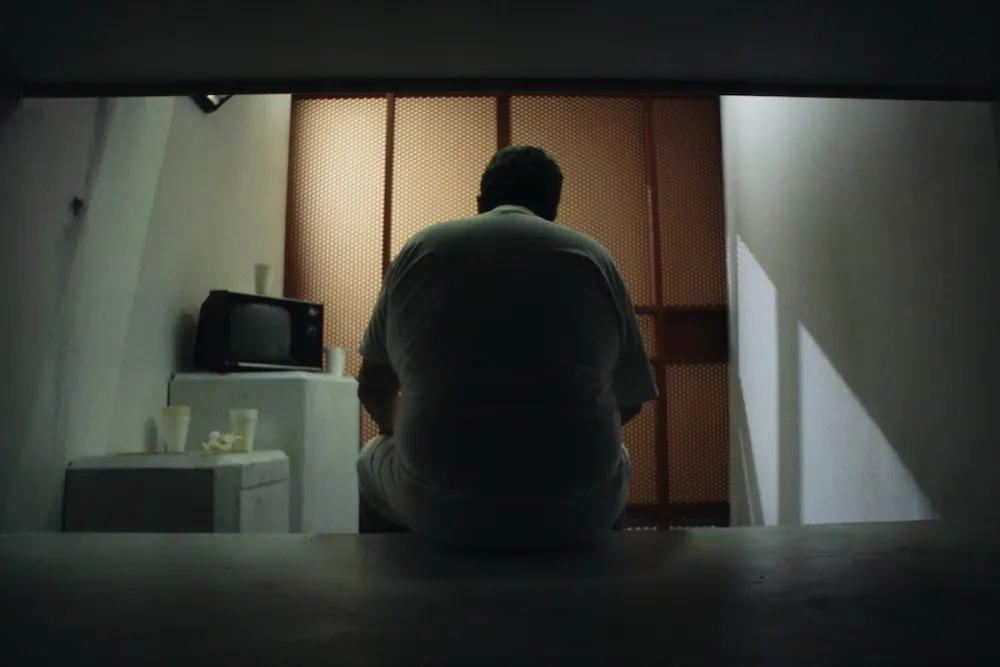
And perhaps this is reasonable, on the surface level. Everything can be dismissed as “reasonable” when we only briefly think of things. But we forget a key aspect of incarcerated people, an aspect you can’t ignore because it is literally in the name: they are people. The Strike, a documentary directed by JoeBill Muñoz and Lucas Guilkey, is a representation of what happens when we forget the human rights of an individual, no different than leaving them to die. We know that 2011 is the first time that Pelican Bay State Prison was forced to change the protocols and procedures after thousands of prisoners (both in PBSB and other neighboring California prisons) protested the restrictive conditions in the SHU with their bodies via hunger strikes. Before this awareness, hundreds and thousands of prisoners spent decades in solitary confinement based on criteria that had no real basis and was presumed based on racial prejudice and stereotypes. Do we erase all forms of morality when it comes to those who are presumed guilty by law? Where do we draw the line if the line has already been drawn for us? 

My intention is not to sympathize with the abhorrent crimes that many of these men committed that brought them to places like PBSP, but it is not to reduce them to less than human either. Rather, providing equal rights for the general public of these prison systems allows for these men to have an exponentially better chance at a productive life if they have the opportunity to be released. For those who may never seem to get out, I believe it is still necessary for them to understand that a productive society has safeguards for everyone, even those who deviate from our social code. They must come to their own conclusions on their moral choices, for no amount of restriction can prevent them from resisting. 

Even if we are to disregard the potential empathy of solitary confinement, these safeguards protect prisoners from an administrative abuse of power during uncertain times. Mihalovich’s Hunger Strike talks about how the California Department of Corrections and Rehabilitation (CDCR) and 20 of its prisons took advantage of restrictive lockdowns during the COVID-19 pandemic by cutting off all outside communication for over 34,000 prisoners. We’re talking about these things happening less than a decade ago, so what is still happening today that is going unseen because of our public view of incarceration? 

Do we ever really know? We the public deserve to stay informed.

May I Have Another Label For My Ever Changing Body?

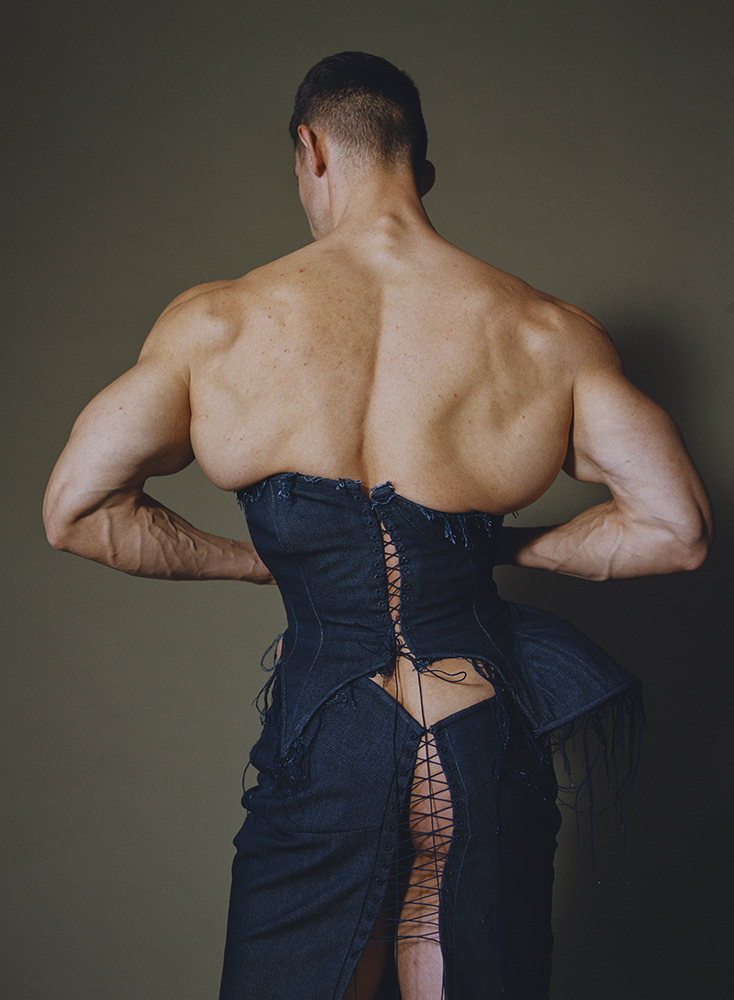
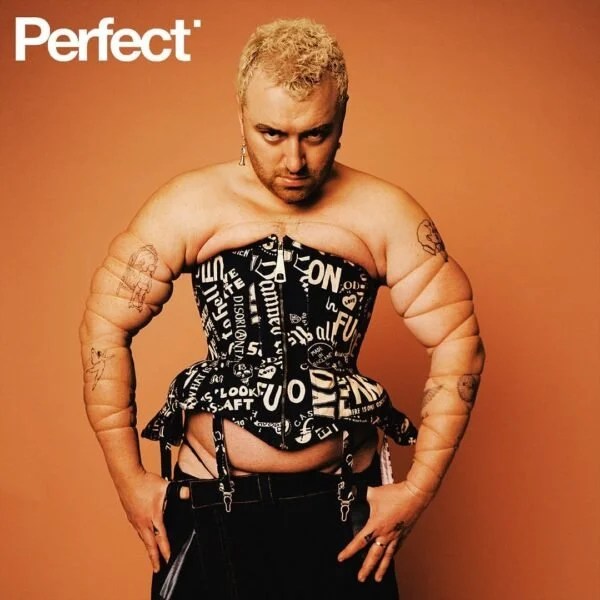
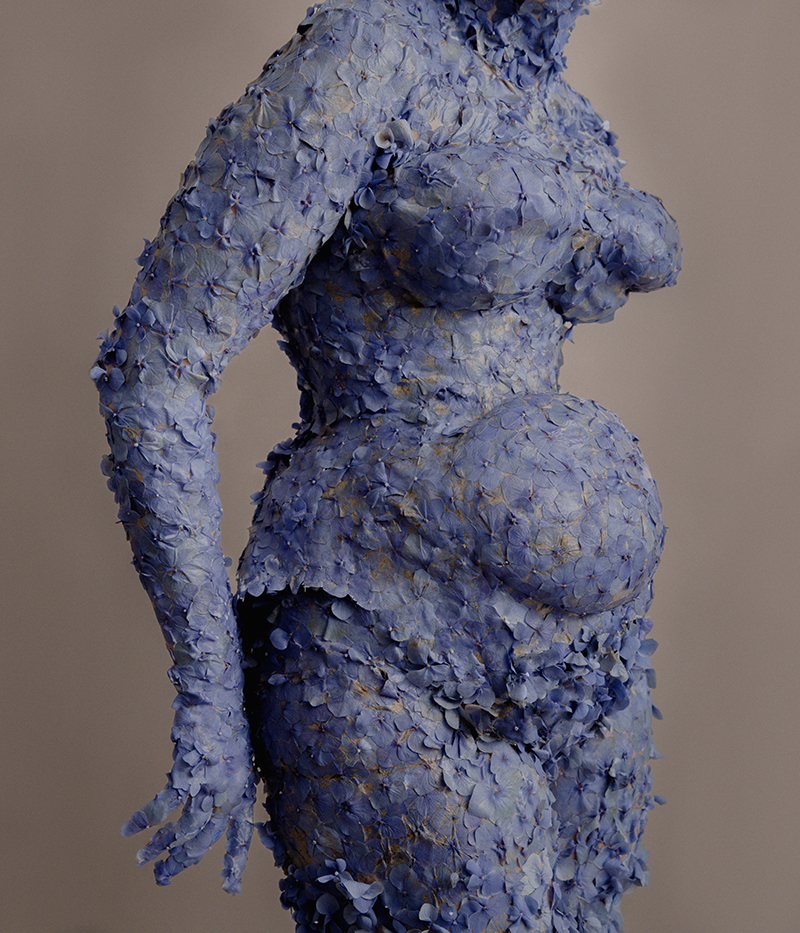
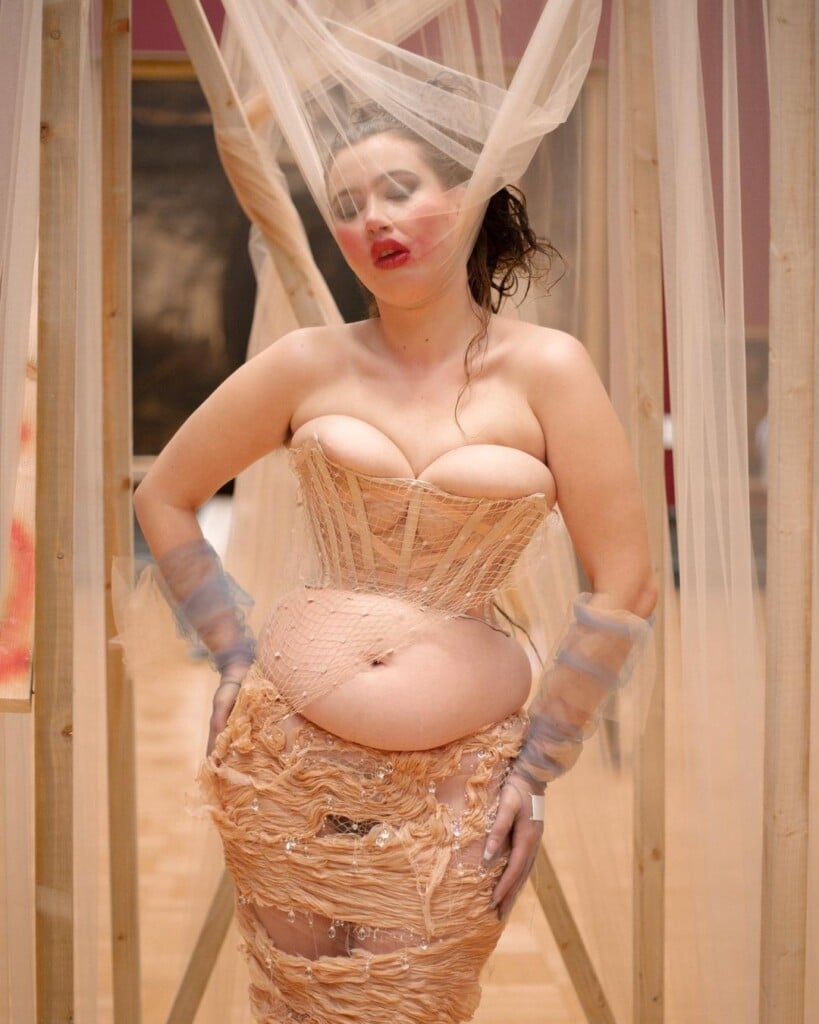
The image above features Michaela Stark on display at the Milan Fashion Week in 2024. Michaela is an Australian “body-morphing” artist currently located in London, who has made several headlines for her ‘Panty’ clothing line, which consists of lingerie and undergarments geared for “all bodies.” She perfectly captures the ways in which our clothing shapes and defines us, and never the other way around. I found Michaela in a sea full of Instagram models, body dysphoric rhetoric, and promotions of every possible procedure to fix every possible flaw of the body, media we consume every single second. Her work was eye-catching, shocking, and…normal.

What is possibly normal about contouring the body in such outrageous ways only to be put on display? Exactly. And yet it has been normalized in every other context by labels. The thin bodies we have shoved down our throats (while completely dismissing our own) are fit to be morphed and changed however need be, whether that be through soft shapewear or restricting corsets. Thin bodies are the ideal, and they must be accompanied by hairless and flawless skin. There mustn’t be a blemish in sight, a wrinkle to see, a stretch mark to grieve. Michaela Stark does this same thing, but we know it’s different. Except we know it’s not different but media has told us it is and so it must be. We all share the burden of having a “broken” body, the only difference is whether your body was born “broken” or conditioned into being “broken.” We all have something we must be desperately fixing at any moment.

And even through political, social, and public statements that individuals like Michaela Stark make (whether that be through voice or body) where is the representation for men? Society holds tight to how a woman should be, and perhaps we are given some lenience because our bodies are meant to change (not by much though, don’t get ahead of yourself) through the natural processes of pregnancy and birth (yes, I know how demoralizing that is to women anyway), but men don’t get this recognition because it’s socialized to us that they don’t need it. A man’s body should only change for the better: gaining muscle, growing taller, being smarter, stoic. Women are the clay that is never left untouched, always malleable in another person’s hands. Men are the statues, the pyramids, never to fall or be broken down. And a statue should NEVER change. Who knows what waits for you when you don’t identify as either of those things.

Michaela Stark represents a movement of bodies, and in that name we must assume this includes EVERY BODY. If we wish to combat the social construct of the body as its ingrained in our everyday reality, let us begin with abstract thinking.

Sources (and/or more to read):

Magnificent Michaela Stark

Michaela Stark Milan Fashion Week 2024

Michaela Stark in Fashion Film

The World Limits My Body and My Body Limits Me

On July 1, 2022, I wrote the following entry:

“Whether I want to admit it or not, my growth is relevant, is obvious…but not when it comes to my body. Kind of. I can’t explain it. I do feel better about myself. I enjoy what I look like…and haven’t used my body as an obstacle or excuse of not trying. But that trauma from being bigger still lingers. What people think of me still stays in the back of my mind, when I get hit on in public it still surprises me…”

Phenomenology teaches us that bodies are not just biological objects but lived experiences, shaping how we perceive, move through, and make meaning of the world. It is the “science of the essence of consciousness.” It is with that then, that we recognize that our Western society has nothing to prepare us for this type of perspective. We are forced to live so physically in our world that we often resort to theories and philosophies to provide cushioning and comfort, but it us that must invoke that change. This is where we feel stuck. The tools and unlimited opportunities but too many fixed mindsets to put it into action. It’s something we feel when we’re 16 and likely what we’ll feel when we’re 60, the outside pressure of constantly separating one’s body from the mind.

What my 16-year-old mind didn’t realize was that there was an exact name for my feeling, an effect of society’s demands: Feminine Motility. How women may move if they must. That’s the feeling you get, anyway. We describe this detached feeling of our body as Ambiguous Transcendence, where we are both separated but bound to our body. The verbal “I can” which ultimately becomes “I can’t” under Inhibited Intentionality, and the Discontinuous Unity, where one severs their capacity in the body from the possibility of the world. At every more we are controlled, questioned, and doubted from something we can’t see but recognize.

It’s an unbelievable reality to merely stumble upon one day, usually in your adolescence. I think that’s the point too, to get you when you’re your most fragile, mentally. It feels damning, but then you get older, and at some point your mind aligns with your physical age and I think that’s what it means to enter adulthood and understand Phenomenology. To recognize that our body is a biological being, but also something that transcends beyond the physical world and our social boundaries. Moving (both emotionally and literally) from childhood to adolescence to adulthood is a painful process, one we can’t understand until we’ve been through it.