
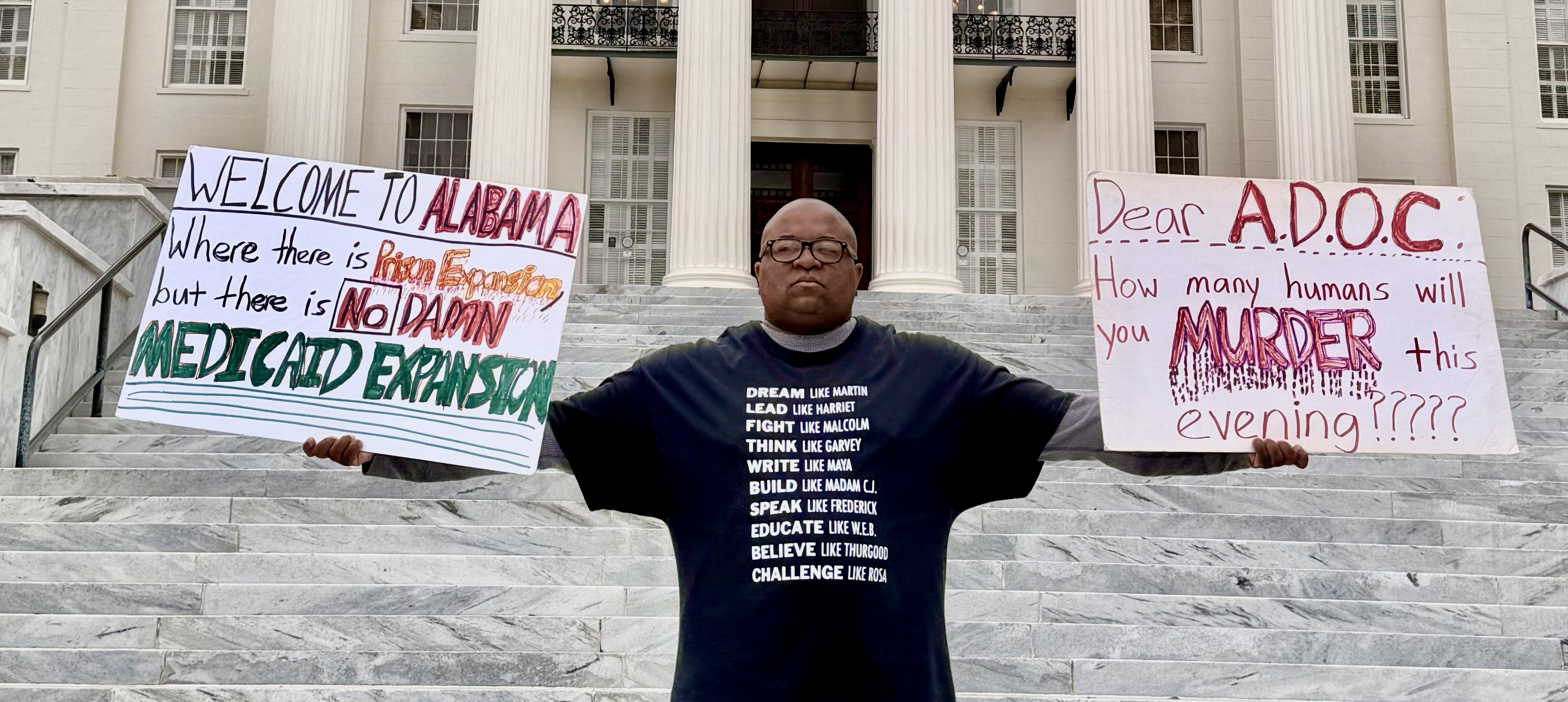
During our conversations about The Strike, we briefly touched on the relationship between incarceration and slavery in reference to the 13th Amendment. Although the amendment abolished slavery in the United States, it also states that it is allowed as punishment for a crime. This raises a pretty common question I’ve asked myself and my peers, how much did the institution of slavery actually change if there is still a legal gateway for it to happen?
I mentioned this several times so not to sound like a broken record, but The Alabama Solution has been on my mind since watching it, and came back to mind after watching The Strike—needless to say I think it’s a highly necessary watch for anyone. It exposes the conditions of Alabama’s prison system, showing the cycle of forced labor, violence, and severe mistreatment of those incarcerated, this time with visual proof from the prisoners’ phones. Their decision to organize to protest their conditions was very similar to the collective resistance shown in The Strike, both by the inmates and their families and friends on the outside.
When discussing the parallels between incarceration and slavery, it’s impossible to have that conversation without recognizing how Black bodies have been used and controlled. In my PSYC 255 class, we recently were discussing Davis Bend, a unique plantation in the south where slaves were given a degree of autonomy to motivate them to work harder. They would be paid overtime if they continued to work, a slave-run jury to handle issues, and even dental care. This false sense of autonomy over themselves with a few rewards—that are just basic human necessities—is a common theme we see in prison systems and these documentaries. It’s an interesting parallel to consider, especially when we now have to question where the line is between these two systems.
It makes me wonder how often we mistake being given “privileges” within an oppressive system for actually having complete and total autonomy over oneself. If someone, no matter if they’re considered a felon or not, has to earn basic necessities through their labor or behavior, can we really call that autonomy? When they can’t even earn those basic necessities and must use their body as a form of resistance, whether through hunger strikes or work stoppages, what does this say about the systems that have been put in place to control them?

