
When you look in your closet how many favorite shirts do you have? How many favorite stores do you shop at when your looking for new outfits? You may not realize how lucky you are to even have a favorite outfit or store to go to.
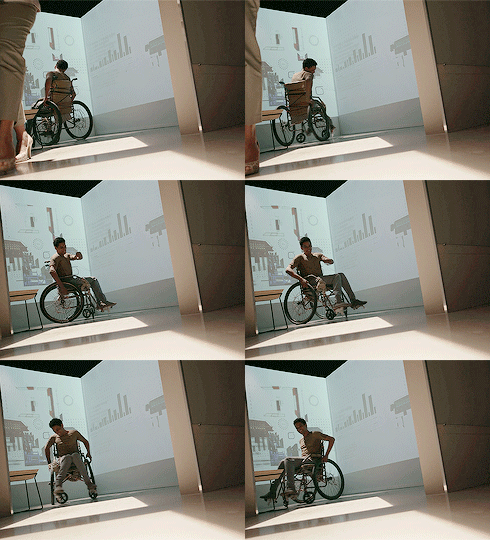
The reality of many adults with disabilities is the obstacles and embarrassment they face when trying to find clothes that suit their body type. We recently saw on the movie “Murderball” a brief excerpt of one of the men attempting to change his pants while sitting in a wheelchair. The struggle to coordinate his body movements to take off his pants was discouraging to watch.
Who is Mindy Scheier?
Minda Scheire is a mother of a disabled son who was confined to a wheelchair due his debilitating rare form of muscular dystrophy. Shopping in the mall was an obstacle that was becoming increasingly draining and unmanageable over time. After experiencing the daily struggle’s with her son to get him dressed in the morning before school and watching his disappointment as his favorite jeans slowly became impossible to fit over his braces, she knew something had to be done.
Schiere understood the importance of clothing and how it could influence a person’s overall confidence. Come to find out, scientists have even developed a name for this called “enclosed cognitive recognition which refers to the symbolic meaning of clothing and the physical experience of wearing the clothing, that have a direct correlation on how you feel about yourself” (Ted Talk, 2017).
It took a lot of time and research to understand what needed to be changed to make clothing adaptable to the “differently-abled.” She located a foundation that supported mainstream fashion called The Runway of Dreams. Her contributions to this clothing line has developed modified clothing to alter closures (buttons, snaps) and replace them with magnets, waistbands were now made with elastic and she created various ways to put on the clothing that differs from the traditional way.
Her creativity and willingness to educate the fashion industry created a social space for people with disabilities to be included. The disadvantages and restrictions that Tom Shakespeare discusses in “The Social model of disability” dealt heavily with the exclusion of people with disabilities. The structure of the fashion industry only targeted the “normal” functioning population. We need more likeminded people similar to Minda Shiere who are willing to go the extra mile to limit the isolation that people with disabilities experience and include them in mainstream social activities, such as shopping, that Shakespeare describes.