
In defense of looking cis

Last year, I took one of my favorite classes I’ve taken for my major – the anthropology of adornment. The class covered the diversity of changes that humans make to their bodies, both permanent and non-permanent, and covered the cultural reasons as to why people adorn their bodies in specific ways, and for what reasons. I took that class with a few friends of mine, one with stretched lobes, a septum, and a myriad of other piercings, and the other, who had been working on her patch sleeve for years at that point, and who seemed to have a new tattoo every month. Sitting next to them during class I looked rather unadorned. I feel a little silly, looking as plain as I do. I keep telling myself that one day I’m going to dye my hair, or get my septum pierced, or get a small tattoo somewhere on my body, anything to differentiate myself from the crowd. 

That class got me thinking about what I do to adorn myself. Despite being a transgender man, I tend to fit the gender binary when it comes to what is expected out of a masculine person. I’ve worked hard to pass as cisgender, for many reasons. As it is, there’s a lot of misinformation and prejudice against the trans community, and I try to work against that by being open about my transmasculinity – despite how “normal” I may look to a cisgender audience – so that cis people can learn and grow to accept trans people as a regular aspect of everyday life. In a way, my lack of any obvious adornment is an act of adornment in its own right, complete with its own cultural and political reasonings and justifications.

Despite my reasoning, is conforming to cisgender notions of masculinity for the sake of cisgender comfort an effective strategy to increase acceptance of transgender people? I can’t help but be envious of trans people who feel as if they are able to express themselves outside of the strict cisgender notion of what is masculine and what is feminine. Hell, even my friends from that anthropology class (who both happen to identify as cisgender) feel as if they can adorn themselves with piercings and tattoos, so why should I be any different? No matter what I do to conform to the gender binary, cis people as a whole would rather that transgender people didn’t exist, rather than accept our existence.

How can I tell if a cis man is a chaser?

Throughout college I’ve had a recurring will-they-won’t-they relationship with a friend of a friend – nothing major, we don’t see each other too often, but we’ve flirted back and forth for a few years now – recently that relationship came to a head, and I found myself confiding in another friend of mine, while catching her up in all the drama I’ve found myself in recently during one of our once-in-a-blue-moon wine nights. As I was regaling her about my situationship, she stopped me halfway. “Wait wait wait, is this guy cis?” As I sheepishly affirmed her assumption she continued “Cause so far this guy sounds like a chaser.” Just a little embarrassed, I took another sip of wine. I had been afraid of that, but didn’t want to think too hard about it. The thought that this guy I had been talking to only wanted me to fulfill some sort of fetish, to have sex with me only for bragging rights, that my body would have been nothing more than a bucket list item for him, it was a good way of making me feel cheap, unloved, unwanted any further than through sex. 

There’s a sort of pressure you feel if you’re a trans person to only date or hook up with other trans people. It makes sense honestly, how can you – as a trans person – be sure that your partner sees you the way you want to be seen? Knows and validates the struggles that you face in your day to day life? Understands the intricacies of your body outside of a cisgendered understanding of the gender binary? Acknowledges the importance of your identity without making it the entirety of your being? Date another trans person. Really it’s best to avoid cis people all together.

Some people, like my friend, are lucky and stumble into a t4t relationship almost accidentally – she and her fiance had been dating for years, before both realizing and coming out as trans to each other around the same time – others find it relatively easy to find and be with other trans people – finding a mystical Goldilocks zone where they’re able to signal to each other that they’re both trans without outing themselves to the cis crowd around them. I, on the other hand, find it to be a herculean task to find a trans partner, possibly in no small part due to – and forgive me if I’m being full of myself here – my ability to pass remarkably well as a cis man. I’ve gotten to a point in my transition where when I come out to cis people, their first reaction is to think I’m a trans woman early on in her transition, instead of a trans man with years of HRT, surgery, and social training under his belt.   

While I have many friends who are trans, just by coincidence I tend to find myself hanging out and partying with cis people, drunkenly telling strangers and friends of friends that I’m trans, seeing their look of surprise, trying my best to answer their genuine questions, listening to my friends roommate – a little drunker than I meant to be that night – tell me that “Really I’m bi, but I never had the chance to try anything out before” as I vaguely register him moving his hand from my shoulder, to around my waist. 

How do I know if a cis man is a chaser? Really it’s best to just avoid cis people all together.

Physical labor, Emotional Labor

When I was around four or five years old, I was obsessed with ballet. Angelina Ballerina was my all time favorite show/book series, most nights I would end up dancing around my mom in the kitchen while she was preparing dinner, and I would religiously practice positions one through five on the weekends when I had nothing better to do. It eventually got to the point where my mom had enough and signed me up for beginner’s ballet lessons. 

I didn’t stick with ballet for various reasons, but to this day I’ve noticed a few things about my body that most definitely are a result from my ballet obsession. I’ve noticed that I’m more flexible than my peers, I have a better sense of balance than my friends, I keep a fairly good posture when I’m not thinking about it, and – most noticeably – I stand at a relaxed position two when speaking to people – my legs out wide with my feet pointed outward, instead of (what I’ve been told is) standing normally with of my legs parallel to my shoulders, and my feet pointing forwards. In fact my standing position is apparently so noticeable to the point where I’ve been called out about it, and my friends have made lighthearted jokes about how I stand. 

There are a lot more effects that ballet can have on the physical body. All things considered I seem to have gotten out lucky, but that fact that an extracurricular I decided to take on when I was five has noticeable physical effects on my body almost two decades on since I “professionally” danced, is at the very least notable in what it says about the body and how it is used. 

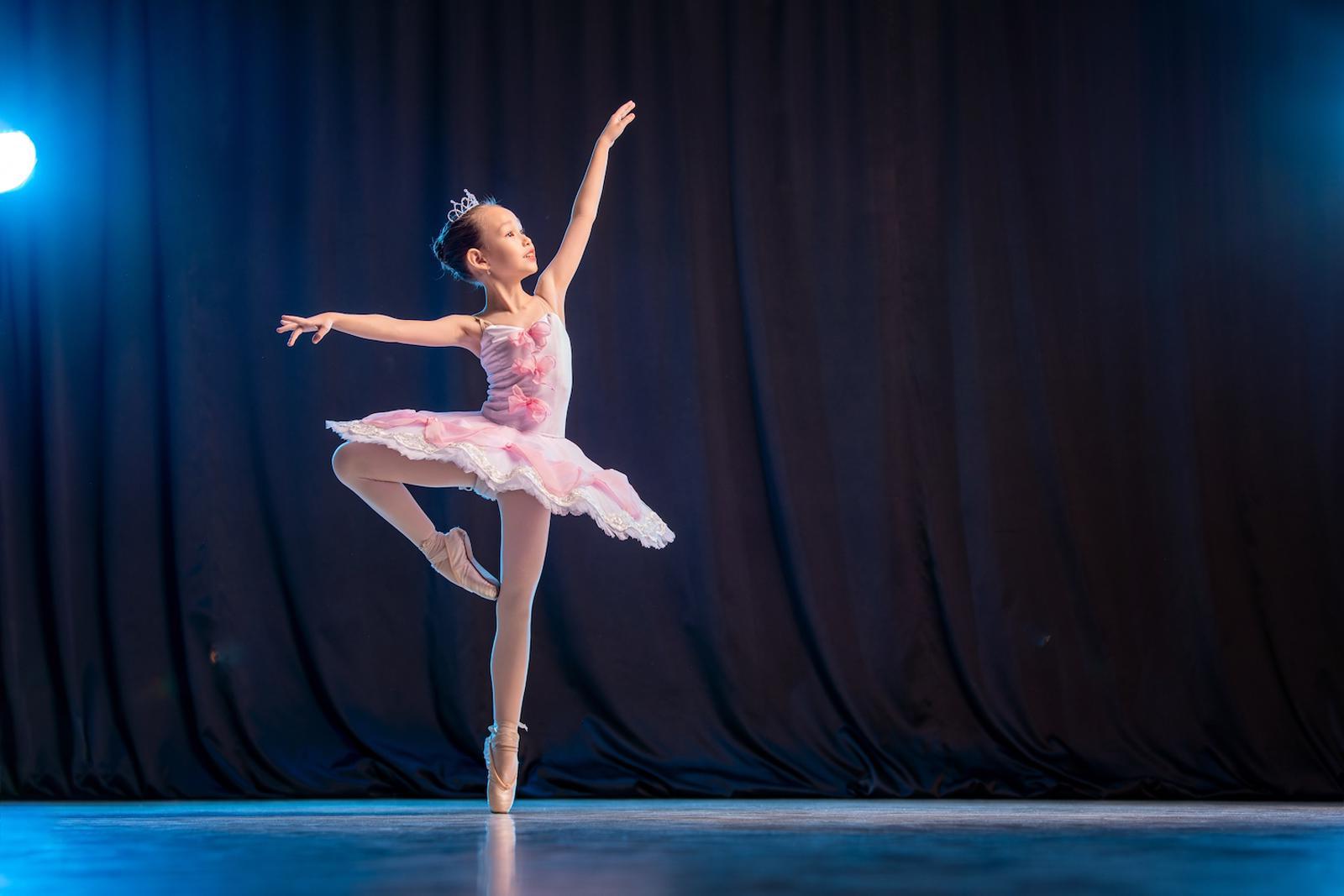
A young ballerina, dancing on a stage

More recently in my life: I became elected, performed the duties of, and subsequently passed on the torch of the presidency of the A Capella group I’ve been a part of while I’ve been studying at UMBC. That entire year was extremely stressful, in no small part thanks to working on my capstone project during the second semester. As an anthropology major, it was my job to perform an ethnographic research study on a group I found interesting. After getting unanimous support from both my professor and the group itself, I was able to study my A Capella group. While I was originally unsure of what to focus my study on, I soon started noticing the emotional and unpaid labor that everyone – not just the group leaders – performed in order to keep the group functional and thriving.

 While I am no longer the president of the A Capella group, echoes of my presidency still linger on, despite my want to “retire” and enjoy the group as if I were a normal member, emotionally I’m still in “president mode”. People still come up to me asking for advice regarding the group, and I have a hard time not interjecting with my opinion when the leaders of the group are having trouble. In a way it reminds me of how ballet affects the way I stand, and I wonder if I’ll ever be able to break out of “president mode” when interacting with the group in the future.

Learning to be a man after being raised a girl

For as long as I can remember, every summer my large extended family migrates upstate to north country New York to spend time with each other at my grandmother’s house on Lake Champlain. The house itself is falling apart, and every year the men of the family take it upon themselves to fix up a new part of the cabin in order to occupy themselves while the women spend time shopping and cooking enough for twenty five people, while the kids spend the day exploring the area and playing in the lake.

Growing up, aside from playing mermaids at the beach and following my older cousins around, I was expected to help sweep the sandy house every day, set up the grown ups and kids tables for dinner, and to clean up afterwards while the adults got themselves something to drink. While my parents tried to get the boys of the household to do the same, they tended to get away with doing less than the girls of the family, using the excuse that they had spent the day helping (or watching, as some of my cousins argued) their dads with that year’s construction project. Nonetheless, that’s how summers were organized for my family, and as I grew older, cut my hair shorter, and started wearing more masculine clothes, I got into the swing of helping inside the house while my brother helped outside of it.

[Image: Lake Champlain as seen from a cove, a sailboat and island are seen off the coast, with mountains on the other side of the lake seen off in the distance]

The summer I was 20 years old, my family once more made the trek upstate. This summer was particularly notable because I hadn’t been able to make it the past few years, meaning this was the first time I spent my summer in New York after socially and medically transitioning. I was expecting to spend my first day back following my cousins around and gossiping before heading back to the house to help my mom and aunts cook dinner. But before I could run off, one of my uncles handed me an armful of plywood and told me to haul it over to my grandmother’s porch. I ended up spending the day with my uncles and cousins disassembling the porch while my grandma sat in her adirondack chair and filled out her crossword puzzle with the help of my mom. I didn’t mind, despite not knowing the details regarding how to disassemble a porch, this was my family’s way of accepting me as a man, and therefore expecting me to fulfill certain duties as a man.  

However, as the sun started to set, and my aunts began making food for the family, I was called into the kitchen to help out with dinner. I am not a confrontational man, and didn’t want to make a fuss, so despite my achy and bruised body, I made my way into the kitchen to help, while my uncles sat in the living room to talk, and my cousins ran off to the beach. I found it interesting that despite my family’s acceptance of me as a man, I was still expected to fulfill the responsibilities that came with being raised and socialized as a girl. 

While this is one of the more notable times I recognized this happening, it was far from the only time in my life I’d been expected to be a man, after having been raised a girl.