
Doctor’s PHQ and GAD7: why are you so afraid of being honest?

Here is an experience 99.9% of you have had… you go to the doctor’s office. It’s been a while, the nurse sees you, gets your vitals, and tells you that you need to fill out a form before the doctor sees you. The PHQ and GAD7 form, everyone has to fill them out. And everyone lies to themselves…

Here are some of the questions you have to face:

  1. Do you have little interest or pleasure in doing things? Yes. Sometimes. Not at all.
  2. Do you have trouble falling or staying asleep, or sleeping too much. Yes. Sometimes. Not at all.
  3. Do you have trouble concentrating…
  4. Feeling tired…
  5. Trouble relaxing…
  6. Being annoyed easily…

The questions go on forever it seems, but it’s only 14 questions in total. I guess it takes time to reflect on people’s last priority, their mental health. Sometimes it takes 30 minutes for patients to finish these questions. Why is it so hard for us to reflect on these things? “Me? Oh no, I’m fine, everyone feels like that!” Or do they.

When I worked for a non-profit clinic, we would see all kinds of patients. Immigrants, elderly, young, mothers. I would check patients in and the PHQ and GAD7 questions were on our computers, so I would ask them these questions verbally. When I would ask patients these questions pertaining to their mental health, it was as if I asked them to recall the laws of thermodynamics. I knew the reason they were taking such long pauses, and the occasional awkward chuckles to serious, and unfunny questions. These questions made them nervous. They were thinking of the repercussions of being honest about these questions. The stigma that comes with mental illness is what they feared. They assumed they were going to be thrown in the looney bin for having anxiety, God forbid they have to see a therapist! Why does the stigma of mental illness cause us to view others differently, so much that we have a false image of our mental health? To normalize bad mental health for the sake of not conforming to the mental illness stigmas of society. You may disagree with all I am saying here, but we live in an age where suicide rates are at their highest, and our day-to-day language has more than ever references about suicide. And it’s all ✨normalized✨.

Is it due to the societal stigmas of mental illness that’s instilled in us. Or is it because of the glorification of stress. Yes, glorifying stress is a real thing that we all do, no matter what profession. The more stressed you are, the more you burn yourself out, all for the sake your work or school, the more you deserve. The artist that went three nights without sleeping to finish his master piece, he is such a hard worker he deserves all the praise. The doctor who cut off relations with the world and started living in his laboratory, HE’S going to get a noble prize, he deserves it more than the guy who got a full eight hours of sleep and ate breakfast too.

“You got a 90 on the exam AND had time to brush your hair this morning, well I got a 91% and I haven’t ate or slept in two days, maybe if you were determined enough and made the sacrifices I did you would have done better!”

But like at what cost LOL, determination and success do not correlate how much you can push your body and mental health.

Maybe this isn’t relatable or ringing a bell to some of you, but with the pre-profession community that I’m a part of… I am constantly reminded by this sad reality. Bad mental health is normalized, and its evident in every day of my life. Thankfully, I have supportive parents and community that allow me to be truthful with myself about my mental health. So please give yourself the right you deserve to transparency, and self-awareness of how you’re doing. Sometimes a little reflecting in silence is all it takes to do a quick checkup on yourself. Don’t let the once a year doctor’s visit be the only time you evaluate your mental well-being.

To end on a funny note, here is a meme I made that depicts the behavior I was referencing to.
Ableism: Capitalization on Female Bodies

In today’s age, we are very fortunate to have an abundance of technological and medical advancements available to us. These advancements have increased the quality of life of many abled and disabled people. They often make the difference between life and death. But is it possible to have too much of a good thing? Is there enough ethical intervention and regularization in utilizing these advancements?

The medical model of disability focuses on finding cures for people’s disabilities, on making them more “normal”. A common, and often devastating, disability is infertility. Infertility is when a female cannot conceive, or when a male cannot impregnate their spouse. This kind of disability is subjective because some people may not find this as an inability. Regardless, the medicalization of infertility and pregnancy complications has come up with the technology of IVF and surrogacy. Where a female egg is taken and fertilized with the desired sperm outside of the body, then implanted into another female’s uterus to be carried. Undoubtedly, this procedure has brought joy and life to many families unable to conceive. But, some able-bodied people are capitalizing and taking advantage of this advancement simply for their convenience.

Firstly, I would like to consider accommodations for disabled people. Do all accommodations meant for disabled people need to be exclusively for disabled people? This isn’t a case of taking the ramp when you’re able enough to walk up the steps. This is not a case of using the bigger stall in the bathroom when you can use the regular stalls. This is a case of medical intervention which is meant to better a disadvantaged person but is abused by abled persons. This is a case of ableism and its new rise to ethical issues.

Although, there are regulations and guidelines set for pharmaceutical medical interventions for disabilities. Such as who can get Adderal prescribed and who cannot. People who truly need their prescriptions for behavioral disorders have to be questioned and interrogated even more, due to abled people taking advantage of these drugs. Ozempic is a really big issue in the news now. Celebrities who have connections with physicians buy this drug to conveniently lose weight when millions of individuals with diabetes need this drug to survive.

Yet, for surrogacy, there doesn’t seem to be any regulation for who is qualified and who is not. It’s a trend now, as casual as a new pair of shoes. A new procedure that is crucial for some, but casual for others is being over-utilized by high-class able-bodied people to keep them from experiencing the inconveniences of pregnancy. How does this affect disabled people or women as a whole? We learned about Marx’s views of organized labor and alienation. Surrogacy is becoming like a business transaction. You pick a healthy fertile female and use her body to carry your child, which is a product the surrogate creates but is not able to obtain or enjoy. The surrogate is alienated from her product faster than any other transaction. In most cases, the surrogate births the child, and it is taken from her and given to the mother of the child lying in the hospital bed next to the surrogate. This can be a beautiful heartwarming moment for couples who truly need this. But the beauty of this miracle is taken away when infertile couples need to wait months and even years due to the high demand for this process by abled body people.

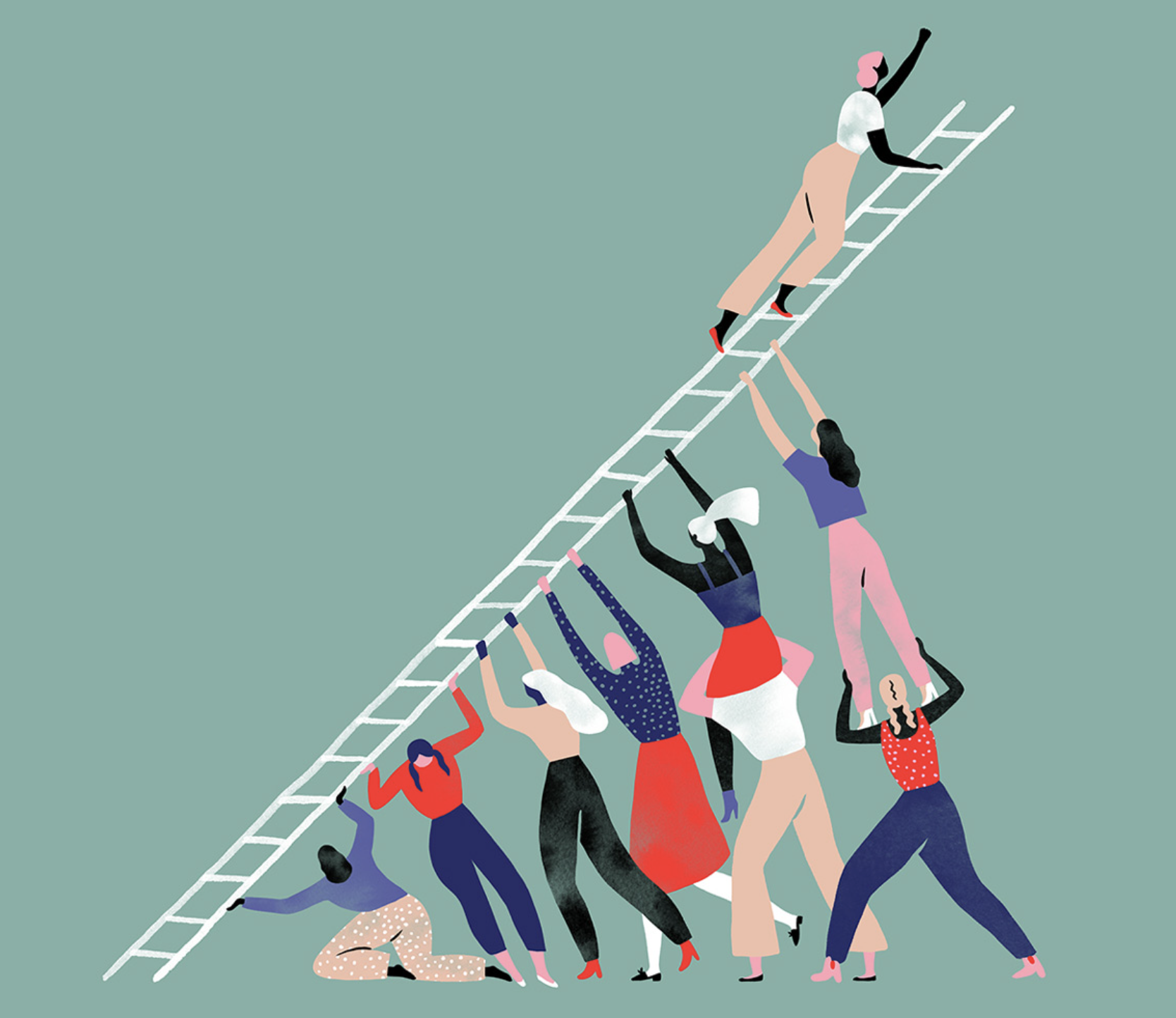
The effect of ableism causing this phenomenon will also set back feminist movements. Although, it is often celebrity figures who take on a feminist character that abuses this procedure for their convenience. But there is nothing empowering about an able-bodied female not wanting to gain weight, go through hormonal changes, or all the difficulties of pregnancy and postpartum issues. But inflicting those permanent bodily and mental changes on another female in exchange for temporary fortune, out of convenience, is and should be unethical.

Does my disability offend you?

Source: http://www.monicagarwood.com/06unzanwj02x4l72zo5a83tix6m8to

This week’s discussion regarding people with disabilities and the social and medical model of disability was very eye-opening and emotional for me to learn about. My mother is a burn victim that lost all function in her left hand, and still has some function in her right. Her incident happened 21 years ago, so she has adapted very quickly, although when she is in public some people stare or give her weird looks. The video of Judith Butler and Sunuara Taylor reminded me of me and my mother, and it was emotional for me to watch. My mother is an empath and she is very sensitive to how people perceive her. If she gets a disapproving look from anyone, she will automatically stop running errands and go back home. She will ask me to run errands for her instead. I get so worked up and angry at people, a look can say a thousand words. I would always ask myself, does her disability offend you? Are the slight imperfections in her skin becoming an inconvenience for you to look at? Why do people value being nice and accepting and preach about it but never practice what they say?

I have always stood for not changing yourself for others, but I supported my mother when she underwent all the cosmetic plastic surgeries to love herself. But, I believe it was other people’s perspective of her that needed altered, not her. The social model of disability focuses on making the world an accessible place for all kinds of disabilities. But I don’t think anyone would wait until everyone in the world got the memo, to be able to live life happily. To be able to feel comfortable, and not as a liability. I believe this is why some people depend on the medical model of disability, for an instant fix to a life-long impairment.

A happy ending that inspires me everyday, is after all the years of my mother struggling with her disability, she finally overcame everything and is now completing her Pharm. D. to become a pharmacist as she was pursuing before her accident. My views and opinions of disability fall in-between the social model and medical model of disability. My mother needed both to lead a successful life. She needed to somewhat conform with societie’s views by changing her appearance through surgery, which is what the medical model of disability stands for. But she also needed many accommodations throughout her undergraduate and graduate education to succeed, which is what the social model of disability stands for. Although the system of getting accommodations is not perfect, because it almost shames students for needing help. It is better than what other countries, as we’ve experienced, have. I believe in the soon future we will see a normalization for people who need are not totally independent, because it is about one third of the population. We need better education in schools about disabilities and how treat people with disabilities. There also needs to be a way to educate people about what accomidations are, because a lot of people do not even know it is available for them. Having an impairment is a struggle that no one should over come alone. Especially in today’s time, we have the resources and ability to make any opportunity the world accommodating to everyone.

Looking through an Artist’s Eyes

Phenomenology of Artists and their perception of the world

Have you ever looked at an Artist’s work and thought “Wow, this exactly encaptures how I feel..”, if you haven’t you need to do your research because it’s truly a life-changing experience that you DON’T want to miss out on. Whether it’s poetry, sculptures, paintings, theater, or music; art always makes me re-evaluate my perception of the world. I often wonder what kind of experiences has this artist had that have shaped their mind and thinking to express themselves this way. How are they able to translate their thoughts into works of art that communicate the same message/experience that they felt or went through?
Self-expression in today’s world is such a complex and difficult thing. I feel like no matter how you express yourself in whatever shape or form, people will have a million different opinions of you ranging from good to bad. Even in simple everyday communication, people have so many different perceptions of the world based on their life experiences that what you say can be perceived in a million different ways. But, how is an artist able to so VIVIDLY and CLEARLY communicate something to people all around the world, who have a million different perceptions, and still give entirely the same message?
If you’re having a hard time understanding what I mean, let me show you some works of art and think to yourself about what this means to you.

“Can’t Help Myself” By Sun Yuan and Peng Yu

“This is just a robot carrying on its programmed motions..” you might think at first glance. But after watching the video for longer than a minute, you might feel an emotional response stirring in you for a multitude of different triggers depending on your life experiences and your own phenomenology.
Does this robot symbolize your feministic way of life? Trying to un-do all of the patriarchy, while society persists to treat you less than a man, not equal.
Or, does this robot symbolize your relationship with your body? Trying every diet known to man but never being considered just right, rather “too small” or “too big”.
Or, does this robot symbolize your struggle to make ends meet? From getting a degree to getting your desired job, your ever-so-increasing standard of living can never make any paycheck enough.
Or, does this robot symbolize your relationship with your parents, a significant other, or an old friend? You love having them in your life, but it’s an ever-lasting circle of ups and downs.
Perhaps, this robot symbolizes your relationship with food. You promised you would do better for yourself but you go back to your stress-eating habits and can never say no when you should.
There are so many interpretations of art, and all of them point back to the viewer’s experiences, upbringing, and gender, which have all shaped them to have those interpretations. But what are those experiences and phenomena that have shaped you, the viewer? What are they for the artist?
To conclude, I personally think it is very interesting to ponder these questions. To me, this is what phenomenology is all about, what makes us do the things we do, or think the way we do.

Unruly Bodies

Unruly Bodies