
Vellus Hair Underneath an Aero Jacket

Vellus Hair Underneath an Aero Jacket

Technically speaking, body acceptance has not been around for that long. Considering that human civilization has been dated to 6,000 years ago and yet racism, ableism, colorism, and many other stereotypes continue to isolate and insult natural human bodies is very terrible. In class, we learned how to define the different types of bodies and all our different perspectives. In Alcoff’s “Towards a phenomenology of racial embodiment”, the author states that in this era, the newly emerging sciences understood knowledge primarily as a practice of ordering and classifying on the basis of essential differences. We all have many differences but at the same time many similar traits; facial features, body hair, bones, organs, and I want to add common sense but alas I can not. It’s kind of ironic how common sense isn’t common at all. 

I switched elementary schools in first grade and entered a new environment filled with cliques. I was accepted in my old elementary school but not in the new one; I distinctly remember being the outcast. I would eat lunch alone and I was never fully a part of any friend groups. I just had fun floating around. At the new elementary school, a white boy made fun of the fact that I have a lot of hair on my arms. So I wore a long-sleeve jacket the next day. And the next. And then the day after that. And now suddenly, it’s the end of eighth grade and I’m still not comfortable with my arms. 

The whole situation about hairy arms was heightened when I was in line in school one day in May and the teacher asked if I was hot because I was wearing my jacket inside. I said, “No I’m fine”. But she asked again so I shook my head. And then she made a comment about me to another student and teacher, shaking her head in disapproval, whispering that it was weird that I didn’t take my jacket off. 

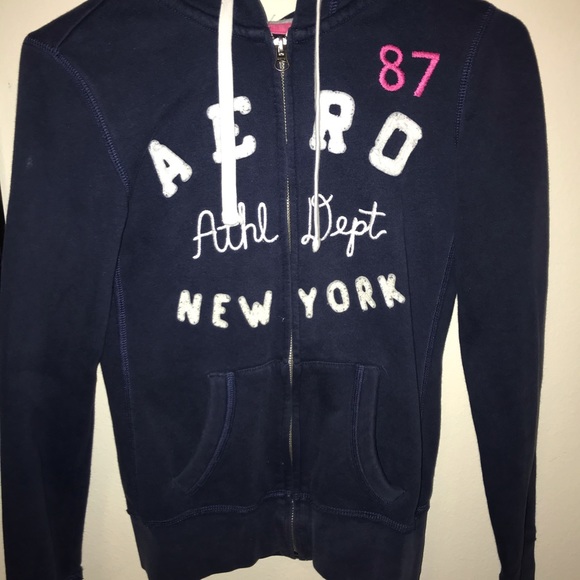
I become afraid that the next person would bully so I didn’t give them the chance. I wore a jacket every single day, I made sure to stock up on sweaters, and all my dresses had to be long-sleeved. My favorite jacket at that time was a blue Aeropostale with pink letters, a classic. 

All that changed in high school. My high school was very diverse and many students had hair on their arms. It was not only me. Then I learned that everyone had some length of hair on their arms. Vellus hair grows everywhere except the lips, the back of the ear, the palm of the hand, the sole of the foot, some external genital areas, the navel, and scar tissue. Vellus hairs regulate your body temperature and help sweat evaporate from your body (Healthline.com). 

Finally, the realization dawned on me. If that boy from my elementary school had common sense, maybe he wouldn’t have made fun of the new kid and made everybody laugh at her because her vellus hair was a contrasting color to her skin color. So then I lived happily ever after wearing my short sleeve tops, crop tops, and *gasp* even sleeveless tops. 
Would you like to meet Doris?

Would you like to meet Doris?

I work for a community service center under the state department of health and I would like to share some information that I’ve learned over the past couple of months. I’ve been meeting with an older adult, let’s call her Doris, for 3 days a week for months and we’ve become friends. Doris is single and lives with her younger adult sister and sisters’ partner. Doris doesn’t do much during the day but has a strict eating schedule, refrains from sugar, and gets dehydrated easily. During our meetings we do crafts, stretches, online games, and talk about our day. Honestly, I love Doris so much and the time we spend together. 

It was such an interesting experience getting to know her. She has a mental disability and from what I’ve witnessed, she doesn’t know how to read, or write, can’t pronounce words correctly, constantly repeats herself, asks the same questions over and over again, has some deformities in her body, and gets easily distracted and angry. But the more I got to know Doris, I also witnessed that she is possibly the sweetest and most understanding person ever. She constantly checks up on me and remembers a lot of information that she brings up to get updates on. She tells me about her worries and I reassure her. The difficult moments that she faces are very unique and I have to be a good listener and role model so that I can give her good advice. So after getting to know how Doris operates, I started mentally prepping before our meetings; maintaining a positive attitude, assure that everything is and will be fine, and focusing on making her happy regardless of what she might say to me.

After reading Margaret Price’s “Defining Mental Disability”, I tried to relate what I’ve learned to how Doris might think. I know she knows that she is different because she has explicitly mentioned that to me. But when she expresses wishes to me that another able-bodied and/or mentally-able person experiences daily, such as having a partner or getting boba tea, I struggle to try to explain to her why she would not get the same chances. Doris draws like a first-grader and her favorite games have to do with Clifford the Big Red Dog and Barney. The fridge and pantry in Doris’s house have to be locked because she will try to eat the food and she has broken the lock multiple times. She has eaten dog food because she felt the urge to throw objects, like the laptop, around when she gets a tantrum. She also picks at her finger and scars it. I don’t mean to put Doris’s business out like this but I want people to know just how different people can be and how accepting we must learn to be. Knowing Doris can be such an eye-opener, as it was for me because I have never met or heard of someone like her. “No term in the history of madness is neu­tral,” Geoffrey Reaume states. So Doris might be different to you and me, but elsewhere she is neutral. Although she needs help and stability, it is not okay to look down on her or anybody else. Price also mentions that she battled her insurance CIGNA to continue getting coverage for her mental health and it had to be determined by her healthcare professionals. It is so absurd to me that patient-centered care is not the focus in America. The patient’s wellness and that everchanging journey should be accounted for the most. The “well/unwell” paradigm is not linear but rather a spectrum. We can not throw around the word “normal” because what even is “normal”? To Doris, we may not be “normal”. We all make up these terms and conditions in our heads and spread them in society to get accepted but doing so means we marginalize people, humans, sisters, and brothers, that deep down are no different than us. 

Visual Impairment

I have poor eyesight but I can still see. My prescription glasses are pretty strong and I know this because my friends will try on my glasses and start saying how blurry it is and “Bro you’re blind”. This is interesting because a while back I became friends with a blind person. Someone who has no vision at all and uses a white cane. Everytime I hung out with them, I was reminded of how blindness effects their life. They would put their arm through my arm so I could guide them. I went into their apartment and it was pitch black. I just stood there for a couple of seconds becaue it shocked me so much that they didn’t need the light to see, which makes sense, but not something I’m used to. They wouldn’t know if they spilled sauce outside of the plate they were eating off of. They were constantly bumping into things. They used text-to-speech option on their iPhone so Siri read everything out to them. 

This person was the one who introduced me to National Federation of the Blind (NFB). I learned about the organization last semester and they stated in their website that they are very progressive and forthright in their movement because because low expectations create obstacles between blind people and their dreams. I recommend everyone to set apart some time and read through the incredible stories and journeys the board of directors went through https://nfb.org/index.php/about-us/leadership/board-directors. Each person has a unique story and the crazy thing is, this is just a small number of stories. There are so many hardships and accomplishments that each disabled person has conquered that we don’t know about. As I read through them, I felt as though I stepped into a different world. I wish I interacted more with diverse people because nowadays, I always notice how my surroundings are inaccessible. From the words I read campus to how I walk around from point A to point B. Only through watching Crip Camp was the movement for social justice solidified in my mind. We must strive for more equality for our peers and the impaired people in our community. 

When my sister was Born!! :)

tldr; i love my family very much

My sister and I have a 10-year age difference. College has put some distance between us but the second she needs me, I’m there for her. Although faint, I remember her first rolling over, her first steps, her first words, her cute outfits, changing her diaper, her Halloween costumes, and much more memories. Thinking about the old times me nostalgic. Oh, how times have changed. Oh, how much worse they got. I would time travel back if I could, without thinking. I wish my sister has a more gentle and kind environment growing up but alas, all families have their problems. At least that’s what I convince myself as I grow older. My family is not perfect but we are very privileged. Our parents go above and beyond for us but who is taking care of them? Especially my mother.

My dad and I fought today. It’s complicated but long story short, my dad’s happiness stems from a clean house and a cooperative family. My mother has been fed up for a while now so she has given up on trying to please my dad. They went to counseling a couple of years ago and they explicitly expressed their unmet needs. My mom asked to be thought of more. To be prioritized more. Today, I told my dad he can’t complain about not having his needs met if he can’t meet her needs. Every couple of months I intervene and try to mediate a conversation but all I do is end up in tears. How can I be there for both of them if they aren’t communicating with each other?

My sister and I have a 10-year age difference. I remember the day she was born. I told my 4th-grade class that morning “My mother is giving birth today”. When I visited my mom at the hospital, she was soaked in sweat. Just now, I am coming to understand how traumatic that day was for her. She had a C-section. She was in labor for a long time but my dad didn’t support her. He stood and watched. She was crying and screaming but he didn’t even come next to her or hold her hand or wipe the hair off her face.

What is the laboring body? How do we support pregnant people? Not everyone has the support and love they need as they go through such a painful yet joyous experience. In Aftershock, the scene that sent me over the edge was the woman giving birth at the birthing center. Rather than looking at it as a procedure, the center focused on the woman and the experience she had. How would my mother’s experience be different if she had a doula or a midwife? How else can I explain to my dad that it’s the little things that matter to my mom, not him building a house for us or investing in properties to save up for their retirement? Instead, he claims that I care more about my mom and that I will always take her side and put him down. How many more times do I have to relive my worst nightmare? How do I express that I can’t imagine a life without them, that they both matter so much to me?