“The Body I Wear Is Not Perfect”

selective focus photography of skeleton
Photo by Chris Mitchell on Pexels.com

When thinking about the beauty standards of today it’s hard to ignore that bodies within magazines and television are rarely realistic goals for the general public. With bodies that range from what some may consider skinny to what others may consider thick, it’s important that we acknowledge all bodies contain a life within them. Looking at myself in the mirror can be difficult sometimes as I don’t believe my body is what society deems as attractive. Attractiveness is different for each gender as what is subscribed for males and females are different though this is changing it still holds today that men should be muscular and that women should be small and hairless. Focusing on the physical aspect of the

Continue reading

Walls and Not Wanting to See…Even on the Daily Show

“Do you think there is something we could do to improve how we see other human beings who are struggling?” –Trevor Noah, Daily Show, 01/07/2019

Collins picture     Image result for malala yousafzai   Image result for roy wood jr blindfold challenge

Watch Trevor Noah’s interview with Malala Yousafzai

Tonight President Trump will hold a press conference, presumably about the xenophobic wonders of the border wall.  Ahead of his desperate interruption, Malala Yousafzai’s new book, We Are Displaced, comes out today, telling stories of refugee girls around the world.  Yousafzai’s global focus developed from sharing her own experiences through discourses of media and academia into a project of listening and responding to girls victimized by terrorism.  Dr. Patricia Hill Collins has long been on a similar journey, sharing her own story and the story of her community.  She brings the layered cultural and physical constraints on Black women to the media and academy and now appears on the international lecture circuit, [1] affirming that intersectionality is a driving force all over the globe.

In Yousafzai’s January 7 interview with Trevor Noah, he noted “Being a woman or a girl who is a refugee exponentially increases how difficult that journey is.” He encouraged her to speak about specific refugee experiences, which she did, careful to use universal language when describing motivating factors—how it must feel to be without parents or facing the threat of unnamed violence. The studio audience showed appreciation for Malala; as viewers, we could feel good about knowing who Malala is, clapping for her and taking a few minutes to listen to her. To feel truly good about tonight’s episode though, is to get run over in the intersection, because Malala’s interview followed a segment on the new Lifetime documentary, Surviving R. Kelly, and in both the segment and the interview, the lived experiences of women of color were concealed even when they were ostensibly the subject under discussion. We need Dr. Hill Collins to guide us back, if not to safety at least to an awareness of the danger.
Continue reading

Am I real or am I a…computer?

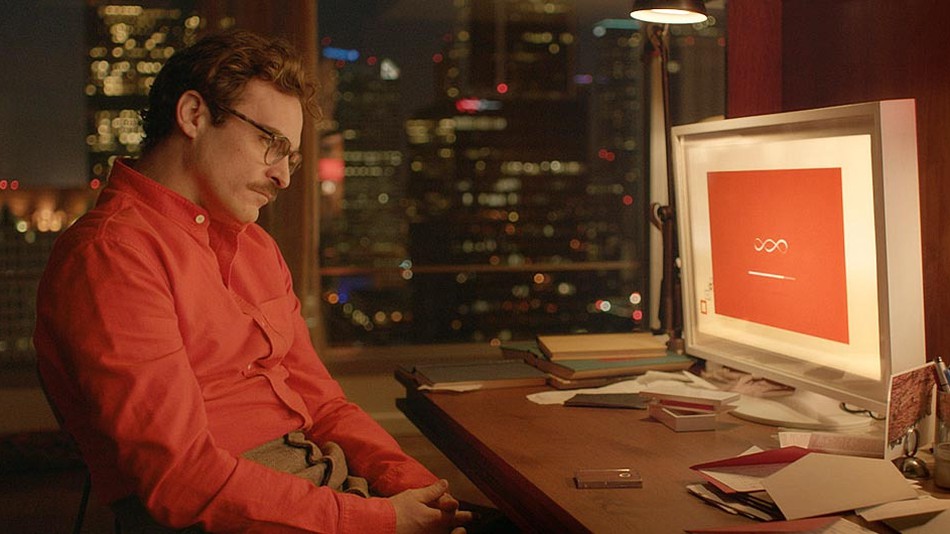
Joaquin Phoenix as Theodore in the 2013 motion picture, Her. Credit: https://mashable.com/2014/01/15/her-singularity/#vKn1ZI74NsqN

I remember when I first saw the movie Her in 2014. It does not seem like that was too long ago, but times are different now. Back then, I wondered if having a relationship with artificial intelligence would ever be possible. Nowadays with things like Amazon Echo, Google Assistant, and even Siri, it feels like that possibility will soon become a reality. Continue reading

Therapeutic interventions for dealing with mental health behaviors.

The increasing number of Americans living with some form of mental health Problem has prompted the need for treatment facilities to help tackle this problem. With the establishment of such facilities, ethical concerns has been raised about the available forms of treatment. Mostly, hospitals and other mental health facilities employ the use of a variety of treatments, including the use of anti-psychotic medications which are for the most part used in conjunction with other forms of therapy. In most cases, hospitals attempt to refrain from the overuse of such anti-psychotic medications, in favor of other less invasive methods. If a decision is made for it to be used however it is usually accompanied by some form of written or verbal consent from either a guardian or an individual that has been deemed mentally capable of consenting to treatment. Combing the use of medications and other forms of therapy is generally enough to effectively limit an individual’s symptoms, enabling them to return to the community and be productive citizens.

Sociologists view an individual’s body as an agent of communication, especially as it relates to mental health, and identify one problem with “the disciplined body”; the inability to maintain self-control. Unlike an infant with a complete lack of self-control, a fully grown adult is expected to have the ability maintain or conceal the loss of such control. However, when an individual has completely loss the ability to maintain self-control, a situation might arise in which there is need for use of medications without
consent from the patient. Others might arise in which the is dire need for
mechanical restraints such as in a situation in which safety can’t be
guaranteed .Implementation of such treatment routines often raises the
possibility of ethical violations, for instance what are some effects to the
mental health of an individual whose mental well-being is already compromised? How might such loss in agency through the trauma experienced from being physically restrained affect the overall well-being of an already compromised mental health? In such instances of complete loss of self-control, a facility designed for care of mental illness, and equipped with a team of Doctors psychologists and nurses is expected to come up with techniques that can be applied to therapeutically remedy the situation and allow  the body to adjust to a stressful situation at hand.

From inferences drawn from past experiences, mental health
professionals are beginning to design new and better ways to dealing with these problem. At the top of their list of priorities is coming up with ways that help prevent mental health behaviors from escalating in the first place. One technique is to instill policies with strong guidelines on procedures to follow when faced with such escalating behaviors. One of such procedures consists of the use of a set of choices termed “Triangle of choices” to help mental health professional deescalate seemingly agitated behavior. Such choices ranges from offering several therapeutic items of choice to an agitated individual like music or quiet time to allow for reflection. In some cases, prescribed doses of anti-anxiety medications can be used only after the first two attempts at de-escalation has failed. With successful implementation of these techniques, it is only on seldom occasions in which such behaviors escalate past the verbal stage and there is limited chances of a traumatic experience since there is no use of physical restraints or forced medications. With the sudden jump in number of incidents of police brutality due to alleged failure of compliance by citizens, implementing techniques aimed at deescalating evident loss of self-control could drastically reduce such incidents and limit the number of deaths from police brutality.

what do you mean this physical reality is only temporary ?

Today I want to share the things I’ve learned about my body and what it means to be energy encased in a physical form.  Since I’ve been aware of my body and what it does and what it represents and what it means to be living in a physical body I’ve started to question why I’m living this life and what it means to be in the body that I’m in. I always question why am I here what is it  in this life that I need to for fufil to transcend into higher dimensions. Continue reading

Queer Identity Discovery: The Domino Effect and Queer Time

9601

Image Source: http://www.avclub.com/article/theres-mash-rainbow-road-themes-all-8-mario-karts-206528

I’ll focus on my own experience here but I know there are going to be things about my experience that many other queer people can relate to in this regard.

My experience with queerness has never been linear, it has indeed been very queered. It has consistently involved not knowing about a way of being queer and then being introduced to the concept, a moment of reflection and then realizing “oh shit that’s me.” But I’ve also consistently struggled with coming to terms with these new labels and seeing how they fit me.

From the age of 12 to about a month away from turning 21 I had been on a journey of denial, internalization, grief over myself changing and growing, complete secrecy, exploration, etc. etc. about me being bi. I had come out after years of being afraid of myself, but in that time I also developed a yearning for community. When I came back to UMBC after two years of community college I knew that I’d want to seek out my community. Since then my reality as a queer person has shifted so greatly. I feel so liberated. Yet I grieve. I grieve for the ways I have been, not knowing if they are different than who I am now. My sense of self has been questioned. I don’t know if my new state of existing is just blurrier, or if things have just been just out of my sight this entire time and it constantly feels like both. I don’t know how consistent this person who is me is. Continue reading

Bodybook™

If you spend time sifting through the hundreds of shitposting meme pages that have monopolized Facebook content, you may be able to find the occasional gem. Facebook groups have established online communities that often foster emotional support, validation, and advice from online strangers and internet friends. Many of these groups have “secret” security settings, meaning the group can only be accessed if one is personally invited, allowing for a sense of trust and community among its members. These groups exist in many different forms that fulfill a variety of purposes, one group being a place for members to share photos and stories that all pertain to their bodies. Continue reading

I don’t need help, I can get through it on my own. Wait, I might need help.

About two months ago I took a large step, which I never thought that I would. I finally went to my doctor’s office and asked to be prescribed medication for depression. Depression is something that I have dealt with for a long time but I have also been very against taking medication to try and help with it. Partly because being on a medication for it would make it more real and not as easy to ignore and partly because I work in a pharmacy and I see the side effects that people have to deal with and how long and how many trial and errors can happen before they find the right medication. For the past couple years, I have gone back and forth trying to decide if I should go on medication or not. When I would have good days, or even weeks I would think no way I need medication I’m fine but then the bad days and weeks would hit and I would be stuck in bed wishing that I had something to help me because I no longer can do it on my own. Finally, after discussing it with my therapist and my pharmacist I decided to take the leap and get prescribed medication. So far it has been helpful and I notice that I do not feel so down all of the time which is nice. It is not a huge change, and I’m not fully convinced that my feeling better is not just a placebo effect but I am glad that I was able to finally take this chance and really start working towards bettering myself and not just suffering through to the next day.