Medicine Kills

Why is my pain not enough for a doctor to recognize it as such? Pain is something that is subjected to the eye, if you see it, you acknowledge it. “On that looks like it hurts.” But if it comes from within you are “dramatic,” “wasting time,” and “you need to get over it.” The pain you can’t see is most likely going to be overlooked by others, by medical professionals, and even by yourself. The chronic pain millions of people around the world are dealing with not with the help of a medical professional but on their own because their pain is not legitimate enough for a doctor’s visit is discouraging. Not only that but looking at the pain that goes untreated based off of race is disgusting and still plays off with the medical myth that people with darker skin have “thicker” skin. The racism that is rooted within our medical system has caused millions of people to die due to negligence. I commonly see on the internet a black person reaching out to a medical professional for help just for the doctor to do a whole 360 and say that the patient is “lying” or “they just want drugs.” These types of interactions with the same people that are supposed to be saving lives deter so many minorities especially black people from going to the doctors.
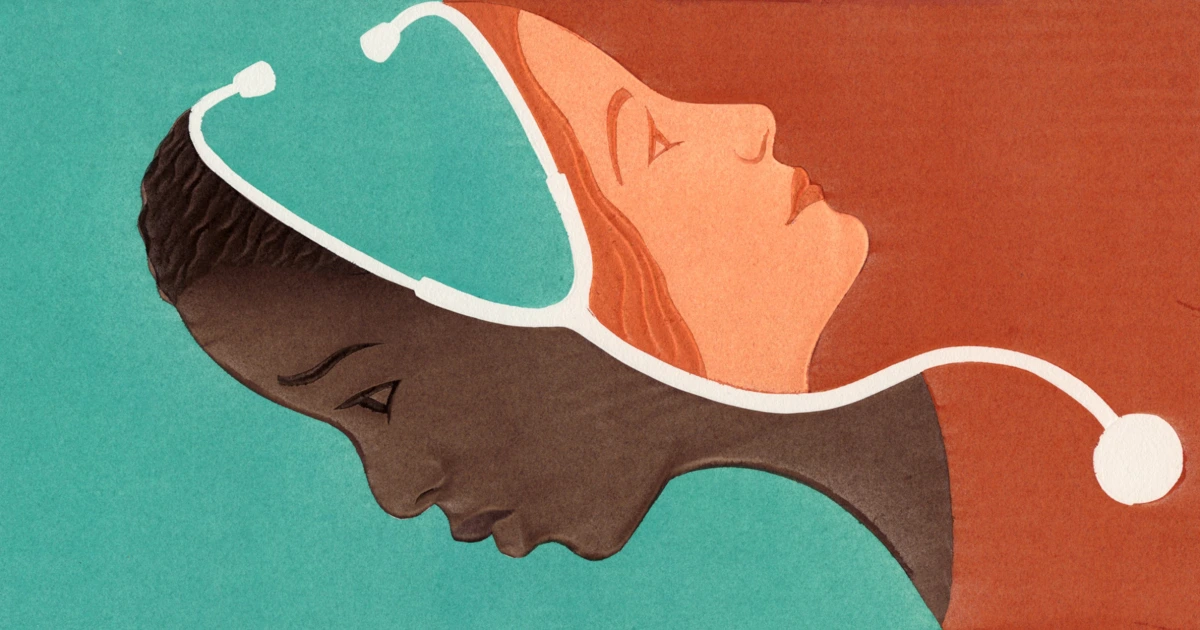
 From personal experience and growing up with my grandmother who lived through Jim Crow and seen the evil that society can radiate from the cracks of the foundation that was created by those who society hates, and I say hate because even though we have taken steps to achieve equality, we are still not yet equal and are still being treated like it’s the 50s. My grandmother would talk about the nasty things the doctors would do, and you could forget about chronic pain because if you can’t see it, you can’t treat it. White doctors only understanding white bodily issues because with all the experimenting they were doing on black people they, of course, forgot to include how our symptoms look different than white peoples in the medical journals. Or how black women are dropping like flies if they dare to give birth in a hospital. What is crazy is that people will treat black people (minorities) so cruel and harsh and delegitimize their pain but then wonder why they aren’t coming in for checkups or wondering why they question a vaccinee that was made by the same government that ran unethical experiments on people like them. It is a lot of distrust that is spilling over from generation to generation and if it does not get fixed then a lot of people are going to get hurt or worse.

We cannot continue to blindly support a medical system that is rooted in racism and biases because these ideologies and teachings are being just that taught to every generation of doctors that comes. People should not be hesitant or have to be afraid to come to the doctors because of skepticism in medicine because it can cost them their lives.

The Odd Thoughts of a Bed Ridden Sick Person

To be completely honest I was going to write about something completely different. About my mother’s cancer and how that has all affected us. Blah blah blah. See, it is not really something to laugh about but people in our society tend to take invisible illness, like chronic illnesses and make light of them, almost like they are not real. But here I am, sitting in bed with 102 fevers because I picked the lucky person and sat next to someone with Covid. Hacking up my lungs is no fun. This is something I believe we can all agree on. And to be fair this is just an all-around shitty situation.


Now it may seem like I am just another left leaning snowflake complaining about how people won’t wear their masks, (whatever that is) and honestly, I am. I am complaining, because I am tired of being sick. This is just plain stupid at this point. And of course, the average person nowadays can ease up their mask wearing. But this started all the way back in the beginning of March 2020.


Because of my chronic illness, my response to covid is far worse than the majority of people in this country. I do not blame anyone, as that would not be fair, well maybe Trump for politicizing masks, but that’s a whole other demon to slay later on. I just have to take into fact that this world was not made for me. I can’t live in a perfect bubble my immune therapist wants me to, so I take that risk. And I take it with both feet forward. Because what else can I do? Yes, I can petition and stage walkouts, but who really cares in our society besides the people it directly affects? This is the real problem that I am mad about. People just don’t seem to genuinely care for others. Creating this world that benefits them. As these people can walk, talk, and live freely without wondering if there’s a ramp or is this the day I finally am going to die.

ADULTS AREN’T “AUTISTIC”

Autism spectrum disorder (ASD) is a developmental disability caused by differences in the brain. People with ASD often have problems with social communication and interaction, and restricted or repetitive behaviors or interests. Autism is so predominantly considered a childhood disability that some autism “advocates” claim that autistic adults do not even exist. Alot of person with autism are Infantilize and reason being children are not able to tell their stories and the adults/organization/media who tell the stories, tell these stories how they’re deem it necessary. Shocking fact is ” DO PEOPLE ACTUALLY AGE OUT OF AUTISM” When I hear people say autism is a child’s disorder, it is really weird.

I listened to a podcast by Lyric Rivera, an Autistic self-advocate from Texas, who shared her personal experience of being considered a child because she is “autistic”. She stated that one of the most gross experiences she had with being infantilized as an Autistic Person, specifically, was when she was traveling in an airport. She stated was asking for help on how to find her flight and needed the guy behind the counter to help her out but this person was getting very snippy and impatient, “I said, I’m sorry. I’m not trying to be difficult. I am Autistic and I am struggling to hear what’s going on in this environment”. Immediately, this person stated giving her directions like a 2 year old and started treating her like a lost child. She said it felt really terrible.

The press/media today, shows mostly pictures of children with autism. because parents of autistic offspring promote children, rather than adults, as the face of autism, charities limit much of their discourse to child-based references, and the entertainment industry restricts autistic characters to mostly children. Additionally, When writing news articles about persons with disabilities, reporters historically focused on the emotional aspects of disability, utilizing belittling language (e.g., “suffers from”). Labels like “the naughty child”, “the disruptive one” or “attention seeker” is put on children with autism or any other disability or impairment because we are not all the same. Also, labeling the individual with the disorder like saying ” an autistic person”. This is really sad.

There are lots of effects/ consequences on adults with autism. Firstly because of the perception that adults do not suffer from autism makes it difficult for them to have support. We need to see more autistic adults. We need to use that phrase until it stops being weird to hear it. Infantilizing autism hurts everyone who is part of the equation. Parents, who live with perpetual feeling for their children seemingly uncertain future. Autistic kids, who grow up without being exposed to proper representation. Autistic adults who, since for some people don’t even exist, might not receive the support they require.It is time to bring all autistic people into the conversation. After all, who better to provide the story than those who have survived the judgment of society. Autistic men and women have a lot to say. The true harm comes from not listening and putting an end to segregation and discrimination that occurs up till date.

Autistic Women Don’t Exist

Over the summer I worked for an aerospace and defense company as an intern. It was my first “big girl” job and I was really excited to gain some “real-world” experience and have something to put on my resume. I thought I was doing a good job fitting in and trying to get out of my comfort zone, until my boss had scheduled a last minute meeting to meet his boss. This was not something I was looking forward to, especially since it had come as a surprise. I had a full breakdown after I had completely frozen up on the Microsoft teams call. My boss was really concerned and didn’t understand why I had gotten upset. To him it was a casual meeting to tell his boss what I had been working on. But I had felt an intense pressure to make my boss look good in front of his boss, and I am not very good at coming up with things to say on the spot. He was really worried about me, and probably a bit confused as to why something so small had upset me so much. I explained to him that I like to have lots of time to “mentally prepare” for things, especially meeting new people who are important.

I had thought I was good at masking, until I heard some of the feedback my boss had for me. He noticed that I was not very good at eye contact, or introducing myself to people. He had chalked it up to me being “shy.” He would tell people this almost as a warning that I would be awkward and hard to converse with. The more positive feedback included how he appreciated my straight forward and direct communication, and my efficiency and time management skills…soo pretty much any feedback I received about myself was an autistic trait. It was all right in front of them, but no one could quite pinpoint what it was about me that was different.

Continue reading

Mandatory Attendance in the School System

Before going into the claim of “there should never be an attendance policy”, let’s give some context! 

When going to high school most classes or institutions, for not to say all, have an attendance policy that requires their students to attend everyday but they are allowed to miss up to 3 days without a grade punishment unless there is a great motive that retains the student from attending. This superior motive must be notified to the school officials and most of the times require a doctor’s notice meaning the students are not attending because of health issues. 

When going to university, attendance is considered by the class instructor and the department that the class may belong to, for example technical writing belongs to the English department. Some classes consider attendance for grade and others without having countability pass the list and in the syllabus it is mentioned that if you miss more than a certain maximum of lectures you would receive a letter grade punishment. If I get an A as final grade because of low attendance I receive a B. 

Given the different attendance policies, what happens if the student has anxiety or an overload of stress during the school calendar? Are they mandated to attend a professional that particular day to submit the notice so he/she cannot be punished? Some professionals actually have a waitlist and most of the time because of mental issues not everybody is strong enough to reach a psychologist. In some other way, it could also be considered a breach in the privacy of students as these most of the times have the need to report their doings to the professor/teacher if they do not attend class. 

Quick and easy, under my consideration, attendance should not be taken into consideration as long as the student can successfully pass the class and learn the essentials taught.

Mentally Ill with Immigrant Parents

I started having panic attacks when I was five. A bit young in my opinion but still I remember the day so clearly. I went to the beach with my family and when the day was over we all went to the bathroom to change into regular clothes. I did not want to wear what my mother picked out for me and instead brought the outfit I wanted to wear. This little thing made my mom furious and she started yelling bloody murder at me in public. I started breaking down, hyperventilating, crying, and every limb in my body locked. I couldn’t move, I sat on the concrete floor, crying, trying to catch my breath. My mom was apologizing profusely when she realized something was seriously wrong. The paramedics arrived because no one knew what was going on. They said I was just dehydrated. Nothing about a panic attack. My panic attacks have continued to this day and they are always this severe. To make matters worse, I developed anxiety and depression soon after my panic attacks started. My parents have gotten used to it now, they don’t comfort me like they used to. Instead, they choose to yell at me and tell me I’m crazy, they tell me I have to control my emotions or I will never get over my phase. So, I try my best to hide my emotions around my parents, I go to other people for help instead of them, and I developed some healthy and unhealthy coping methods.

I don’t have ill feelings towards my parents for how they handle my panic attacks. They’re immigrants, from their country, mental illness was not taught and emotions are seen as a weakness. They can’t understand what they were never taught. Of course, I wish things were different and that I had parents that would comfort me and calm me down but I empathize with how they grew up. I know they have mental health issues too but they don’t understand it and choose to bury it, only to hurt themselves. They were taught to bury their feelings and they tried to teach it to me. It has affected how I have grown and how they have. I love my parents and I know they are doing their best, now that I am an adult I understand they were only trying to help me despite all the pain it caused.

It is hard having a chronic illness in an immigrant household. I didn’t even know my mental health issues were a chronic illness until this class taught me. We are not alone, generational trauma is hard and I know so many other people deal with the consequences too. So here is my lesson to you, we are not our illness, we can learn to do better for our children, and to forgive those who meant to do us no harm.

Congrats! Lucky #567542244 qualifies to be a person!

How does one determine who is a person rather than a biological entity of a human being? The checklist doesn’t consist of blue eyes, brown eyes, medium length hair, etc. although it does judge based on appearance. So how then is personhood earned?

It can be based on one’s intelligence, so if you get every A and push yourself past all limits to achieve the long term benefits it does not guarantee, you are showing your person ablitilies. It can tie into labor and how to be a functioning member of society. Be polite, but not too nice or talkative. Go to college to get a good job. I was somewhat under the impression that because I am a human being I have human rights which is true to an extent, but the lesser known, harder to achieve, subconscious rights are my person rights. 

Continue reading

Diagnosis and Joy

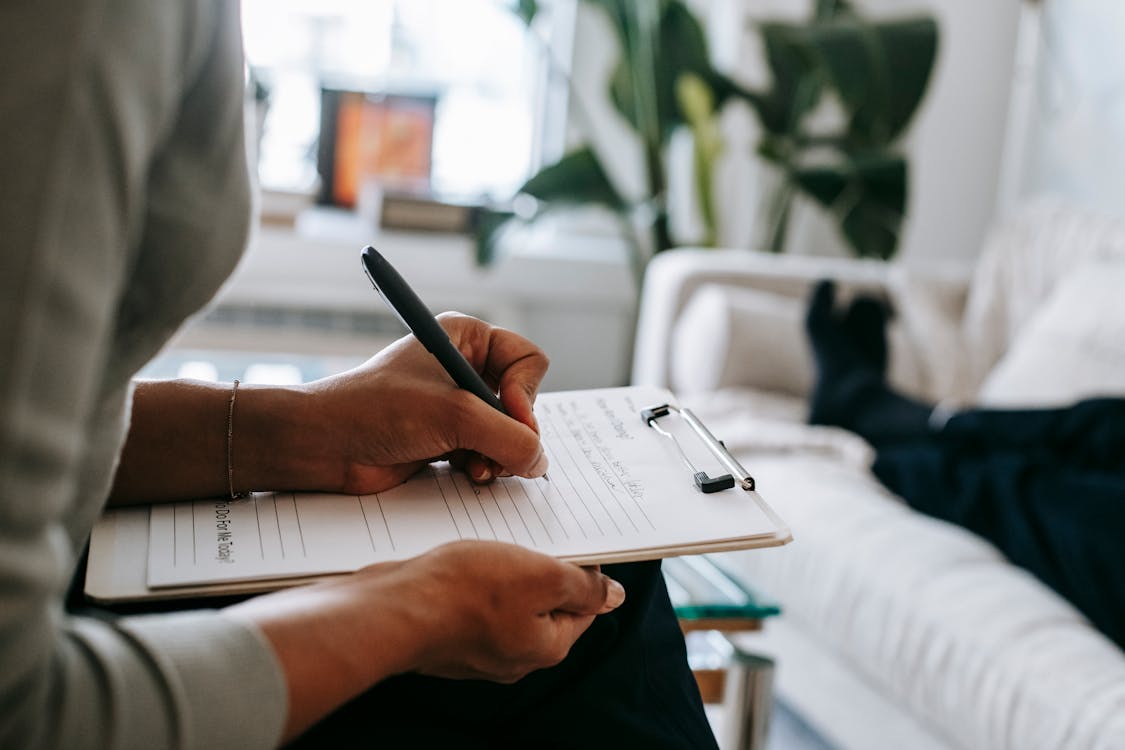
Free Unrecognizable ethnic female therapist taking notes on clipboard while filling out form during psychological appointment with anonymous client lying on blurred background Stock Photo
from pexels.com

”The Normalisation Agenda and the Psycho-Emotional Disablement of Autistic People” explains that the dynamic qualities of autistic people are understood from the outside–particularly with regards to parents and those facilitating behavioral treatment for autistic people–as a pathological deficit. The assumption of deficit here forges a negative association between the diagnosis of autism and the ability to function; the diagnosis in these spaces represents a problem to be solved or otherwise treated and responded to. While diagnoses can indeed help tremendously with necessary treatment and can aid an individual who finds themselves having difficulty completing necessary tasks, it seems remiss to think of a diagnosis in such a light that it is solely the predecessor to an attempt at changing the self/the self’s habits. Diagnosis can function as a powerful tool for crafting and strengthening one’s sense of self and consequently membership in a community. There’s a great deal of validation, too, that comes with having an explanation in some capacity for traits and habits that larger society (and potentially the individual themselves) might fail to understand.

I remember when my cousin told me and my mother she thought she had autism. I’ve thought for a long time that she’s autistic. My (and my mother’s) suspicion of this wasn’t a negative assumption meant to emphasize deficit, but a simple descriptor of someone we knew very well. When she told us this, both my mother and I told her we think she was probably right and that we see that in her too. She was so excited that we thought the same thing, visibly happy that we saw her. My mother talked to my aunt (her mother) about it and explained that she should look into getting her diagnosed because it can help her find the resources she might need to help her function the best she possibly can and she will be able to understand herself and be understood by her family and others better; my aunt was hesitant about this until my mom explained to her what a diagnosis could do. My cousin got diagnosed and it’s proven to be incredibly helpful. Previous misunderstandings between my cousin and her parents and frustration with her on their part were partially ironed out with this diagnosis, and she has a lot of joy participating in communities of other autistic people, especially online. I remember being overjoyed along with her when we agreed with her about her self-diagnosis, and in no capacity was I thinking of it as a problem. I’ve been very close with her our whole lives, and to me, the only real “problem” to be solved was other people failing to understand and accommodate her; she is an exceptionally intelligent, lively, and compassionate person and a diagnosis aided her in these areas. Joy, here, and in many spaces, is paramount. To remember that neurodivergent people can be and are joyful is to respect their complexity and humanity, and not fall victim to doom-centric narratives about diagnosis and the resulting action.

Mental Health

Mental health is no joke. I have seen people go from happy to depressed after just one small incident. I would term these as “healthy disabled”. “Healthy disabled” are whose impairments “are relatively stable and predictable for the foreseeable future” (Davis, 2013). Mental health tends to be visually shown through people’s emotions, but it can also be completely visible where a fake smile is made, yet they are depressed. Mental health can have consequences such as gray hair, stress which can lead to heart attack, physical health, and more.

I have suffered from mental health before and it was not great. What was weird was that something that seemed so trivial could become big and cause you to become depressed. The time I suffered from mental health was when I got called out for something that was not my problem. If you were told you were able to do something and you do it, you would think there would be no issues later on, but that was not the case. I kept thinking it was a trivial matter, but I kept thinking about it which led me to become straight up sad for a while. In this case, I considered myself as “healthy disabled” since I was not physically disabled. Next time you suffer from mental health, definitely do some meditation or some praying as both definitely helps a lot!