
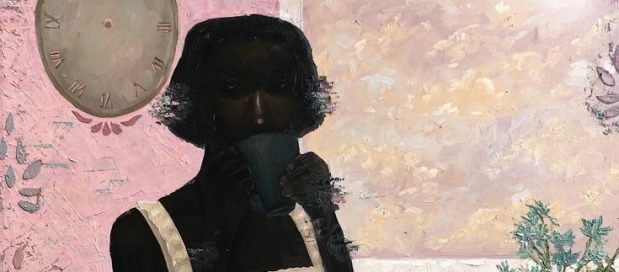
As long as I can remember, I’ve felt a certain way about my skin. Now, I left that remark to be vague because that “certain” way has changed constantly throughout my life. I’ve come to love my dark, glistening skin. In fact, I’d go as far as saying it is my favorite physical trait of mine. My family comes from a country where having dark skin is the beauty standard, it is slightly out of the ordinary to be of a lighter complexion, because to us, being dark is just…us – a natural part of our phenotype.
However, coming into a country where the beauty standard is quite the opposite shook my world. I believe everyone is familiar with the humiliation ritual that is middle school. One day, as I was taking part in this humiliation ritual, a black boy, black just like me, looked at me as I walked past. “Blending in with your outfit, I see!” To better contextualize this interaction, it would be good for you to note I was wearing black jeans and a black long sleeve.
I’d like you to be mindful of the fact that he was no more than two shades lighter than me. He was black, black just like me. There was no one else around, really. He wasn’t with any friends, nor was I. It was just him, the lockers, me, and our melanin. He wasn’t doing this for validation, it was genuinely how he felt.
I’ve received comments like this numerous times. When the teacher turned the lights off to properly project a video onto the board, I’d gulp preparing for the comments asking where I went. But something about it coming from someone who looked almost just like me felt so different. I was young then, but I understood that he didn’t hate me, it was himself that he hated.
Now, being dark skin is more “accepted,” if you will.. a lot of people call it “the great shift.” To me, it’s more of a great fetishization, but I digress. I was sort of reminded of this anecdote when reading Alcoff’s “Toward’s a Phenomenology of Racial Embodiment” as it heavily looked into the manner in which we perceive race. I grew curious about the way colorism is perceived in the black community, and whether it would be different if we hadn’t been tainted with such racism, we felt the need to further divide ourselves for self-protection.

