parts unknown & the late anthony bourdain’s impact on inclusion

parts unknown & the late anthony bourdain’s impact on inclusion

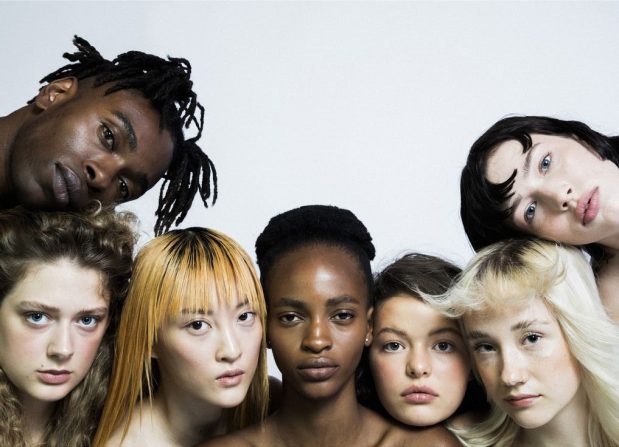
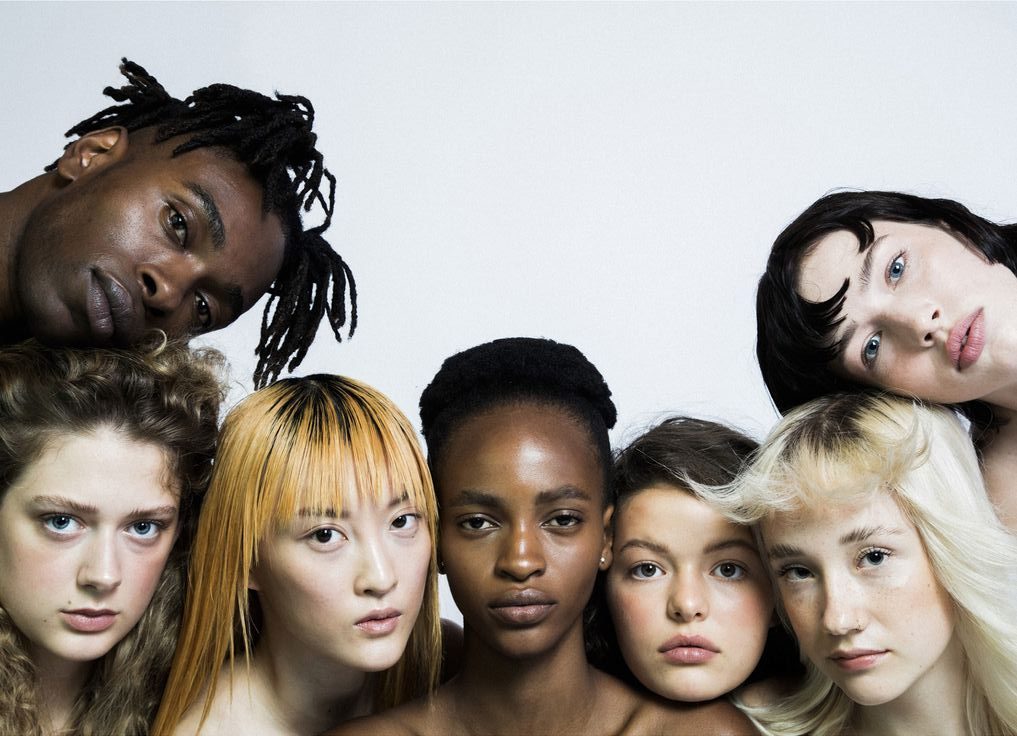
Surrounding all the recent buzz and chaos around immigration status and the laws regarding it, I’ve always had a lot of thoughts, especially as a child of two immigrant parents. I just wonder how people can think of other human beings as ‘foreign’ or ‘illegal’ when in reality, we’re all just one species inhabiting this Earth. What is so wrong about a multicultural society? Is it not a privilege to decide you want to try authentic food from another country, and be able to walk down the street and just do that? Is it not a privilege to work alongside people who aren’t exactly like you, but bring learning experiences, stories, languages and culture with them. 
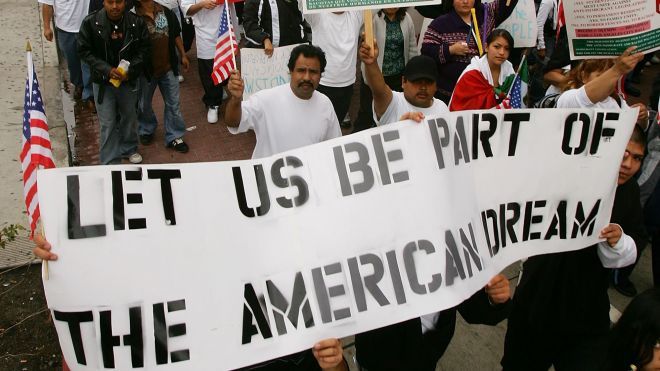
As someone who loves to travel, there is nothing I love more than being able to not only visit other countries but meet people from those countries and understand their everyday lives or learn a line or two in their language. We live in a country so diverse with numerous diasporas, that this can be achieved within our borders, yet we’re not the slightest bit grateful. It’s also interesting to travel to other countries and observe other Americans and how they interact with those within the country they’re visiting. When I visited France this summer, a lot of the Americans I interacted with were very snobby and rude, complaining about the food they’ve had to eat, the subway system, and how busy the tourist areas were. I didn’t really care because I’m not the biggest fan of French people but I definitely noticed. it made me realize that not only are a lot of Americans not very accepting in their own country, but just everywhere. 

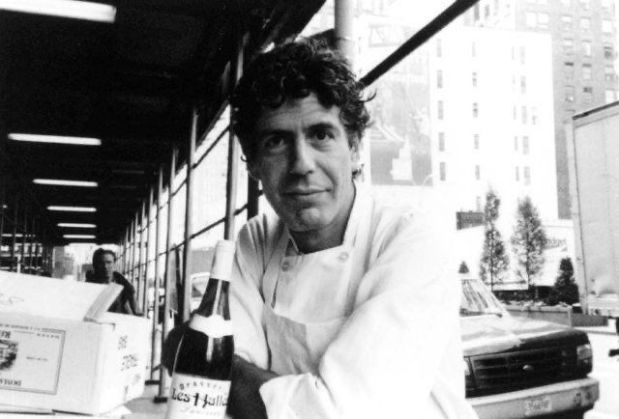
Growing up, every Sunday night around 9pm, I’d join my dad who was already watching CNN, to watch Anthony Bourdain’s Parts Unknown. I’d watch him go to countries throughout the world, and try their dishes, whether they were popular or not. I really admired the fact that for him, it wasn’t about food, it was also about living like these people. He also spoke so strongly and highly of immigrant people and even once stated “The bald fact is that the entire restaurant industry in America would close down overnight, would never recover, if current immigration laws were enforced quickly and thoroughly across the board. Everyone in the restaurant knows this is. It is undeniable. Illegal labor is the backbone of the service and hospitality industry – Mexican, Salvodoran, and Ecuadoran in particular. To contemplate actually doing without is to contemplate mass closings, a general shake out of individually owned and operated restaurants – and, of course, unthinkably higher prices in the places that manage to survive…the ripple effects would be grave.” 
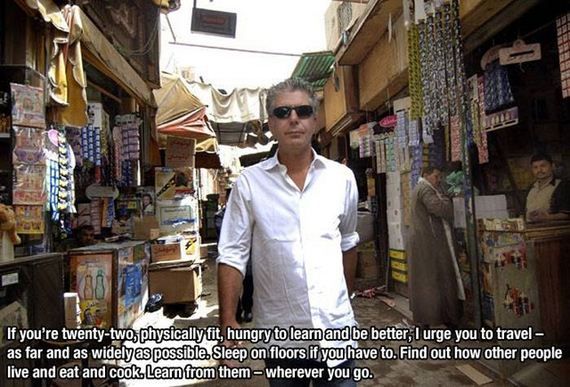
While long, this quote is so beautiful because it speaks to the volume that America underappreciates illegal labor while continuously profiting off of it. But dare I say, even if people considered ‘illegal’ didn’t work so hard, their presence should be welcomed as no one can be illegal on stolen land as many say.
In class, we read Citizen: An American Lyric by Claudia Rankin, and though it focused on Black stories which I appreciated, the themes of systematic bias and aggression and everyday racism remind me of our society today, which is a shame due to many of the anecdotes being slightly dated. When our society should be progressing it is in fact doing the very opposite, and as American people we deserve to be ashamed. Although Anthony Bourdain’s fate serves as a reminder that no matter where we go, we cannot escape ourselves, his longing for good food and interconnection was a beautiful gift.
overconsumption hurts, as does hunger.

overconsumption hurts, as does hunger.

I’m never the type of person who thinks that one group of people’s problems are miniscule just because others are suffering on a much larger scale. However, there comes a time where the world needs the banding of humankind more than ever. There are numerous current events I can draw this statement to, all occurring in our world today. 

I’m sure not everyone’s algorithm is the same, but mine has shown me videos of grown people waking up at 3 in the morning and standing in line for a cup that looks just like the bottles of honey shaped as bears, except it has a logo and straw slapped on it. It is also worth mentioning that the cup stands at $30 and I’m not sure if this is true, but each store only gets 2 or 3. I’m not sure what exactly the appeal of this cup is. It doesn’t even fit in a cupholder, and it isn’t even convenient to clean or use overall. Maybe it is the exclusivity? I have no idea. Additionally, the people on the ‘quest’ for this cup are borderline harassing minimum wage workers in the early hours of the morning. 

Starbucks apologizes after 'Bearista' cup sparks fights, long lines and  $500 resale listings

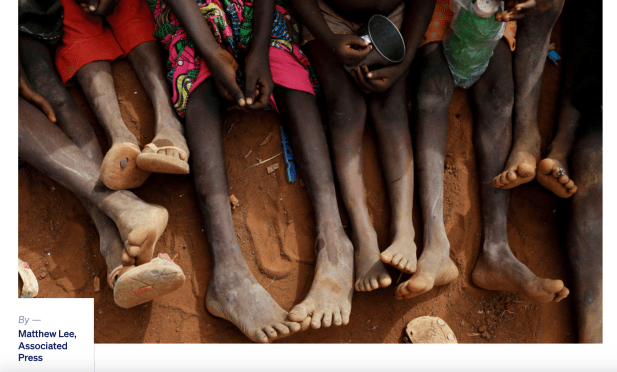
All the while, food stamps are getting cut all over the nation, and thousands of Americans are struggling to eat just in time for the holiday season. If you look into our neighboring continents, you’ll see the famines happening in AT LEAST 5 regions Sudan, 5 potential genocides occurring throughout the world (Gaza, Sudan, Democratic Republic of Congo, Myanmar, and Uyghurs). 

It all just reminds me of our discussions of forms of protests in class – especially hunger strikes. In the article we read for class describing the hunger strikes in California prisons, they stated that the hunger strikes weren’t rooted in defiance necessarily, but for change. This whole notion serves as a reminder that hunger isn’t an option for everyone and for certain people hunger is a reality, and sometimes it’s a norm. All in all, I just can’t help but wonder what the world would look like if we put the same energy that we put into over-consuming and self-pleasing into helping those around us. At the end of the day, the only difference between ALL of us are our existing geopolitical barriers. 

https://www.aljazeera.com/video/newsfeed/2025/11/12/un-warns-sudan-is-the-largest-displacement-crisis-in-the

a token for a token

a token for a token

(the clip if u want more context! – https://www.youtube.com/watch?v=5_BhradG7ME)

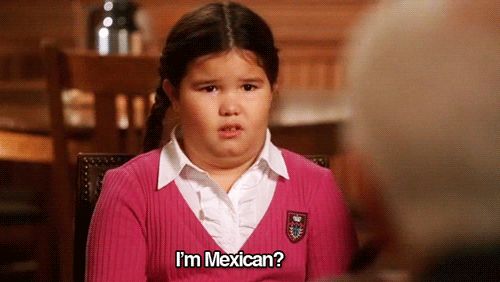
And I’ll be honest, it is a pretty funny one-liner and it got a chuckle out of me. However, when reading Nonbinary: Memoirs of Gender and Identity, specifically chapter eight, titled “The Token Act” I couldn’t help but draw similarities between this scene and the author’s experience being Asian American as well as nonbinary and kind of being tasked with the role of representing her entire background and minority. 

The author of this specific chapter, Sand C. Chang states “My identity is conveniently used as a symbol, especially for employers and organizations that want to show how welcoming they are of DIVERSITY! I hate the word “diversity,” almost if not more than I hate the word “multicultural.”” The author goes on to make an excellent point about how the job of being the token in a certain environment makes you vulnerable to being the representative of an entire group of individuals who are different from you. I truly loved this chapter because it put something I didn’t even know I was feeling into the perfect words, with a shared amount of anger and frustration. 

Drawing connection to both this particular show and chapter, it made me wonder why being a minority deems you immediately entitled to a second job in which you’re required to represent the vast majority of the people who just happen to be of the same background as you. Whatever category you’re placed in, there are numerous subcategories of whom you’re completely unfamiliar with. For example, if you identify with being black, there’s numerous black people whom you cannot speak on the behalf of. Say for instance,  you’re fully African American. How accurately would you be able to speak on the experience and lifestyle of Afro-Latinos? West Africans? East Africans? Black and White bi-racial African Americans? The same goes for all varying sorts of people. It just doesn’t make sense. 

Hue and Hurt

Hue and Hurt

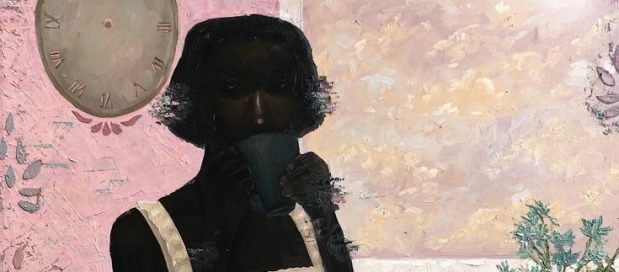
As long as I can remember, I’ve felt a certain way about my skin. Now, I left that remark to be vague because that “certain” way has changed constantly throughout my life. I’ve come to love my dark, glistening skin. In fact, I’d go as far as saying it is my favorite physical trait of mine.  My family comes from a country where having dark skin is the beauty standard, it is slightly out of the ordinary to be of a lighter complexion, because to us, being dark is just…us – a natural part of our phenotype.

 However, coming into a country where the beauty standard is quite the opposite shook my world. I believe everyone is familiar with the humiliation ritual that is middle school. One day, as I was taking part in this humiliation ritual, a black boy, black just like me, looked at me as I walked past. “Blending in with your outfit, I see!” To better contextualize this interaction, it would be good for you to note I was wearing black jeans and a black long sleeve. 

I’d like you to be mindful of the fact that he was no more than two shades lighter than me. He was black, black just like me. There was no one else around, really. He wasn’t with any friends, nor was I. It was just him, the lockers, me, and our melanin. He wasn’t doing this for validation, it was genuinely how he felt. 

I’ve received comments like this numerous times. When the teacher turned the lights off to properly project a video onto the board, I’d gulp preparing for the comments asking where I went. But something about it coming from someone who looked almost just like me felt so different. I was young then, but I understood that he didn’t hate me, it was himself that he hated. 

Now, being dark skin is more “accepted,” if you will.. a lot of people call it “the great shift.” To me, it’s more of a great fetishization, but I digress. I was sort of reminded of this anecdote when reading Alcoff’s “Toward’s a Phenomenology of Racial Embodiment” as it heavily looked into the manner in which we perceive race. I grew curious about the way colorism is perceived in the black community, and whether it would be different if we hadn’t been tainted with such racism, we felt the need to further divide ourselves for self-protection.