Our relationship has been rocky for the past 22 years, to say the least. Some days, I see you and I smile. I stop and admire the little things about you. Sometimes that admiration stays, feeling like how a breeze feels on a warm summer day. Sometimes is not all the time. Most days, I see you and I want to cry. The little things I once admired have since disappeared, and the comforting breeze on that warm sunny day has turned into the searing gusts that cut my skin and leave me raw. These days are much more frequent. More often than not, when I pass you as I leave for the day, making eye contact with you is impossible. I avert my eyes to avoid the death by a thousand cuts that I know will ensue if I stay with you for too long.
I don’t know what its like to be comfortable with you. To be happy with you. To be secure with you. You have caused me endless tears, endless confusion, endless dread. What is it like to look in the mirror and feel completely and fully affirmed by you? Has anyone ever felt that? Or am I chasing a mirage, a confidence that will never truly be achieved by someone with a human brain and human body?
I hope that one day you and I will make amends. Maybe one day the gusts will turn into breezes, and my cuts will heal.
trigger warnings: body dysmorphia, suicide, mentions of disordered eating, illness
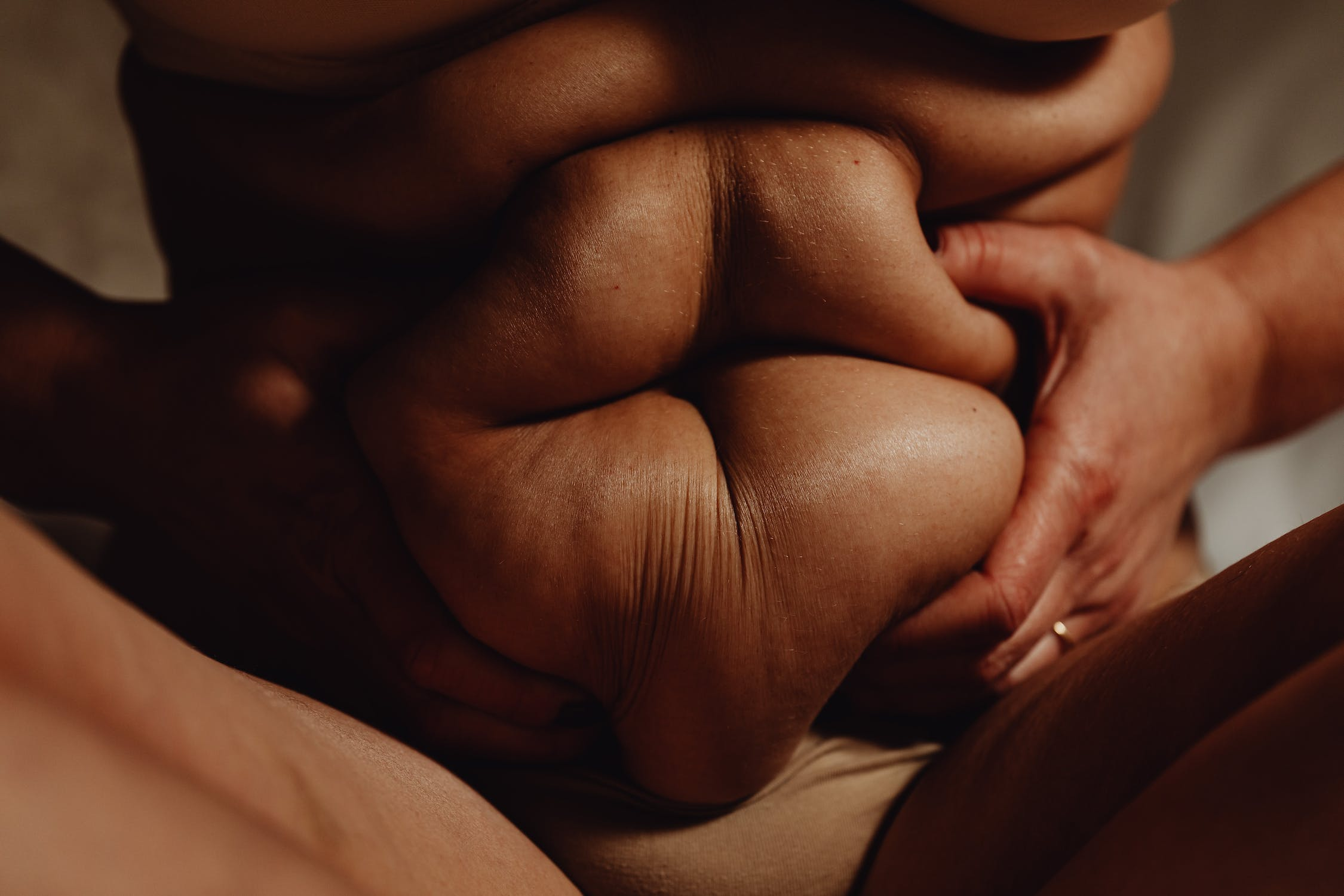
If you remember what your body looks like, I think you’re one of the lucky ones. If you don’t, then I’m not so glad this is what we have in common. Coming from an older West Indian family, my body was always a discussion. No matter how many soccer practices I showed up to, salads I ate, nor how well I did in P.E. class, whenever an aunt approached me it was always “You’ve gotten bigger!” Even throughout my adulthood my body has gotten bigger. I know I’m big, but I wish they knew that I didn’t need to be reminded every second of my life.
I think it’s important to note that I wasn’t always fat, but I still struggled with food and dieting at a young age. Having to deal with cholesterol issues during elementary school was the start of my long, relentless relationship with food. I remember sitting in the doctor’s office with my uncle, his eyes glazed over, listening to every word my pediatrician said. My relationship with food not only originates in this moment, but also with my family’s history of heart disease, diabetes, and many other debilitating diseases. By the time I reached high school, my uncle had a coronary angioplasty, stent insertion, triple bypass heart surgery, and several other surgeries for various kinds of cancer. He never wanted me to suffer like he did.
For as long as I can remember, my uncle micro-managed everything that graced my plate. There were even times we fought at the dinner table so he could see whatever takeout I’d brought home. The stress of bringing home any form of food that he would scrutinize started to transfer into other aspects of my life. In middle school I discovered how uncomfortable it made me feel to eat in public spaces. In high school I even went as far as to become the library aide so I could escape the daunting task of consuming food in the adolescent-filled cafeteria and tried my best to retreat back to the library every lunch break. The library was my safe haven, a place of structure for the moments where I felt the most vulnerable. This is still a habit I have today, I always look for security.
It wasn’t until my senior year of high school that I started my first romantic relationship. He was beautiful, smart, and even had a piercing on one ear that was the jackpot of my teenage girl fantasies. Being with him was the first time someone told me I was pretty. For someone that had only dreamed of having a boyfriend, that meant the world to me. I naively thought that feeling would last forever. As the pandemic raged on, and quarantine forced us into our isolated nests, there became an evident strain on our relationship. Still, we continued to stay with each other. I never noticed when his demeanor changed or that I couldn’t fit into half of my jeans anymore, or even that I was getting bigger than him. I made a huge mistake. You know that horrible mistake people make when they get lost in a relationship because they already have constant bodily validation? Yeah, that one. I gained the “happy weight”, I let myself go. People hate happy weight because being fat makes you feel empty and alone after a relationship. Nobody thinks that you’re attractive anymore and it feels like now there’s this huge responsibility that you have to get back to when you were skinnier. I fucked up.
Coming out of that relationship I became extremely depressed. I moved back in with my family, back to a space I never felt secure in. Endless nights spent scrolling through Tinder, a space where your body is always being perceived, felt completely invalidating. I was a completely different person. And I didn’t feel that way because I had loved and learned valuable lessons about navigating relationships, but it was because I was fat. Everytime I looked into the mirror, a devil appeared on my shoulder pointing out every flaw on my now monstrous body. It’s like my ego had turned against me.
I didn’t want to live in my body anymore. I thought I was nothing without the comfort of another person telling me I was good enough. I can’t say that I never feel that way today, but I’ve worked on it. I’m not about to go on a spiel about how much it matters to love yourself, nor about how self-love is a journey and not a destination… but would love really be worth it if it meant that I had to be skinny, athletic, or fit any of the aesthetic qualities guys on dating apps wanted? Probably not. But I want to be better, because I know that the moments in between these feelings of doubt and despair are much more important than these superficial views of my body. Though, how I never saw myself changing is still a phenomena to me.
In the end, I’m still trying to upward spiral out of this feeling called body dysmorphia.
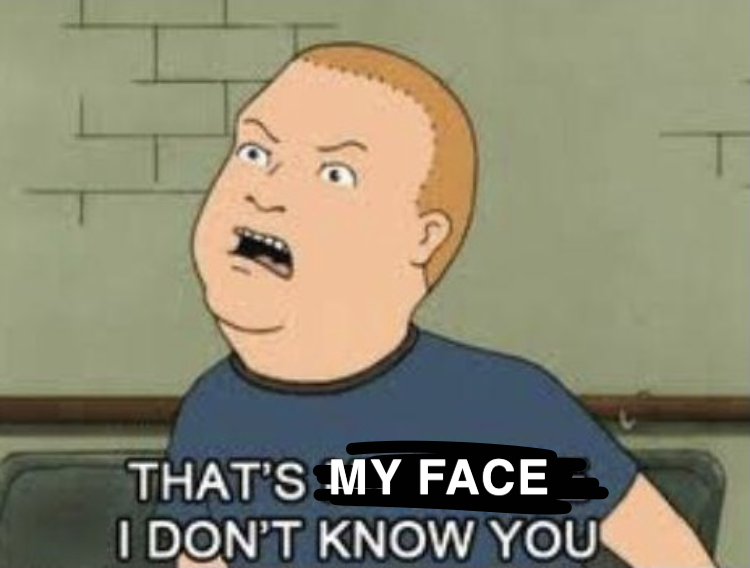
This is (another) photo of Bobby Hill where, instead of saying “That’s my purse, I don’t know you!”, I edited it so he’s saying “That’s my face, I don’t know you!” because I am worried about the alienation people could/can feel when they see their face without makeup as unrecognizable.
I am prefacing this post by saying I barely wear makeup (is slapping glitter on your face “real makeup”?, the next presidential debate topic), I don’t know how to do makeup, but I really think we underestimate the power and psychological issues/potential trauma makeup can create. Granted, makeup can be and is gorgeous/fun because you can accent your favorite features or you can coordinate it with a cool look (i.e. special effects makeup or just a really bold neon green eyeliner), but at what point is it too much? Is it at the point where you have put on a full face for a beach trip? Is it when you have to put on a full face for a gym session? Is it when you’re incapable of seeing yourself/allowing yourself to be seen without makeup, so much so that it dictates how, when, and if you’re even going to be seen in public that day? Or when seeing your bare face strikes actual fear and depression into you? I do not think the idea of seeing your bare face exposed or exposing your bare face to the world, rendering you depressed, disturbed, or even disgusted is given enough space in talking about dismantling body dysmorphia. The alienation experienced at the disconnect of seeing your bare face and not registering it as your own because it has no makeup on it sounds like a trauma response to me. The gym comment is from a conversation I had with a friend. She legitimately could not go to the gym with me (or outside for that matter) without applying at least five different products and I remember pointing out, “dude you’re gonna sweat that off 5 minutes into rowing” and she told me she “wouldn’t allow” herself to go outside without it.

 Unruly Bodies