
Docile Department Store Bodies

     When I find myself in need (or want) of new clothes, I often find myself in thrift stores. Early in my transition, this was where I shopped. As soon as I could drive, I would make my way to the local Goodwill and buy a $4 oversized rugby shirt. It was low stakes, high reward. I did not have to drop $20 every time I was curious if I might like to wear something, especially since I was still figuring out my style and tended to wear something for a week before burying it in my closet.

     Now in my life, I can comfortably buy brand new clothing from target, but I rarely do. Something about thrift stores is so inviting and comfortable, and on the contrary, something about department stores has such Bad Vibes. Foucault kind of helped me understand why.
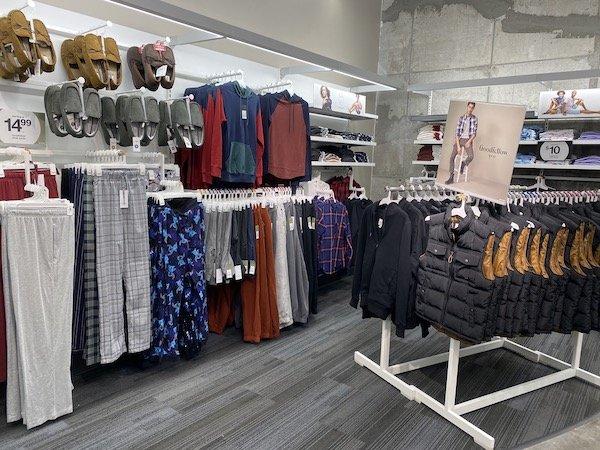
     Discipline is written all over department stores. Everything is in its place, to a meticulous extent – clothes folded or hanging from hangers in neat rows, sleek monochrome mannequins with ironed outfits, identical products stacked in rows of tens. The bodies of the employees have to work on their feet, constantly scanning to see if anything needs to be refolded or if they can smile for a customer or answer a question. The clothes themselves are even surveilling the customers, with tags that will sound an alarm if one step is taken outside of the store with them. I think the worst part for me in department stores is how much power I can feel being taken from me when I look at the options of clothes I can buy. The ultimate reduction of individuality is a stack of the same exact shirt in any size. 
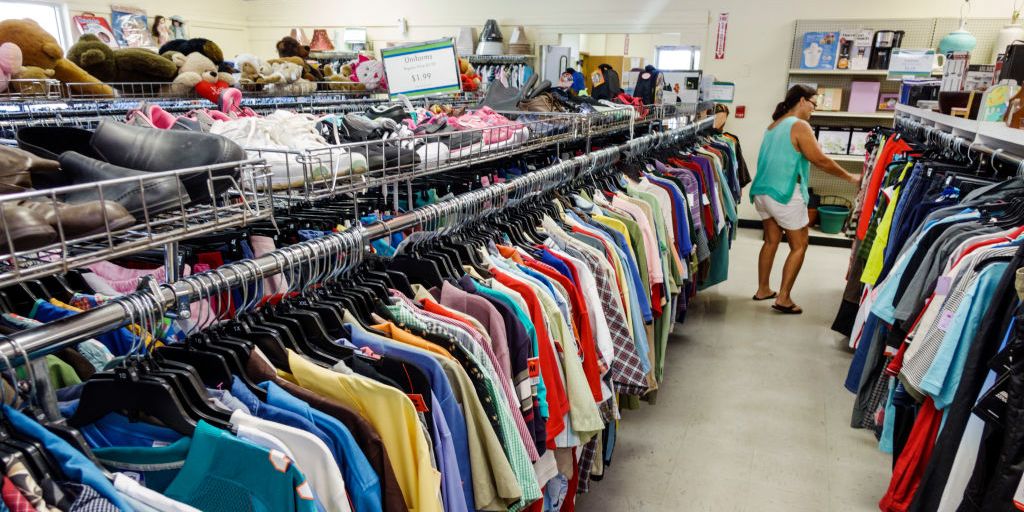
     Alternatively, the relaxing, comforting feeling of walking into a thrift store is unmatched. There are so many ways thrift stores subvert discipline and control. Thrift stores defy the intended life cycle of a piece of clothing or product. Our society wants us to buy new, use, and buy new again, and by ignoring this rule, we can escape a kind of control. Further, thrift stores neglect little details – there is imprecision everywhere! Stains on clothing, clothing you can tell has been worn for a lifetime, clothing that has been out of style for at least 20 years, differently gendered and sized clothing all mixed up together. The maximization of time and money is not evident, either. Employees take their time checking out customers, sometimes impressively slow, and products are usually less than $5! Even considering all of these glories, my favorite thing about thrift stores is the community it takes to curate what is inside. Anyone can contribute to what a thrift store/consignment shop sells, effortlessly ignoring trends in society, providing a vast array of options, and encouraging people to listen to their own desires.

Hijabs and Hoodies

After we discussed the horrific and tragic murder of Trayvon Martin in class today, this article in particular caught my attention:

Shaima Alawadi, a resident of San Diego, California, was found beaten unconscious in her home last Wednesday and died of her wounds this past Saturday.  A note was found saying, “Go back to your own country. You’re a terrorist”.

Shaima was a stay at home mother with five children.

http://www.reuters.com/article/2012/03/28/us-california-iraqi-memorial-idUSBRE82R01N20120328.

This happened less than a week ago.

There was mention in class of how certain ideas in society become normalized, for better or for worse. In Trayvon and Shaima’s case there is no question these ideas create a poisonous environment.

But in both cases there was a similarity: clothing.

Trayvon was wearing a hoodie; which according to sources across the spectrum, most notably Geraldo Rivera, made him a target for suspicion. Last I checked wearing a hooded sweatshirt left no one with the ability to label someone as “suspicious” and cause cruel loss of life to another.

Shaima also had an article of clothing that marked her; a hijab. For those who are unfamiliar with a hijab, it is a head covering traditionally worn by Muslim women for reasons of modesty. Yet by wearing a hijab Shaima marked herself as “other”.

I find myself wondering if we can draw parallels between Shaima’s and Trayvon’s murders. They were both marginalized members of society, Trayvon was black and Shaima was an Iraqi-American immigrant. Both were wearing articles of clothing that are innocuous (although a hijab may stand out for those unfamiliar with the garb) but these clothes became threatening to those with prejudices and stereotypes.

I think we, as a Western society, are not past our cultural and racial biases when two murders are committed within a month of each other on the basis of race and ethnicity, with the flimsy excuses of clothing as reasoning. (By the way, I’m not ignoring that there are far, far too many of these crimes that go purposely unnoticed or are unreported).

In response to this hate crime there has been an out pour on social media and I found a group on facebook that seemed particularly fitting: http://www.facebook.com/pages/One-Million-Hijabs-for-Shaima-Alawadi/137306256397032.

When women are told, “you were asking for it”, if they are raped and happened to be wearing a miniskirt, when young black men are shot for wearing hoodies, and a woman is beaten to death in California for wearing a hijab because it “makes her a terrorist”, I have to wonder about the emphasis placed on clothing and the body-the cycle of violence around the clothing people wear for religious or personal reasons and why people use these articles of clothing as excuses for committing atrocities.

I find myself sick at heart with the violence, the hate, the prejudice, and the inbred bias. I send loving and peaceful wishes to the members of Trayvon Martin and Shaima Alawadi’s families.