
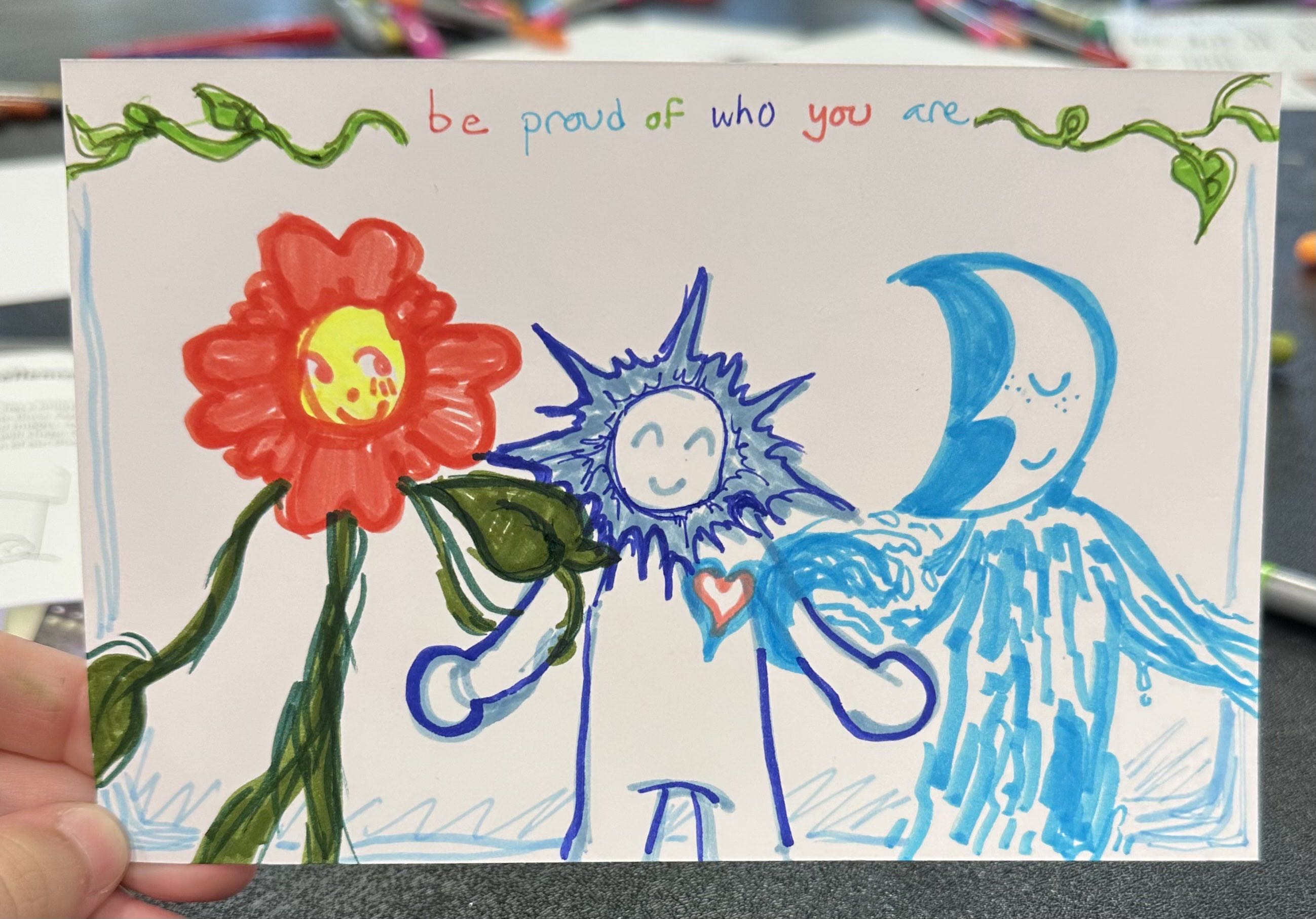
“The flesh is inscribed with meaning both from ourselves with our consent and by others against our will.” Kosut & Moore, Introduction: Not Just the Reflexive Reflex.
In times when my community is the center of media, I feel like an ant being scorched alive under the microscopic lens of a snot-nosed child. Why, in my own habitat, must I smell my burning flesh? It’s not as if mine or my neighboring hills have done anything to incite such a cruel fate. Still, man believes himself to invade and reign supreme over bodies he views as ‘other’.
Growing up in a small town is difficult because you know everybody and everybody knows you. Being divergent from those who surround you, the burden of being seen feels suffocating; you’re not really sure what people think until they say something to indicate how they feel about people like you.
Twice now have I received a call from my dad following cases of gun violence in which the shooter – or someone personally involved with the shooter – identified as transgender. First, he’d sent me a text saying to call him when I had a minute. He’d preface the call with “now I’m not saying this to scare you, but” before updating me on the latest crass life-threatening narrative spun about my community and subsequently spread like wildfire among people who haven’t known how it feels to live with intrinsic fear laced in their veins. And although it was coming from a place of love, he told me this time to “be selective of who I tell”; as if that is something I needed to be told, as if telling me to keep my identity a secret isn’t painful no matter the place it comes from.
Michael Foucault’s Docile Bodies describe “a body that is docile may be subjected, used, transformed, and improved”. The modality of control is an uninterrupted coercion, and technicians of discipline become dominating. Where there is power, however, there is always resistance.
What does self-preservation in the face of tyranny look like? Under the scrutiny of everyone’s eyes, I feel like I’m expected to shrink, to slink quietly back into stealth and hide an integral part of myself. The fighting part of me refuses to go unnoticed and I yearn to get irrevocably intertwined in activism, to bloom into a symbol of hope. My pride will never get ripped away from me. I will not be a docile body.
Claudia Rankine, author of Citizen, poses a question that stings like alcohol on a raw wound; “How difficult is it for one body to feel the injustice wheeled at another? Are the tensions, the recognitions, the disappointments, and the failures that exploded in the riots too foreign?” Are minority groups viewed as so far removed and alienated from ‘typical’ society that we are seen not as human, but as beast? When the very structure designed to serve you strips you of your rights, your protections and defenses, and discusses rescinding your amendments, the answer is an aggressive, spit-in-your-face “YES”.

