
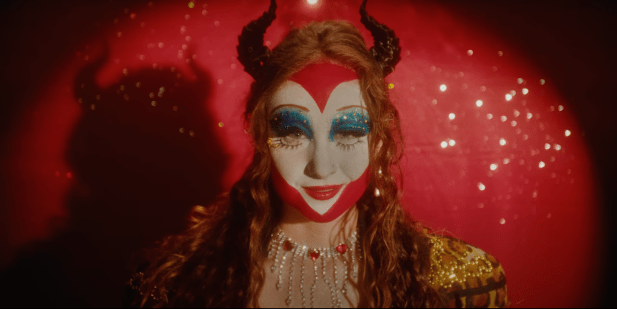
It’s 2023. I have just shut my computer after a grueling day of classes and homework, all to turn my attention to yet another blue-lit screen. As I catapult myself into my bed, I open YouTube in search of the Bob Ross marathon live-stream that I can always count on being my first suggested video. As the app opens, instead of Bob Ross’ comforting face, I am greeted by a smirking woman with curly red hair, glittery clown makeup, and devil horns. Her name is Chappell Roan. As a drag queen myself, I was instantly intrigued. I click on the video, named “My Kink is Karma”, and watch intently.
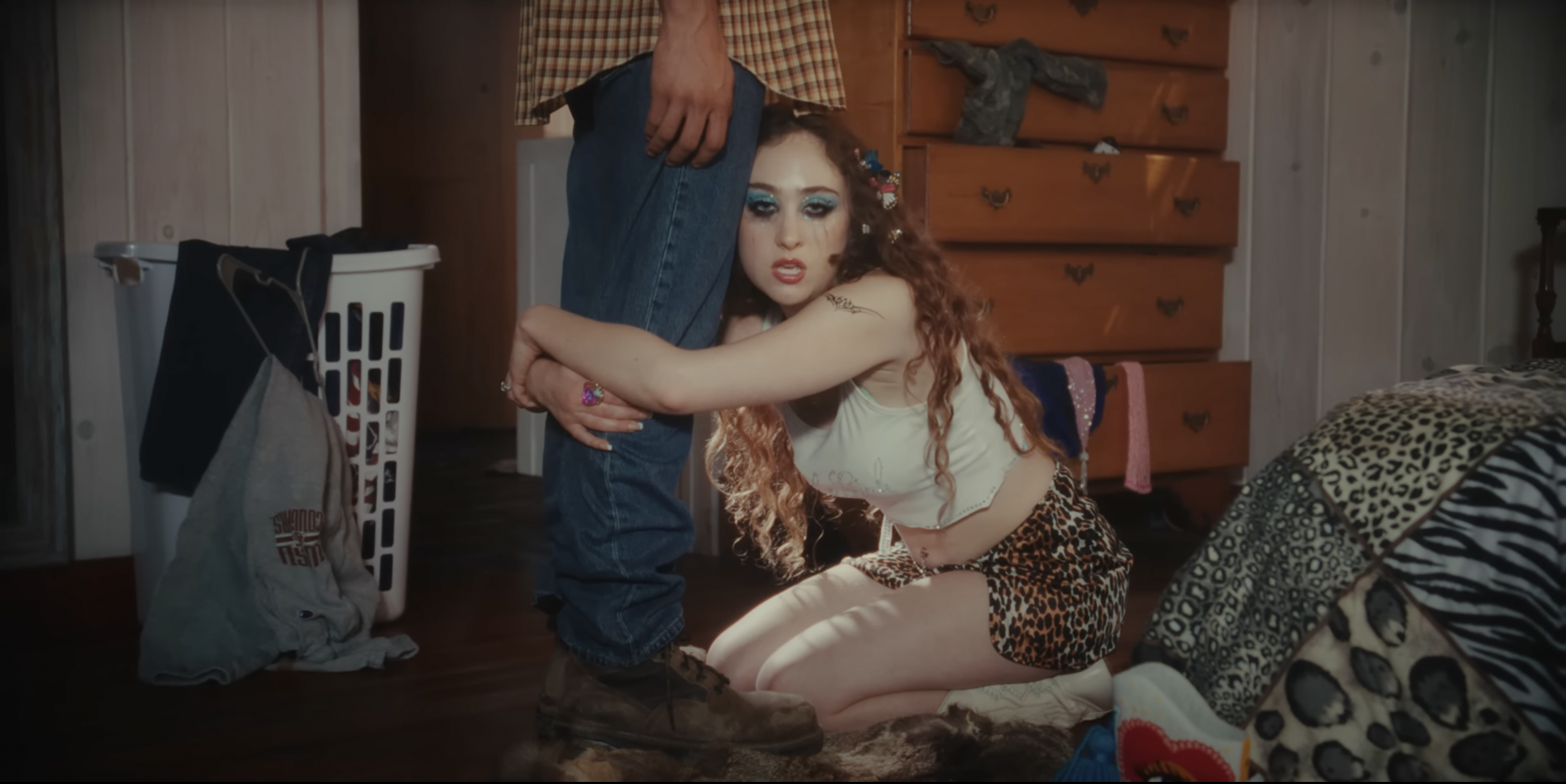
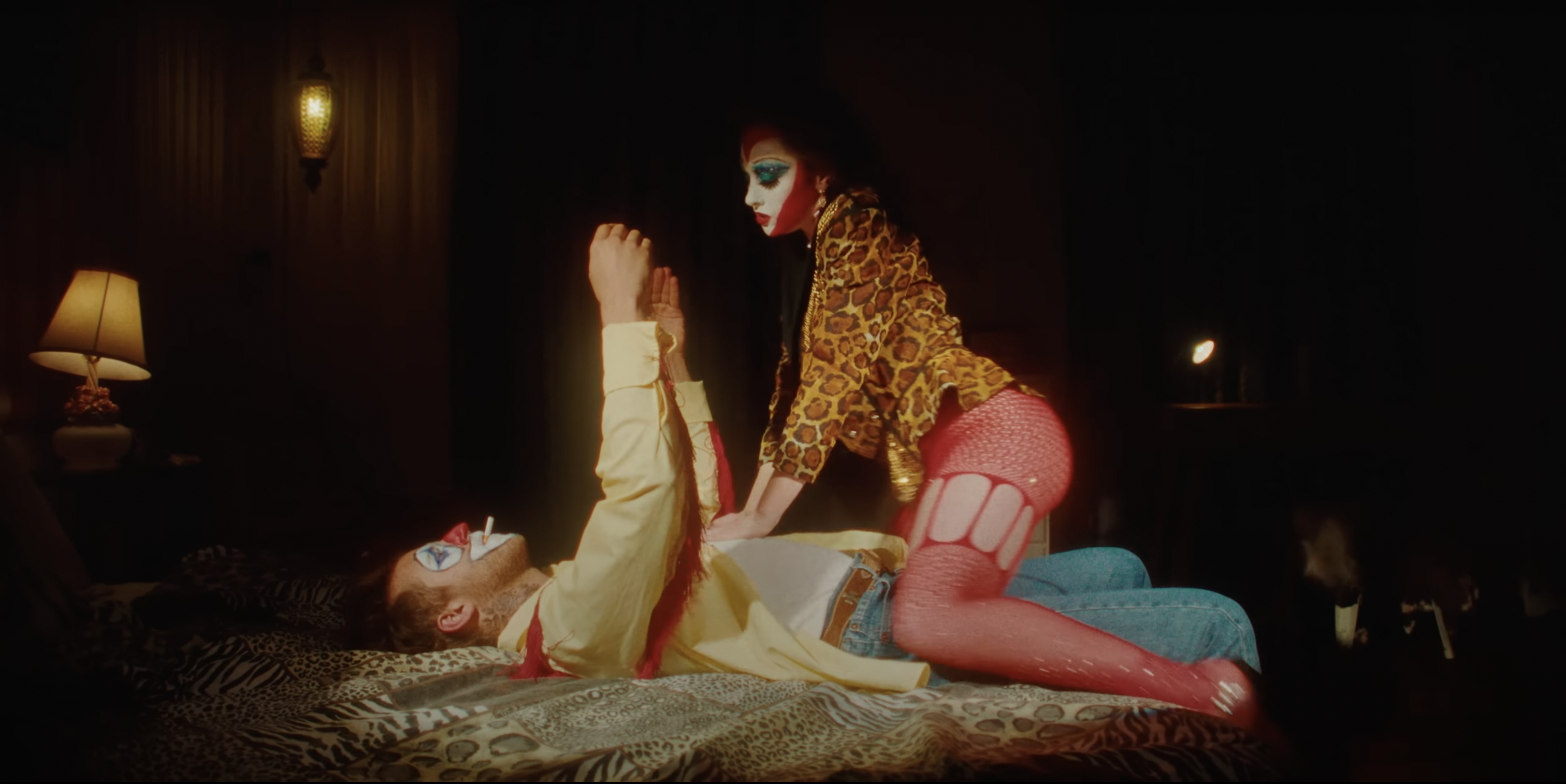
The video begins with Chappell packing her things, mascara running down her face after she broke up with her cheating boyfriend, Clownie. Her body language in this first scene communicates that her potential is repressed by Clownie’s emotionally abusive nature. I notice how during the first verse, it is made very clear that this story is not about him. In fact, his face is not shown throughout the first minute and twenty seconds of the video. As the first verse builds into the chorus, Chappell transforms from sitting timidly on a street curb to embodying power, confidence, and control. Her transformation into her drag persona represents a shift in embodiment, from a place of trauma to a place of dominance. For the majority of the video, aside from the first minute or so, Clownie is notably docile, in a trance-like state controlled by Chappell Roan. This dynamic in music videos, where one party has total control and the other serves as decoration, traditionally mirrors gendered expectations of embodiment. “My Kink is Karma” subverts this dynamic by explicitly depicting how this level of control looks when the roles are reversed.
According to Iris Marion Young’s piece “Throwing Like a Girl” (1980), feminine bodies are taught to occupy less space and use less bodily power compared to masculine bodies. When someone is socialized as a girl for example, they are taught to throw a ball without engaging the entire body; this results in a throw less powerful than someone who is socialized as a man, who is traditionally taught to maximize their physical strength. This dynamic can be seen in the first part of the video. Chappell’s posture is submissive and defeated while Clownie is throwing her things to the curb in a fit of rage.

During the rest of the music video, Chappell Roan breaks every rule of gendered embodiment. She looks directly into the camera while Clownie exists in his submissive state of hypnosis. He does not react when she pushes him down onto the bed, or when she throws his jacket into the fire. He does nothing when Chappell smashes his face into the cake, or when she pins him to the heart-shaped target. Clownie is not there to take up space like men typically do in music videos, but to receive the karma that Chappell exacts. His embodiment is completely in Chappell Roan’s hands.
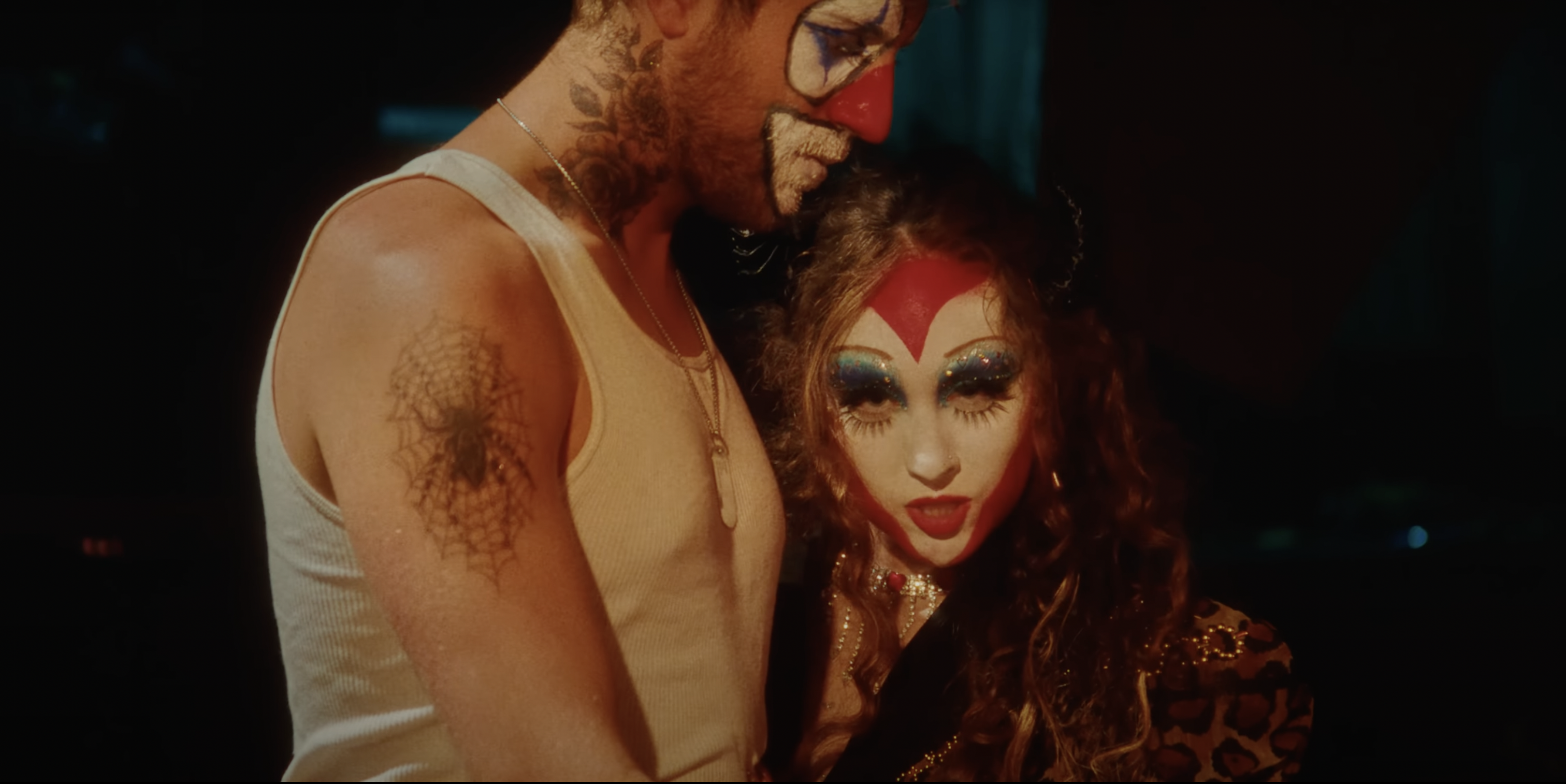
Although I’m sure there is an argument to be made that reversing the roles of gendered embodiment is problematic because it still privileges one socialized group over another, I find Chappell’s subversion of feminine embodiment extremely compelling. Her video inspired me to revisit the ways that I practice embodiment through art. The next time I am on the stage in my heels (it’s where I belong 🎶), I will think of Chappell Roan’s subversive embodiment.
Sources:
Roan, Chappell. “My Kink is Karma”. YouTube. May 13th, 2022. https://www.youtube.com/watch?v=ePsqyPMIg6I
Young, Iris M. “Throwing Like a Girl: A Phenomenology of Feminine Body Comportment Motility and Spatiality.” Human Studies, vol 3, 137-156. 1980.
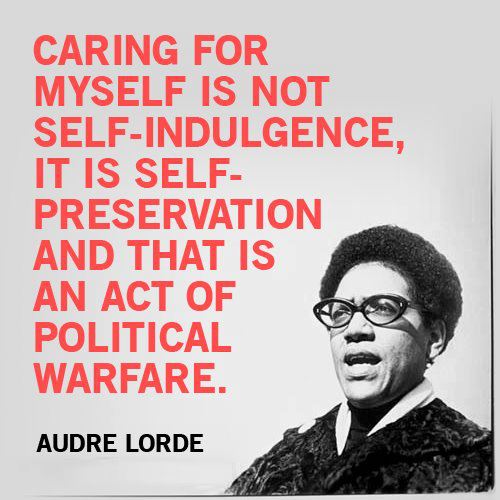
 would describe self care as a way of life. For me its not just, taking a shower or treating myself every now and then. Its the day to day moments. Self care is everything from being able to take a step back from my egoic self, and instead of feeling my anxieties and desires with full force, being able to mindfully and compassionately process the situations to make the best decisions I can.
