
Accessibility is such an umbrella term for so many things- be it mental health, our physical bodies, learning, etc. According to Webster dictionary, it isn’t until we hit the fifth bullet point for it to say, “easily used or accessed by people with disabilities : adapted for use by people with disabilities”. I don’t know about you, but that still doesn’t narrow it down for me.
Pages: 1 2


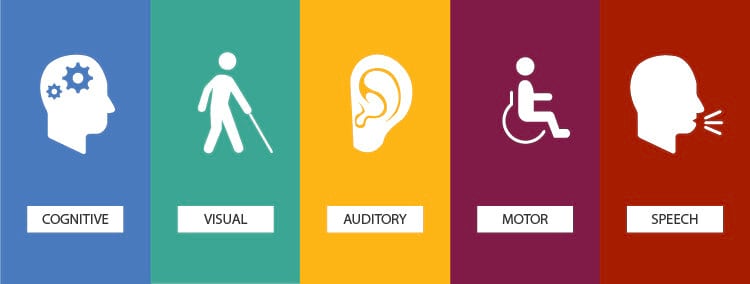
I feel like it’s a catch 22 situation. Accessibility needs to be broadly defined. Disabilities can take many different forms. However too broad and accessibility loses its meaning. Also I feel that image is a good start. Quite a few disabilities would fit in those categories. However I am not sure it covers all disabilities. Where would those with internal disabilities fit in? For example those who need constant access to a bathroom. Would they be considered in the motor category?
I agree with what you’re saying, accessibility should be more commonplace. One thing that I found interesting while traveling to other countries is how accessibility really differs where you live, which I found saddening. In Japan, many (city) streets have grooves on them in patterns so that when blind people use canes, they can know ahead of time if there is a turn or an intersection. At the same time, there are many doors to buildings outside of America that simply aren’t built wide enough for people with wheelchairs. It would be nice to see some sort of global regulation being put into place, much like with streets and street signs being almost unanimous in style.
Really good examples, iuvenia! Thank you for sharing these experiences.
I found this post to be very interesting. When we first learned about alt-text I thought about how privileged I was that I was to be able to go the last 20 years without knowing about accessibility of images. The fact that it never occurred to me that images need to be described for others who may not be able to otherwise experience it made me feel like I was ignoring the needs of others because it is not something I needed myself. It made me realize that my ability to not consider accessibility beyond the apparent needs such as ramps and elevators is a privilege that I need to recognize and work on. I really liked the fact that you included that accessibility efforts are made out to be special or big deals when in reality they should be created so often that no one should bat an eye at accessibility efforts. It’s also important to recognize that advances in technology should be focused on accessibility with the same amount of effort as all the other advances that are made for those without disabilities. This effort may begin with properly defining accessibility and having a bigger national conversation about it.
I really appreciate you highlighting this issue, that graphic is a great reminder to consider as many forms of disability as possible when addressing accessibility. The issue of “universal” access is so complicated when it is impossible for access to be universal with the presence of so many conflicting access needs, like how many sensory disability accommodations inherently conflict. I was glad to see cognitive access brought up. I feel like it’s really overlooked, especially in academia where it seems like maintaining elitism and exclusivity gets prioritized over giving everyone access to information in a way that meets us where we are at.