Disability Imposter Syndrome

TW: ableism, self-harm

Disability imposter syndrome is strange. I’ve been living with it since I was a little kid, and yet I still find it difficult (and oddly embarrassing?) to discuss, particularly with abled people. I was first diagnosed with ADHD, Anxiety, and mild Depression in elementary school. My mom arranged for me to have academic accommodations, much to my classmates’ dismay. They didn’t understand why a person like me, who seemed perfectly capable, got “special treatment.” But they didn’t have to worry about that for long: once middle school rolled around, I was denied accommodations because ‘I could pass my classes without them.’ In my school’s eyes, I wasn’t disabled unless I was failing. Being 12 years old, I believed them. When my symptoms got worse, I told myself it was all my fault. Overdramatic, lazy, stupid, annoying: my personality was the reason I was suffering, surely. After all, if I wasn’t cutting or having panic attacks or flunking my classes, I wasn’t disabled. 

Even back then, I realized those thoughts weren’t healthy. But I couldn’t help feeling like I wasn’t disabled enough to count. Sometimes I still do. 
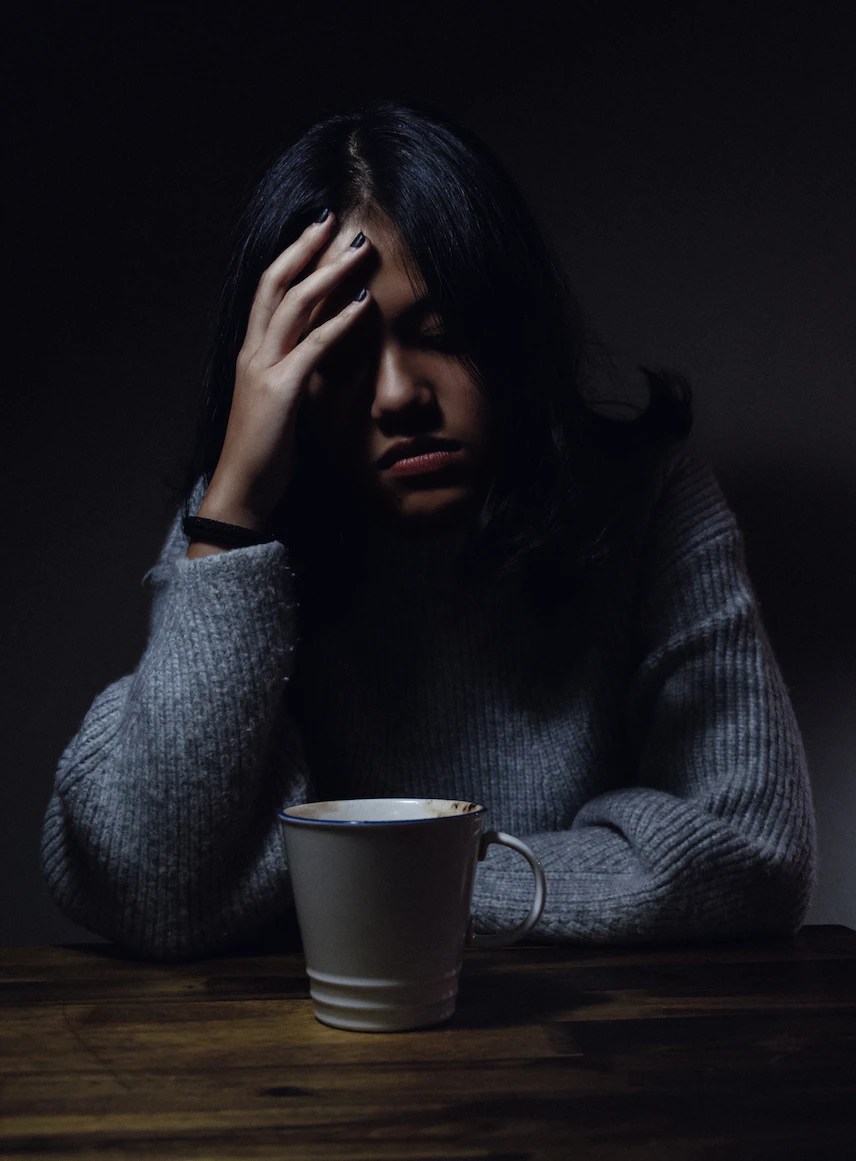
Person sitting at a table in the dark with a hand on their forehead looking tired.
Photo by Anh Nguyen, courtesy of Unsplash

About five months ago, I was recovering from my second bout of COVID, and I never really got 100% better. I figured the residual effects would go away after a few weeks like they did the first time, but they didn’t. I still struggle on and off with intense brain fog, chronic fatigue, breathing problems, and a slew of other symptoms. I, like so many others, am suffering with Long COVID, a diagnosis that is essentially a giant question mark. My doctors are hopeful it will go away on its own, as it has for some, but they really just don’t know. I could wake up tomorrow and be fine, or I could be like this forever. 

Sometimes I wonder if it’s all in my head. On bad days, I feel embarrassed by my inability to execute basic tasks and frustrated because I know the tasks should be easy. On good days, I find myself torn between the fear of another flare up and the fear that people will think I was faking it all along. Even to myself, I question the validity of my experience; I recently had to lean on a wall to catch my breath after a short walk, and I remember thinking to myself “I’m being so dramatic.” I was alone in an elevator.

That insecurity of being overdramatic, the fear of not being able to trust yourself, the belief that you’re “not disabled enough” to count — that is disability imposter syndrome at its finest. But I’m learning to fight it, to forgive myself for my limitations, to treat myself with compassion, and to advocate for myself because I am worthy of support

Haunted House – A work of Anxiety

When you’re mind gets like this when the spirits of your past self haunt you with every misspoken word or awkward interaction you feel as if you’re trapped in a haunted house tip toeing around your own mind trying to dodge the parts of creaky wood that is your memories as not to alert the next specter itching for a scare you look to see the shards of glass that once we’re mirrors that you saw reflections of yourself in versions of you that no longer exist hoping the fractured parts of you don’t tear through those cracks and drag you back to times long wished forgotten some days you make it to the end successfully avoiding the haunted house that is your mind and other days the spirits have a hold that is simply to tight but there’s always another day to open the door and bask in the kinder light

“You can’t change”

When I was a young child I was extremely hyper and way too impressionable, at one point I wanted to be like my family dog so I started to eat cicadas and cicada shells after seeing him do it. I also modeled myself after one of my close family friends, Michael, who had a learning disability. We have apparently known each other since birth and he was one of my first friends. Of course, at time I had no idea that he was any different from other children. When I was about twelve I realized that he had a disability, and started noticing how unfairly those not close to him would treat him. Everyone around Michael would expect him to never act out and they would become visibly angry when he did something they did not agree with. I noticed that Michael started to become extremely reserved in public with anyone outside his close circle of people he knew would only support him.

One of his biggest supporters was my mother; Michael was often over, and my mom would set realistic goals for him to meet as well as teach him to be more confident. Whenever Michael reached these goals both he and my mother became ecstatic. Over the years Michael has become one of the most self-disciplined people I know; everyday he runs outside and goes to the gym, he plays ice hockey for a rec team, and only continues to grow as a person.

Michael learned how to read social cues and understands what is considered appropriate behavior, but the impressions he’s made on others when he was still learning has stuck. Many of those who knew him choose to pretend he doesn’t exist and are unwilling to compromise on their belief that he could not have changed. It’s always upsetting to see that all of Michael’s hard work is sometimes moot just because people can’t believe that someone with a serious learning disability could actually learn and be a productive member of society.

I feel like a poser.

I think that if I had seen people like me– brown neurodivergent individuals– I wouldn’t be having such a hard time writing this. I tried writing about my experiences as a neurodivergent person, but I sounded like a poser when I read it back to myself. Like someone who’s trying too hard for attention. I tried listing out some of the experiences I have had as a neurodivergent person before backspacing almost immediately, I tried writing about how I have to watch and wait when I enter any social setting to learn how I should be behaving and talking. About how there have been so many instances in my life where I have miscalculated and said/done the wrong thing when I was so sure that that was the expected response. About how, for the longest time, I had a running list of rules in my head, all of them pertaining to social interactions. Little scripts for me to follow in any possible conversation or confrontation. 

 But, even now, listing all of that out makes me think that I’ve lived the life of the average individual. There’s nothing actually significant about any of what I’ve listed. A part of me KNOWS that this isn’t true, based on accounts from other neurodivergent individuals who have said the same thing. But, a bigger part of me is actually kind of nervous to post this. I know that I’m neurodivergent, but am I really? If someone asked me to demonstrate the ways that I am, I don’t know that I could. Or at least, that I could in a way that would really prove to them who I am. 

I think it’s hard for me to really believe that I am neurodivergent. Unfortunately, at this time, I don’t have the resources to pursue a diagnosis. A diagnosis that would be an incredibly grueling process for me, someone who is afab and a person of color. If I had known earlier on that someone like me could be neurodivergent, I don’t think all these doubts about my own validity would be swimming in my mind.

M.H.M

Mental health matters. Apparently that is what M.H.M stands for. Which is crazy because I had no idea that was a thing. I feel as though mental health is important until it interferes with your social life, or your academic life or extracurricular activities. Teachers and professors will swear up and down to take care of yourselves, and mental health is important but also seem to purposely make the course load hard and heavy, for the sake of force feeding the material down your throat. We talked a bit in class about how there should be less focus on attendance as a grade because sometimes people need mental breaks or a mental health day. However most teachers don’t have systems in place for mental health days. What I mean is that if you’re sick, you get a pass on coming to class and sometimes you have to have proof, so you get a note from the hospital and there you go…no penalty for you. What about your mental health? I feel like when it comes to your mental health the excuse has to be an extreme to get a day off from class like, someone died or some tragedy just occurred. And maybe it’s not as hard to get a pass off class for a mental health issue but it is hard to ask for one, because it also isn’t really all that talked about. 

I also wanted to discuss mental health in the household when it comes to different cultures. As a blasian woman, mental health wasn’t really discussed at all growing up. From my Filipino side, if you feel depressed, you’re not…you’re just sad and all you need to do is work harder and pray. For my black, African American side mental health has more of a negative stigma. It really wasn’t acknowledged at all. Mental health was seen as unlucky and if someone in the family was possibly mentaly disabled.. They weren’t, they would never actually get diagnosed until later. Two different cultures and yet the same reaction to mental health. Unfortunately knowledge and awareness of mental health has a long way to go.

My glasses are a part of me

Growing up I had good vision and was able to go about my life without missing anything with my eyes. This all changed when I got to third grade and I started to notice that things became blurry and almost illegible at a distance. The young me thought nothing of it at first, it was not until I started bringing it up to my mom that I realized that something was wrong and that I needed to go get my eyes checked out.

Continue reading

SDS at UMBC

Before UMBC I took classes at my local community college and had to seek out accommodations due to my disabilities (mainly migraines and ADHD). The process was pretty self-explanatory and simple. I reached out and explained my situation and asked what the next steps were and scheduled a meeting. After that meeting I had all the accommodations I needed and did not need to jump through hoops to get what I needed to succeed in college. 

Continue reading

Masking and Making Friends

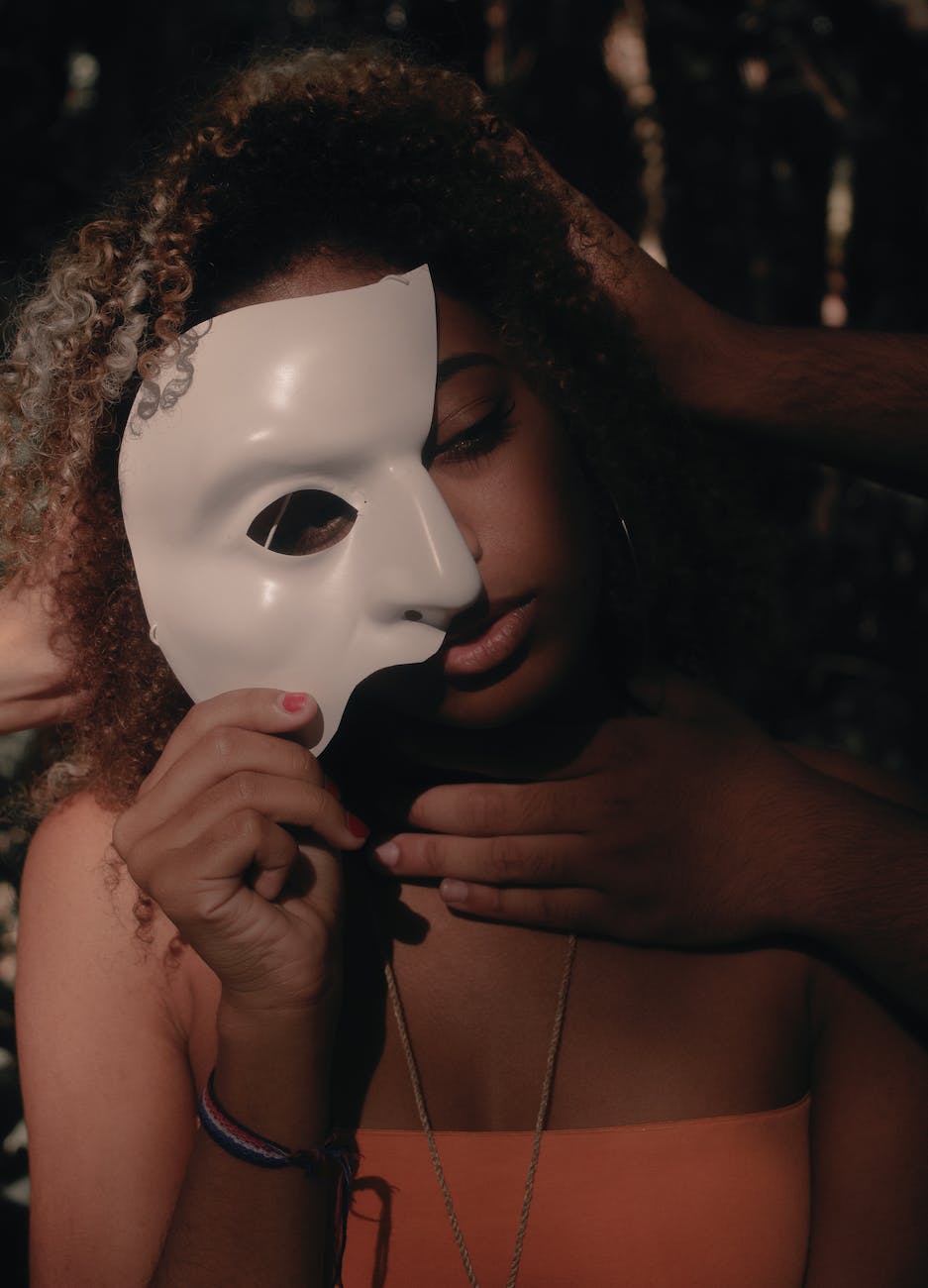
Trying to make friends while being neurodivergent is honestly extremely hard. Especially while having anxiety, it’s a mix of things that causes the task of making friends difficult to carry out. But when you get past that stage of making friends, what happens after that? What am I supposed to do from here? How am I supposed to act? This is where masking (unfortunately) comes in, playing the main role, and makes this process of making and keeping friends much harder.

Person holding up half of a white mask, covering half of their face.
Continue reading