Time Under Capitalism

I feel like I’m constantly chasing time. When my grandmother died last semester, time stopped making sense. I started sleeping during the day and staying up all night. I couldn’t get through my classes without crying, so I just didn’t go. It wasn’t that I didn’t want to work — I couldn’t. Everytime I picked up my computer, it felt like I was betraying her somehow, like working meant forgetting. I wasn’t ready. I needed time to process, to grieve. But, much to my dismay, time wouldn’t stop. I turned in every one of my finals late. I scraped by with good grades in all of my classes, in large part due to the kindness of my professors, but I still felt like a failure. Capitalism asks us prioritizes our productivity over our mental health, and I couldn’t do that. 

For a long time, I’ve been doing this thing I call “budgeting” — I force myself to be productive in hard times in case harder times are ahead. You can only ask for so many extensions and excused absences before it becomes a problem. You can only have so many breakdowns before you can’t catch up.  But it shouldn’t be this way. I just want time. I want to take days off without the fear of failure constantly looming overhead. I want to ask for as many extensions as I need without feeling guilty or embarrassed. I want to heal without being questioned or rushed. I want — I need — time.
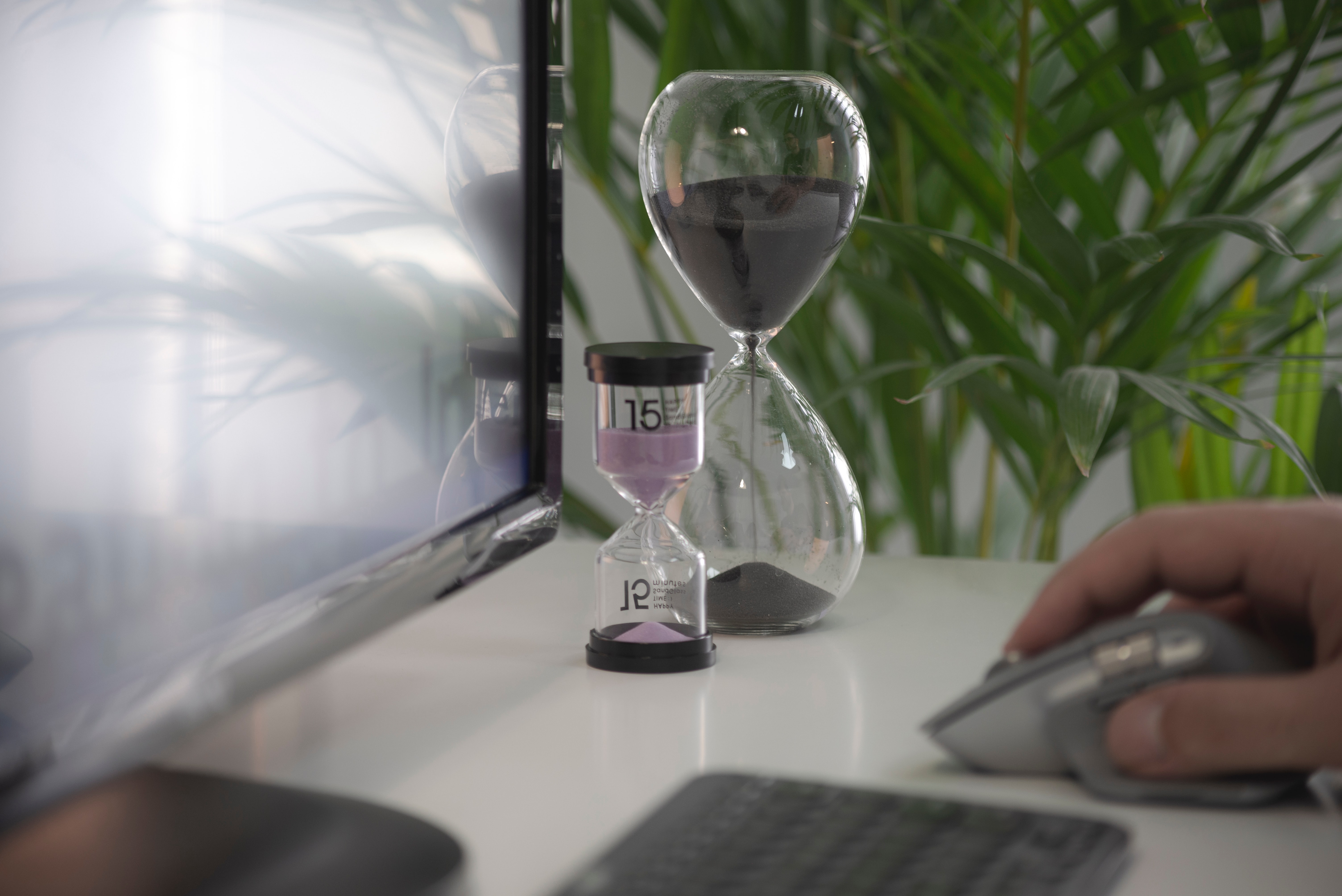
Two hourglasses sit on a desk as a person uses their computer.
Courtesy of Milan Fakurian on Unsplash (https://unsplash.com/@fakurian)

Disability Imposter Syndrome

TW: ableism, self-harm

Disability imposter syndrome is strange. I’ve been living with it since I was a little kid, and yet I still find it difficult (and oddly embarrassing?) to discuss, particularly with abled people. I was first diagnosed with ADHD, Anxiety, and mild Depression in elementary school. My mom arranged for me to have academic accommodations, much to my classmates’ dismay. They didn’t understand why a person like me, who seemed perfectly capable, got “special treatment.” But they didn’t have to worry about that for long: once middle school rolled around, I was denied accommodations because ‘I could pass my classes without them.’ In my school’s eyes, I wasn’t disabled unless I was failing. Being 12 years old, I believed them. When my symptoms got worse, I told myself it was all my fault. Overdramatic, lazy, stupid, annoying: my personality was the reason I was suffering, surely. After all, if I wasn’t cutting or having panic attacks or flunking my classes, I wasn’t disabled. 

Even back then, I realized those thoughts weren’t healthy. But I couldn’t help feeling like I wasn’t disabled enough to count. Sometimes I still do. 

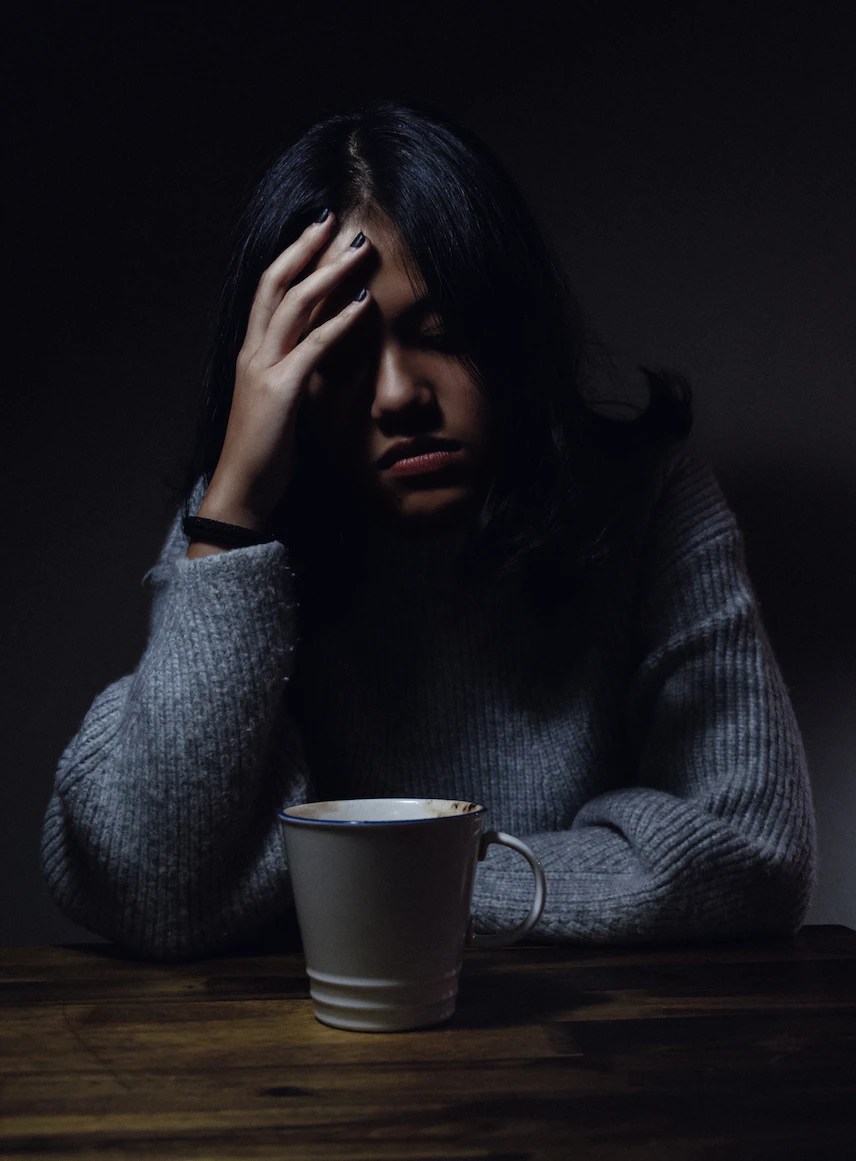
Person sitting at a table in the dark with a hand on their forehead looking tired.
Photo by Anh Nguyen, courtesy of Unsplash

About five months ago, I was recovering from my second bout of COVID, and I never really got 100% better. I figured the residual effects would go away after a few weeks like they did the first time, but they didn’t. I still struggle on and off with intense brain fog, chronic fatigue, breathing problems, and a slew of other symptoms. I, like so many others, am suffering with Long COVID, a diagnosis that is essentially a giant question mark. My doctors are hopeful it will go away on its own, as it has for some, but they really just don’t know. I could wake up tomorrow and be fine, or I could be like this forever. 

Sometimes I wonder if it’s all in my head. On bad days, I feel embarrassed by my inability to execute basic tasks and frustrated because I know the tasks should be easy. On good days, I find myself torn between the fear of another flare up and the fear that people will think I was faking it all along. Even to myself, I question the validity of my experience; I recently had to lean on a wall to catch my breath after a short walk, and I remember thinking to myself “I’m being so dramatic.” I was alone in an elevator.

That insecurity of being overdramatic, the fear of not being able to trust yourself, the belief that you’re “not disabled enough” to count — that is disability imposter syndrome at its finest. But I’m learning to fight it, to forgive myself for my limitations, to treat myself with compassion, and to advocate for myself because I am worthy of support

My Body Is More Than a Vessel

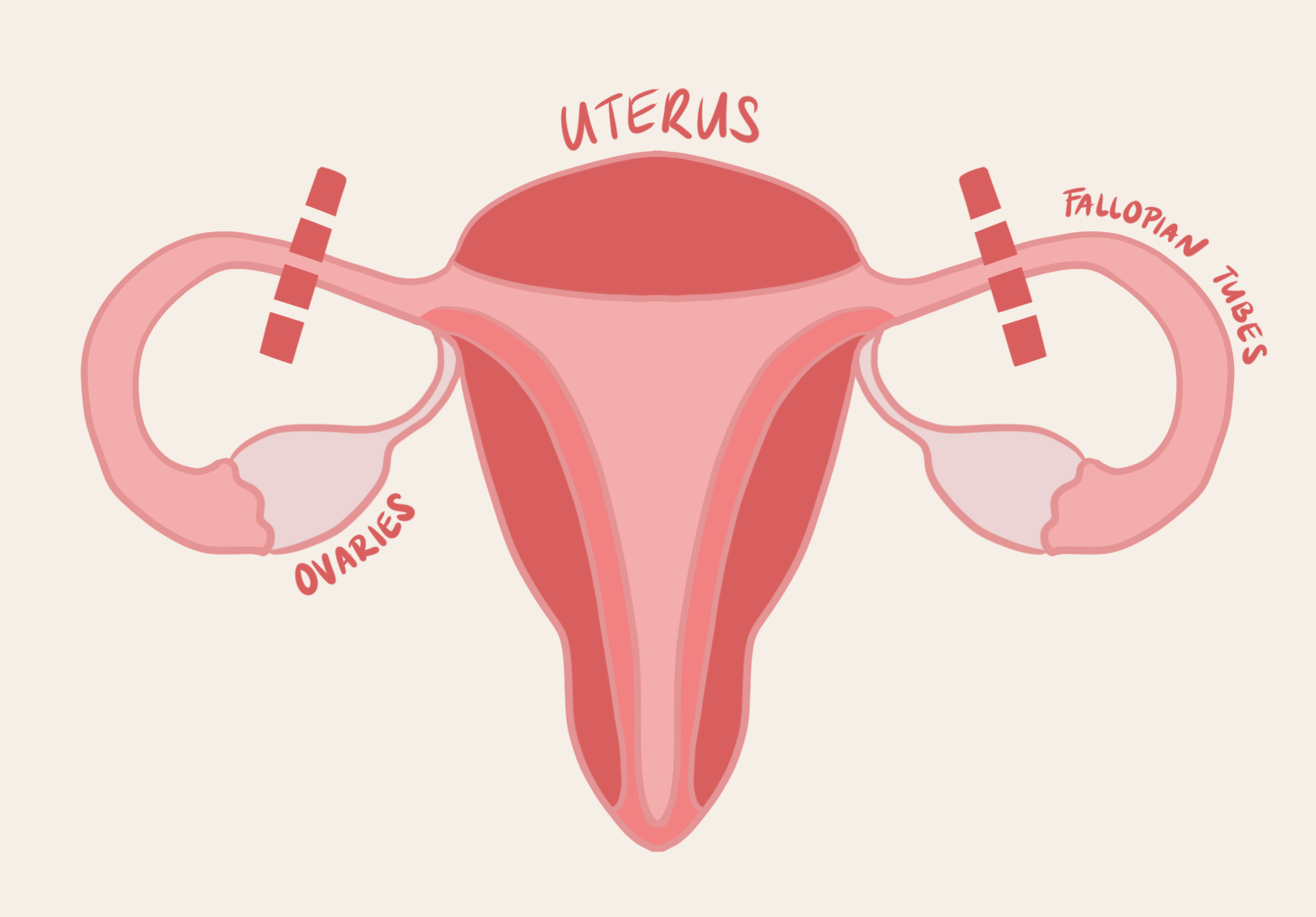
A simple drawing of a uterus. A dotted line marks where incisions would be made on the Fallopian tubes during tubal ligation.
A sketch of the uterus (not entirely accurate, as I am not a doctor). Dotted lines mark the incision points where the Fallopian tubes are cut during a tubal ligation procedure (female sterilization).

CW: Pregnancy anxiety (tokophobia), mention of sexual assault

I want to be a mother. Not right now — I’m 20, with a life full of complications and a brain that is not fully developed yet, so I think it’s best I wait a while — but someday. I have always pictured my future through the lens of motherhood: visions of waking up far too early to send the little ones off to school, coming home from work to hugs and toys scattered across the floor, shopping for last-minute school supplies and snacks that probably have too much sugar. 

But — I’ve never wanted to birth a child. I am not equipped for that sort of thing. My health has always been tumultuous, and the thought of growing a child inside the same body that can’t even make it through a blood draw without passing out — just no. I don’t want to share my body with something else; I don’t want the stress of worrying about every awkward movement and strange sensation; I don’t want any of it. And I don’t think I should have to. But no one seems to believe me when I tell them with certainty that I do not want to carry a child.

When I mention wanting my tubes tied, the response is usually one of two questions: “What if your future partner wants a biological child?” or “How can you be sure you won’t regret it?” For the former, that’s great, good for them. But my body is not theirs. There are ways to have a biological child that do not involve my uterus. And for the latter, my honest answer: I can’t be certain. But people do a lot of permanent things they can’t be sure they won’t regret. They have children. 

Even if I was absolutely sure, it’s not like it would matter. I’m 20. No doctor would let me anyway. Women who seek permanent contraceptive surgeries out of medical necessity are often questioned — and sometimes denied — by doctors, so being 20 and getting a tubal ligation is probably out of the question. 

It’s frustrating, feeling like my reproductive potential outweighs my bodily autonomy. I feel like my body is being patrolled. I’m being held hostage by a hypothetical human — not even a fetus, not even a fertilized egg, but the mere possibility of a future child. People will say “just use protection” or “just don’t have sex if you’re so worried,” but, unfortunately, that’s not a guaranteed solution. I know too many people who haven’t had the luxury of that choice. And even protection, birth control, and Plan B aren’t perfect solutions. (It’s worth mentioning that tubal ligation is not infallible, either, and it is not a substitute for condoms, which protect against STDs.)

I just want the choice. I want to decide what happens to my body. I am not a vessel for a future child; I am a person, and I should be treated as such. 

Embodying Invisible Disabilities

I am disabled. It took me a long time to call myself by that name. I used to think disability was a term restricted to people whose disabilities were obvious — you could see it in their gait, or how they fidgeted in their chairs, or the way people would talk around them instead of with them. My disabilities manifested in less noticeable ways: poor time management, perfectionism, relentless talkativeness, trouble sleeping, etc. I always considered these manifestations “personality defects” and personal failures rather than symptoms.

I think for a while I was afraid of co-opting the term from a group that seemed more minoritized than myself. I didn’t see myself as having real struggles (thanks, internalized ableism and impostor syndrome!), at least, not like those that other disabled people grappled with. Even when friends would describe their experiences of disabilities we shared, I would sympathize with their stories, rage at the injustices they faced — but I couldn’t give myself the same grace. 

It wasn’t until I experienced a visible disability that I realized how disabled I’ve been. The last time I had COVID, I noticed something was off. Ten days, six weeks, then three months later, I wasn’t better. The cough and congestion were gone, but I still felt slow, like everything around me was playing at 2x speed, and it took all my energy to keep up. My brain was so laggy I struggled to compose coherent sentences; catching up with a friend over dinner left me lethargic and almost dizzy for days. People asked if I was alright, worried why they hadn’t talked with me in weeks or seemed so dazed at work. 

I couldn’t deny it anymore, I was disabled. When everyone noticed it, I believed it. But, really, it wasn’t all that different from how I experienced disabilities before, except that, this time, there was an easy before and after comparison. Everyone knew pre-COVID me and post-COVID me. There was never a version of myself before ADHD or Anxiety; they’ve been with me since birth. There’s no telling where the diagnoses end and I begin.

Long COVID made my other disabilities entirely unmanageable. I didn’t realize how tumultuous my balance was until COVID gave me a shove and sent me tumbling off a cliff. It was a wake-up call: just because I was compensating for my disabilities well enough before COVID didn’t mean they weren’t there. Just because other people couldn’t see them didn’t mean they weren’t real. Long COVID forced me to accept that I needed support. I couldn’t keep trudging through life, exhausted from playing on an uneven field and unwilling to accept the help offered to me. My disabilities were — are — real, and I deserve a level playing field. 

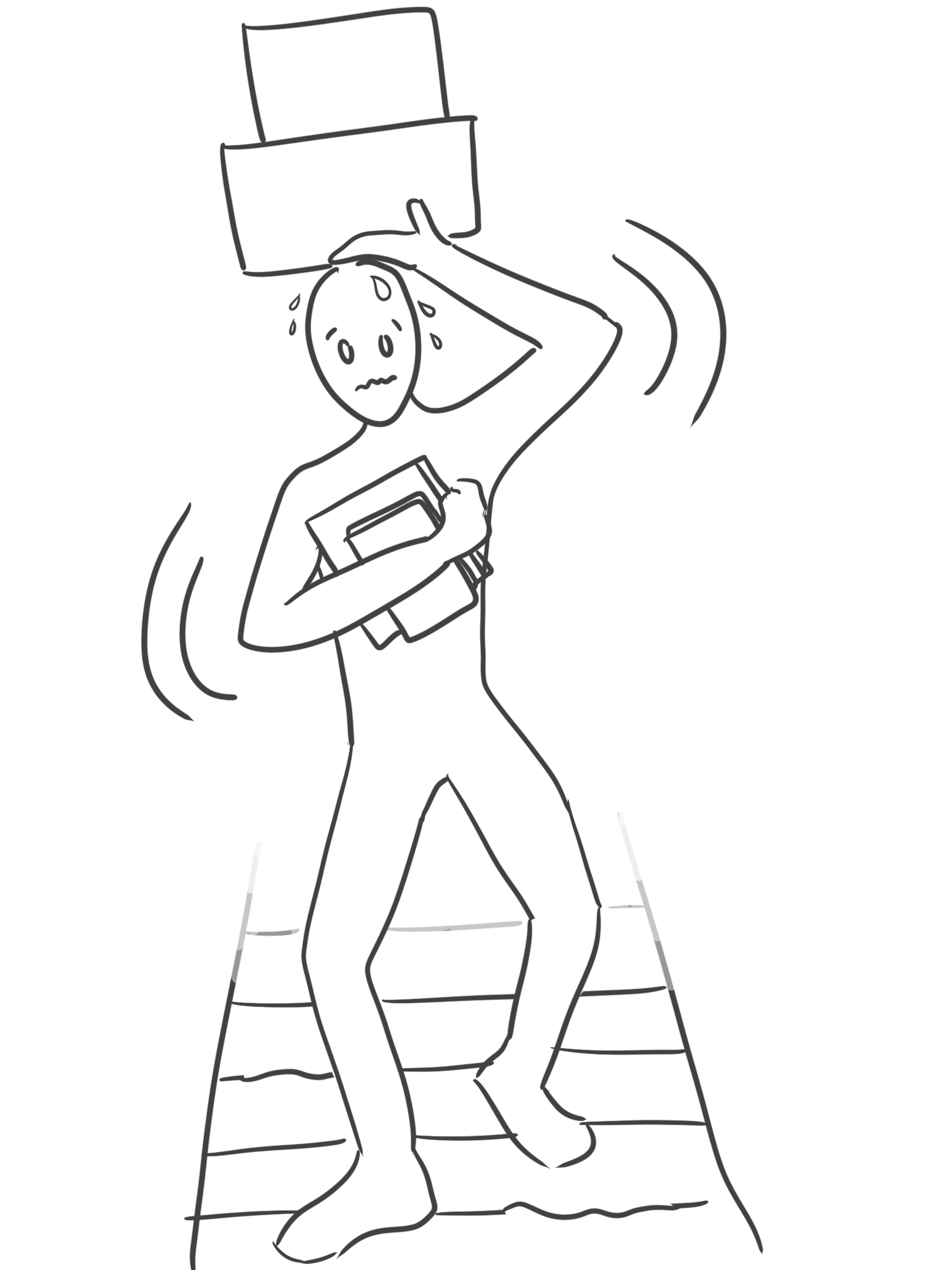
Digital sketch of a person walking down uneven stairs while carrying a stack of books in one arm and balancing boxes on their head with the other. They are sweating and wearing an anxious expression.
A quick sketch of how I feel internally when dealing with disabilities.