
The article on the infantilization of autism really made me think about my cousin who has autism. He’s about 3 years younger than me, so I’ve always seen him as a younger brother. However, reading Stevenson’s article made me wonder if myself and my family have been infantilizing him in some ways. In a lot of ways, he’s like a stereotypical teenager. He can be moody, he likes alone time, and he likes video games. In some other ways, he still enjoys a lot of typical “kid” stuff. He likes Dora and YouTube Kids, a lot of his favorite toys are children toys, and many of his favorite songs are kids songs. Basically, he’s pretty unique in his interests, and doesn’t necessarily act like a stereotypical kid or teenager.
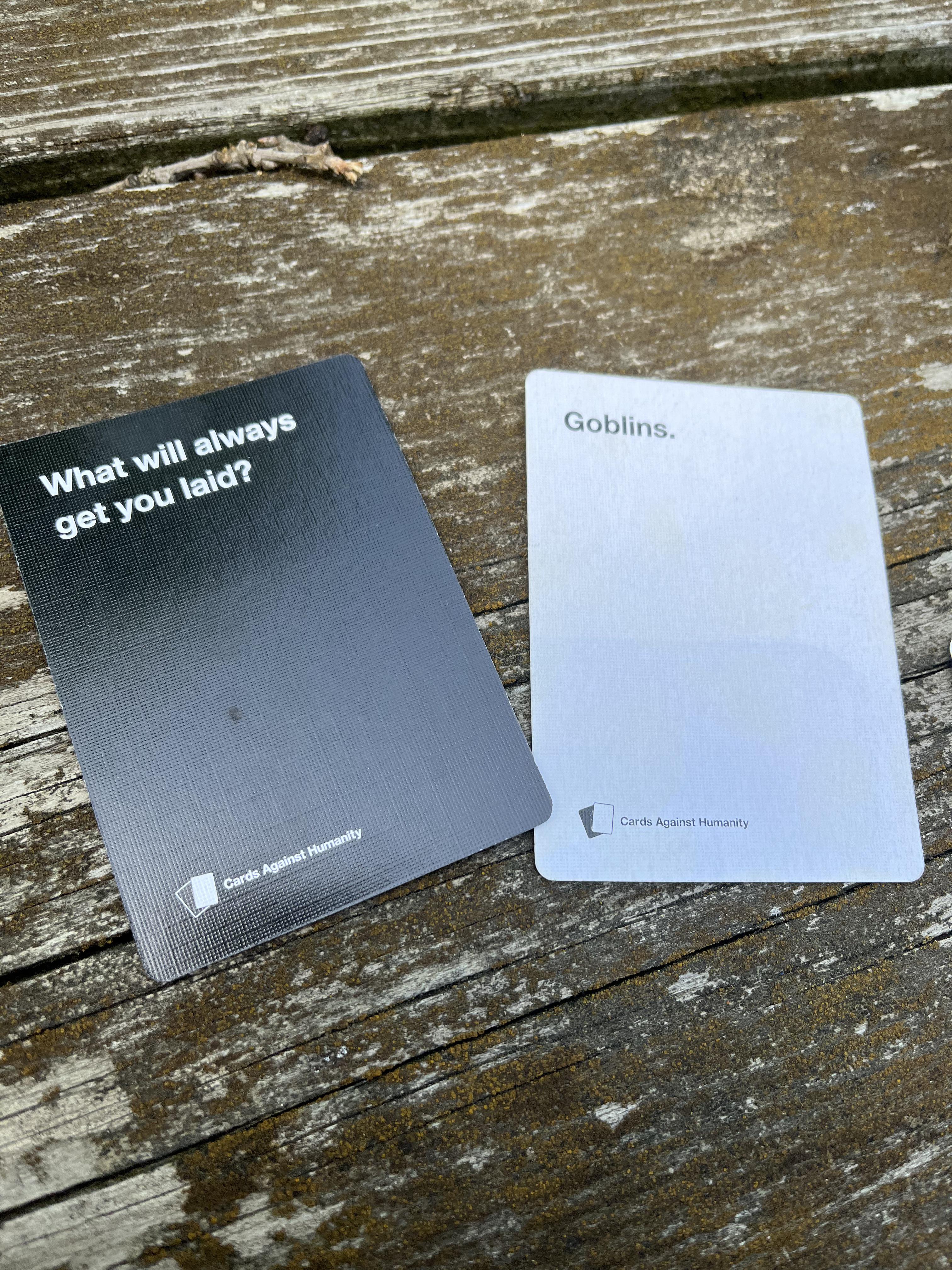
A few weeks ago, he discovered Cards Against Humanity and has been reading the cards out loud. If you don’t know about this game, the whole point of it is to be as offensive as possible by combining two different cards (I put an example as a picture). My family was a little conflicted as to whether or not they should stop him from reading the cards. Their first reaction was to stop him because what he was saying was inappropriate to them. But when they considered his age, they realized that it’s actually pretty normal for teens his age to like offensive humor. It was interesting to me that this was our first reaction, and I’m not sure if it’s infantilizing him or not.
On one hand, we don’t want to treat him like he’s a kid. We shouldn’t completely shelter him from the world, he’s a teenager now. On the other hand, we don’t want to set a bad example or have him repeat the things on the cards in an inappropriate situation. In the end, we decided to let him keep reading the cards out loud, but to just let him know that they’re intentionally offensive and not the way people should talk to each other. Overall I think we handled the situation well, however, I think that it shows that we have a bias towards seeing him as a kid that we have to think a lot about to correct. I think that this bias is definitely perpetuated by the media and autism charities that only depict autistic people as kids.


Thank you for speaking on this. This is such an important conversation that I feel is never talked about. I strongly relate to this post as i have the same experience with my sister all the time. She is only 2 years younger than me but I am constantly finding my family and I guilty of doing the same thing to my sister. Part of it comes from a sense of overprotectiveness but I strongly believe a part of the infantilization of autistic children comes from an underlying (whether you recognize it or not) feeling that they aren’t competent enough to carry out tasks or participate in tasks due to the stigma that is so normalized and pushed down our throats in society. But once u recognize this, you are able to educate yourselves and change.
It is nice to see that you are being self aware in this situation. I agree with you that people tend to have a bias toward seeing those with autism as having childish tendencies. Stevenson makes the argument that media representations of individuals with autism have often perpetuated stereotypes and myths. She highlights how these portrayals have often infantilized individuals with autism, depicting them as childlike, dependent, and incapable. I feel that there is much work to be done to shift the perception of individuals with autism. They should be treated with the same respect and regard as anyone else in society.