
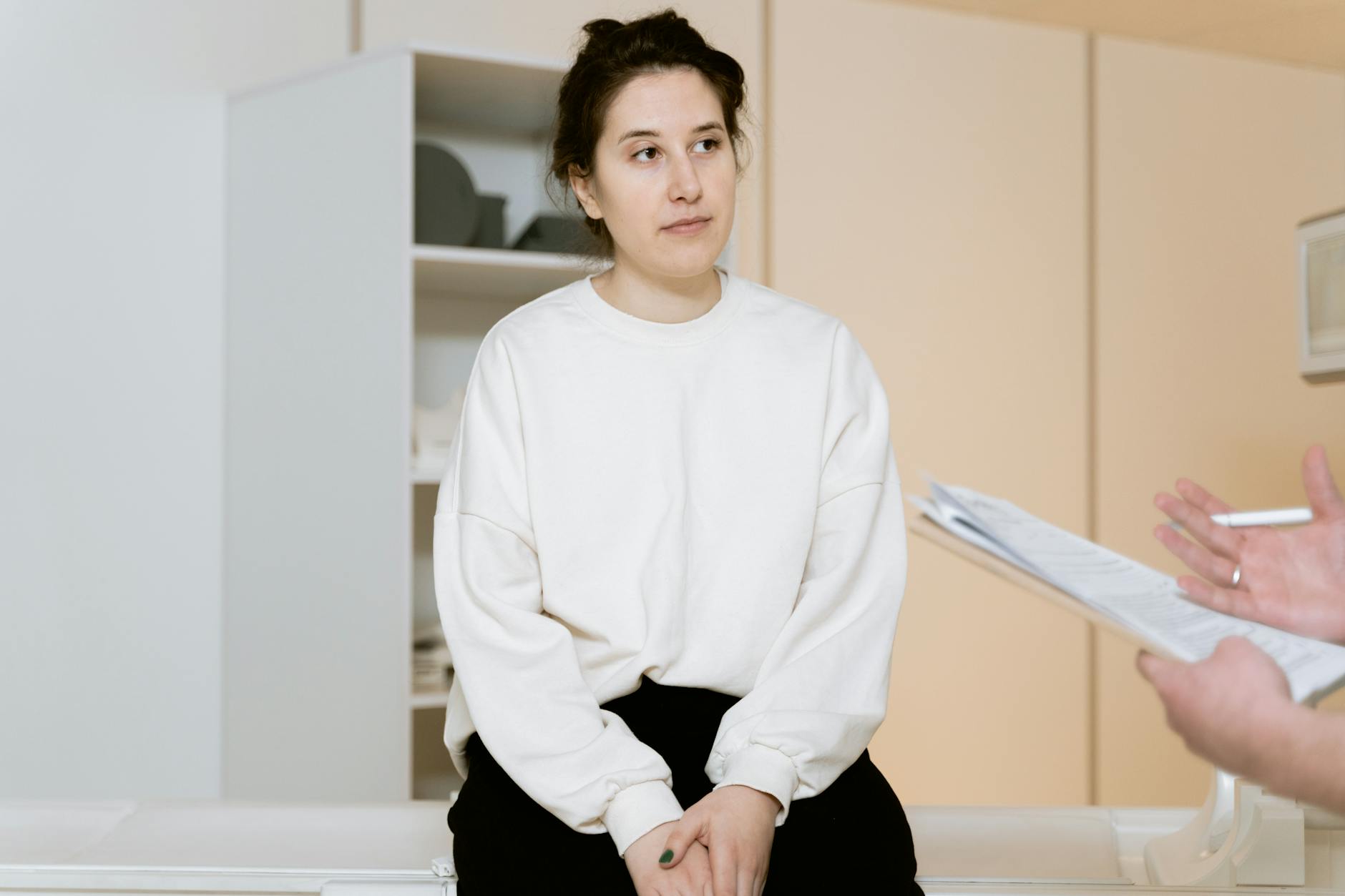
The body perceived as a ‘woman’ is the body assumed to contain a hysteric mind. While this concept is pervasive in every aspect of our society, one can especially see the ways in which past thoughts on the ‘gendering’ of bodies determine how one is treated when looking at medical settings. Looking at this from a phenomenological point of view, others’ perception of one’s body leads to a complete denial of one’s internal experiences.
…
One’s conscious perception is cancelled out by another’s, as if both viewpoints do not hold the same value and are equally capable of contributing. One must wonder, however, if in the case of pain and discomfort, why is the experiencer automatically dismissed? Of course, it makes perfect sense that a doctor would have more medical knowledge than a patient, but we often forget that the knowledge is limited both in scope and because a patient cannot transfer the physical feelings they undergo to a doctor.
When women speak of physical feelings, that is, the pain or discomfort we detect within our own bodies, we are told that it is normal for women to experience pain or that it is simply imaginary. This is partly due to years of excluding AFAB individuals from medical research and prioritizing certain medical conditions; the amount of research into problems that mostly affect men versus problems primarily impacting women is disproportionately skewed. Very common issues that cause pain and suffering, such as Premenstrual Syndrome, Endometriosis, and PCOS, are understudied due to a lack of financial backing and interest, yet a significant amount of well-funded research has been done for more minor problems, such as erectile dysfunction and male pattern hair loss. It is no wonder that those impacted by such issues are dismissed by doctors, as the culture has allowed our pain to be pushed aside. Skeptical doctors and anyone doubting our experiences should ask themselves: since we did not know of germs before we had the prior knowledge required to develop a hypothesis and the equipment needed to physically see bacteria, did germs only pop into existence once humanity made the microscope? The answer is obviously no, but with this in mind, how can we dismiss women’s pain and discomfort on the grounds that doctors cannot or will not care to see or measure it?
In totality, bias and the years of exclusion from medical studies combine to create an environment in which women’s internal experiences are often disregarded as fictional or written off as unimportant. One is made to contort oneself into a specific presentation in order for one’s experience to have a chance of being validated. We must make an effort to dress ‘correctly,’ not too sloppy but not too put together; research enough to explain our pain, but not let on that we have researched it, lest the doctor accuse us of faking; and ensure we are complaining the ‘right’ amount, as too little, one will assume it does not exist, and too much, one will assume we are drug seeking. Even when one is the ‘perfect’ patient, which is an ‘achievement’ further dependent on uncontrollable factors, many still struggle to find a doctor who will give credence to such facts that are easily deniable by those not embodied by it. One must understand that all of this greatly compounds when looking through an intersectional lens, as the plight of not being believed due to our perceived gender is wholly exacerbated when race, gender identity, disability, body size, and any other form of marginalized identities are present. Disregard becomes debate, leading to dismissal that transforms individuals into statistics without any semblance of consent. Even a millionaire can be subject to the hesitancy and repudiation of an individual who is supposed to listen when a patient is expressing that her internal experience is abnormal.


This is a very insightful piece highlighting the struggles that women face when it comes to being heard in society, specifically when it comes to medical needs. I was fortunate enough to grow up with two pharmacist parents, so I never had an issue getting the medical care that I needed. Even now, as an adult, my parents “know someone” for any medical need that I may have. When I started getting the chronic migraines that my dad passed down to me, he already knew a neurologist who would set me straight, and that’s just one example. But what about the women who don’t know any better? Those who receive less effort from doctors or are steered the wrong way, without even knowing it? How many of their struggles could be resolved with more compassion and professionalism?