When Will the Ouroboros Run Out of Body-Length to Eat?

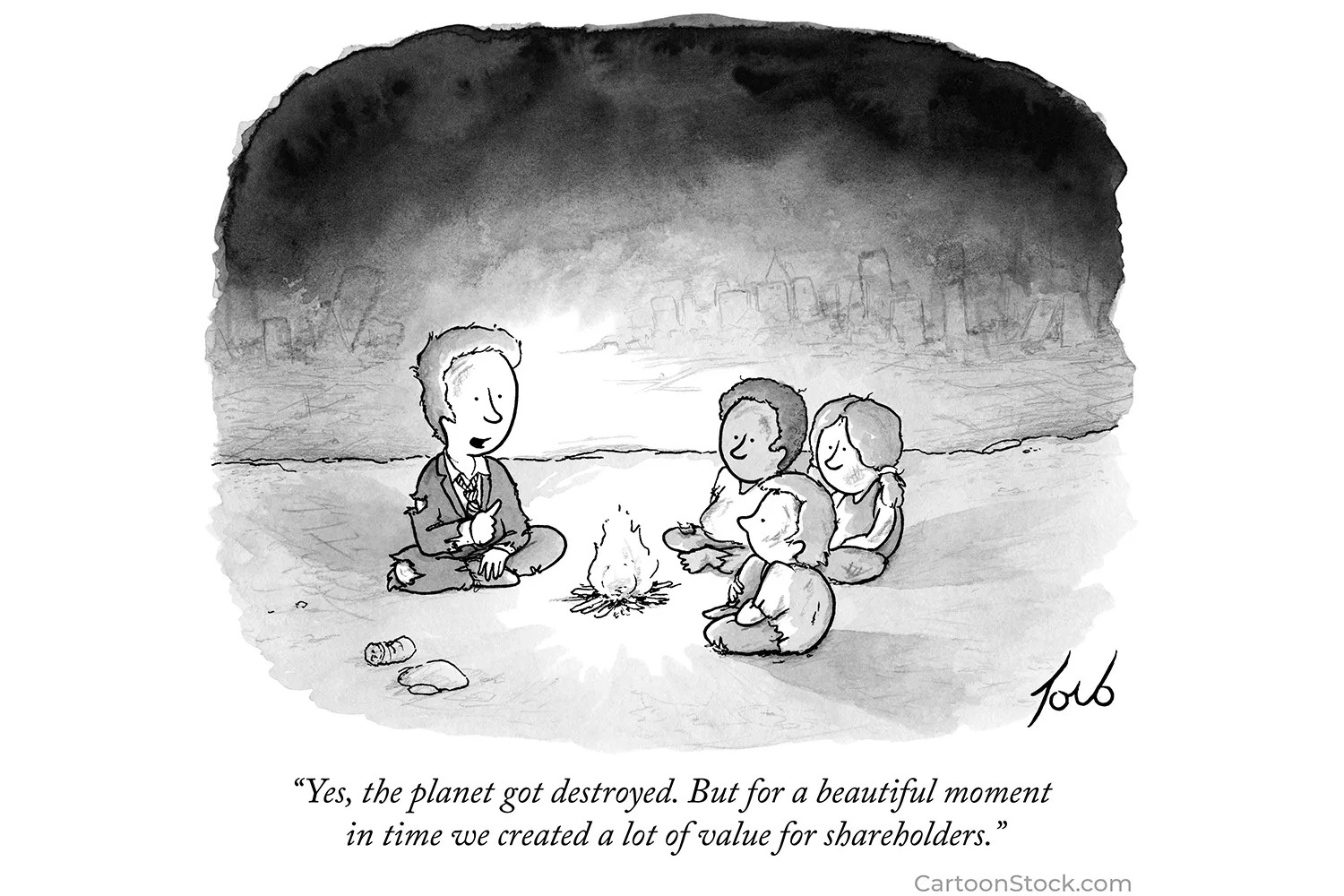
Our system postures itself as a beneficial ouroboros; one is led to believe in the presence of infinite resources fit for infinite consumption, yet one can look beyond this façade and see that individuals who rank power and profit above all else have been devouring those deemed unimportant or undesirable. Within the false notion of never-ending resources, one can see a paradox in which abundant resources suddenly become scarce when those outside of a particular group request them. It has been declared that our society cannot have free healthcare, clean air, timely cures for devastating conditions, affordable housing, public health measures, food for hungry children, or the absence of war because it is too expensive or difficult.

Beyond this excuse, one can see that the most likely reason for withholding and denying is that many of these protestors’ demands would not generate sufficient profit for the right companies, nor would the outcomes conform to the prejudiced worldview that has kept the systemic divide alive and well for centuries. As such, numerous causes do not receive attention until a problem becomes so impossible to ignore, so popular, that one may wring profit and control out of it. We produce reusable straws at the detriment of many disabled people, greenwash products made by grossly underpaid workers, and tout ‘personal carbon footprints’ in an unwalkable society, yet the majority of polluters are allowed to continue.

How loud must one be in order to be heard by those in a nearly soundproof box? How visible to be seen through the frosted glass wall that surrounds us? There is a highway barrier between the suffering and the indifferent, built by those who seek profit and power. Even in the places where this barrier crumbles, one is conditioned, either through excess exposure that rots one’s ability to fully see the magnitude of it all or dismissive falsities meant to cloud one’s perception, to see one’s suffering and look away. Those in the figuratively often-less-dangerous slow lane are told that those stuck in the fast lane are to blame for the highway, for its traffic and danger, forgetting that we are all trying to safely reach the same destination while those who built this system fly overhead.

A Modicum of Power, Respect, and Autonomy

Within the strictly imposed, purposeful, and artificially manufactured hierarchy of our society, the term ‘power’ consists of numerous meanings. The first definition that most think of is how, in many settings, power is about dominance, control, authority, and oppression. It is a matter of commanding people how to act, what to look like, and where to place one’s body. This is presumably the type of power that most incites the oppressor or the privileged to fear any semblance of gain from oppressed groups, as one’s acquisition of power is identified as something that only happens at the detriment of another’s. It is as though some are terrified that they will be unable to impart shame, terror, disdain, or indifference if those they subject to such tools of oppression and control have enough power to refute their efforts. When someone places themselves wherever they choose, exists in a body that defies social norms, or performs actions that are implicitly or explicitly forbidden without politely carrying the emotional or cognitive burdens for others’ comfort, the power dynamic experiences a significant shift.

Perhaps this view of power, as if it is a finite resource, is why our society so carefully enforces arbitrary rules and prioritizes those who can embody them. One can see this when Roxanne Gay is shouted at by a stranger who feels entitled to comment on her body, when civil rights protesters are subjected to horrific violence for challenging atrocious laws and attitudes, when the demands of disabled protestors to attend the activities of everyday life are ignored, and when incarcerated people are forced into appalling conditions. The same message applies: if we cannot control every aspect of your physical being, we will at least attempt to control our view or knowledge of your presence. 

In parallel, power can be regained by the supposedly powerless in many ways, such as when one reclaims one’s autonomy and refuses to accept, either internally or externally, the disrespect one has been bestowed. What is power, if not the presence of respect? What is power, if not autonomy over oneself, and even over others? Power is in the ability to go on with one’s day without being harassed and criticized; it is in the circumstances that allow one to move about the world freely, without social or physical barriers; and it is wholly anchored in the presumedly simple concept of peacefully living one’s life however one chooses. Why should one not have the opportunity and ability to determine one’s own life as much as possible in one’s circumstances, with as few barriers as possible? One should further ask oneself, why is seeking oppressive power over others normative and incentivized, yet the simple request of wanting to be seen and treated as human is consistently dismissed as grossly idealistic?

Did the Parents of Our Hominin Ancestors Proclaim Clothing to be Unnatural?

Throughout various abhorrent efforts to dehumanize any given particular group, the question of what is deemed ‘natural’ has often been present. The concept of ‘naturalness’ is made to be synonymous with ‘goodness,’ ‘correctness,’ and any term that denotes a certain level of social acceptability or praise. Yet, the definition of ‘natural’ does not indicate some infallible or permanently held state of being. Rather, it is an ever-changing term, constantly adjusting to new norms and technologies as our society changes.

Continue Reading

Regarding Sick Girls, Women, and All Those Perceived as Such

The body perceived as a ‘woman’ is the body assumed to contain a hysteric mind. While this concept is pervasive in every aspect of our society, one can especially see the ways in which past thoughts on the ‘gendering’ of bodies determine how one is treated when looking at medical settings. Looking at this from a phenomenological point of view, others’ perception of one’s body leads to a complete denial of one’s internal experiences.

Continue Reading →