Will I get beat up?

In 5th grade my mom thought I was going to get beat up, real optimistic of her. She thought because I was a smart, Jewish, mixed girl about to go to a middle school in what she deemed the “ghetto” that I would have to learn how to fight. We will never know if she was right in my destiny to get beat up in middle school, because we ended up moving to a different school district. Nevertheless, before the move she enrolled me in Taekwondo. I still have the trophies in my room, and whenever I look at them, I think of how in competition I was one of maybe three girls in said competition and how as a single mother she decided to pay for all the equipment and classes that came with the fear that because of my race I would be more at risk. 
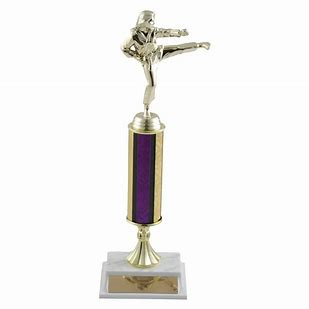
Tall cylindrical Taekwondo trophy

I remember four things from Taekwondo; being out of breath while trying to run up and down the stairs trying to keep up with everyone else, having to retake my belt test because I couldn’t do a sit up, someone asking me when my mom picked me up if I was adopted, and how to count to seven in Korean. Three out of four of those memories do not speak highly of my sporting experience.  

The conclusion is, I don’t know, sports are neutral. While I had less than ideal experiences, I know that for a lot of people sports are a great confidence builder and especially martial arts can make people feel more protected and surer of themselves. That was just not the case for me. Sports became something that I had to do as a child, not something for joy. Even when I did dance it was more for having something to do than the actual sport itself. This experience of doing a sport for non-sporting reasons has led to my middling views today. 
Invisible Disabilities Don’t Count

The definition of disability that Oxford Dictionary uses is “a physical or mental condition that limits a person’s movement, senses, or activities”. Society in a broad way decides what is limiting, to have a certain degree of poor vision is not limiting because glasses are so widespread, to have the flu is (often) not limiting because there are medications that can quickly treat the disease. Some things are limiting because society has made them that way, having mental health issues can be limiting because access to affordable care is difficult, having a chronic illness is limiting in that others do not support or believe in what one believes is limiting them. Per Oxford disability is categorized by what someone can and cannot do, as partially controlled by society, but that is the dictionary definition. No one cares about the dictionary definition in real life though. 

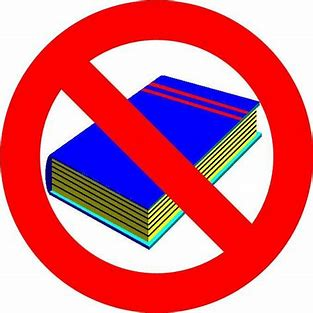
Blue book crossed out with a red circle with a line through it

People care about themselves and their worldview. What I view as a disability depends on my community and the world I interact with. Seeing someone in a wheelchair I know them to be disabled because that is what the parking lot signs say. That this person needs accommodations to be able to go grocery shopping. I honestly think it is the sign that makes me view someone as disabled, the fact that Walmart has said that they have a disability and therefore need assistance makes me think that they have a disability. Of course, it seems silly to frame the idea that companies determine disability but isn’t it true. The accommodations given indicates who is believed to need it. There is no widespread accommodation for chronic illness symptoms or migraines. This is sad, but I think it is something that we all know intrinsically. Invisible disabilities in the mainstream don’t seem to be a part of the common vernacular. Due to the self-centered nature of people and the ability to only look so far beyond themselves it feels as if invisible disabilities don’t count. They do count, they should count to everyone, but they don’t. 

two wheelchair parking spaces indicated by painting on the space itself and physical signs

An all-American bitch

Lyric video to all-american bitch

For those who are not familiar Olivia Rodrigo’s second album GUTS is about being a teenage woman, in that she is both infantilized, sexualized, and criticized for everything all at the same time. This vague sort of womanhood compounded with the lens of fame creates a specific bubble of control that she both has because of money plus relatability and does not have because of media and perceptions. The introductory song on GUTS titled “all-American bitch” highlights the sort of pressure that has become a part of life for her and many others. The track primarily has a soft and dainty sound with semi-satirical lyrics that project an “I’m always perfect and amazing” kind of mentality with lyrics including “I feel for your every little issue, I know just what you mean” and “Coca-Cola bottles that I only use to curl my hair”. The very feminine sound of the verses is contrasted by the anger and resentment in the chorus where Rodrigo proclaims herself “a perfect all-American bitch/ with perfect all-American lips/ and perfect all-American hips”. She must be perfect both in the soft girlish way of being a great listener as well as in sexy objectification way of her body being “all-American” too. Being perfect in two seemingly contrasting ways is emotional labor to me. While she can write a song that a lot of women relate to the industry and the world still looks to her to be all-American. To not complain in interviews and when compared to others, to not feel her emotions and heartbreak through songs, to not be too sexy or too unappealing. Even in song writing and singing as the Beck article put it, she is “monitored for [her] ability to produce an emotion”. As touring kicks off in February Rodrigo will be compelled to sing with the same emotions of heartbreak, anger, and love as she did when first producing the album even if she feels none of those in the present moment. 

The outro perfectly sums up the emotional labor of feeling like you must be perfect, so much so that it was a TikTok trend to put your own scenarios and frustration over the lines “All the time/ I’m grateful all the time/ I’m sexy, and I’m kind/ I’m pretty when I cry”. Not everyone is always a pop star with millions of eyes on them and has making others feel things as a full-time job, but the pressure to be perfect in every situation is one that many relate to. 

A compilation of tiktoks highlighting how people (primarily women) feel the need to be perfect when angry and sad.

A funhouse of the self

I have a body, and I don’t think that I particularly like it. I think there is something wrong both with my body and something wrong with the fact that I don’t like my body. I like to think I am worldly enough to know that “fat” is not a bad word, that to be fat is not insulting or a negative aspect of myself and yet whenever I’m trying to convince myself to keep going on the treadmill the mantra in my mind is variations on “stop being a fat bitch”. I guess that is my self-awareness coming through. 

The encyclopedia entry on phenomenology talks about how phenomenology develops awareness in many forms through various experiences. I like to think I am good at being self-aware, I feel like I have to with all the expectations placed on me. Going over every little thing I do, say, and all my experiences from a third-party perspective. This third party in actuality is all of my perceived thoughts and shortcomings about myself coming back to influence me in fun new ways. It’s like a weird meta-self-awareness. My idea of self comes from what I think other people think, which comes from what I think about myself, which is influenced by society. It’s circular thinking that I can’t really break out of. I am experiencing immanence, trapped in myself by my own thoughts.   

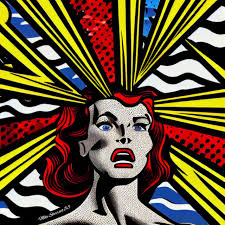
pop art style of a brain explosion

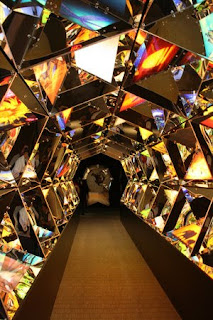
My idea of self is tinted. Tinted by the fact that I present in a feminine way and therefore am told that I need to have certain interests. Tinted by the ideas of my family and how I am to be like them in all aspects. Tinted by the idea of what it means to be black while not being “fully black” (I’m mixed). I think most of all I am tinted by the words people use. How fat is not a bad word, but I still feel self-conscious for being fat; how I can hear my mom telling me to not call us poor even though there was a winter without electricity; how I feel queer in a hypothetical way but too afraid to claim the label for myself. This tint is not necessarily a bad thing, it is a method of self-evaluation. I can think about how the words I say come off to others in unintended ways and how to fix that, or how even though society tells me I can’t be into traditionally nerdy things I still can because it’s a tint, not who I am. Where this self-evaluation is harmful is when it is no longer a tint and my perception of myself is distorted from trying to match all the ideals enforced on me by me. It’s a weird funhouse mirror that is also a two-way mirror at the same time. Focused on me with aspects of society mixed in, but all in a wonky self-conscious masquerading as self-awareness way.  

Spiral of mirrors with broken images