Music makes me feel gender. Whether it’s moving my body, feeling the beat, watching live performance, or playing the drums, music is the one thing that helps me make sense of my tangled mess of a mind and body. I haven’t played the drums in a while but I have been practicing since I was 15. My Chemical Romance had a profound effect on me when I was younger and I became so enthralled with the motions and flow of playing the drums. I started practicing on my dad’s drum kit in our basement. In some weird way, it helped me feel connected to my body. For some time, I was a cyborg and my wooden drumsticks were merely an extension of my flesh. Playing the drums is kind of a dance, too. My left arm held a steady snare beat while my right flailed between crash and hihat and ride. Meanwhile, my legs were running in place as they pedaled away. I felt connected to myself and I was playing music that helped process the anguish and loneliness I felt at the time. I was at home in my body.
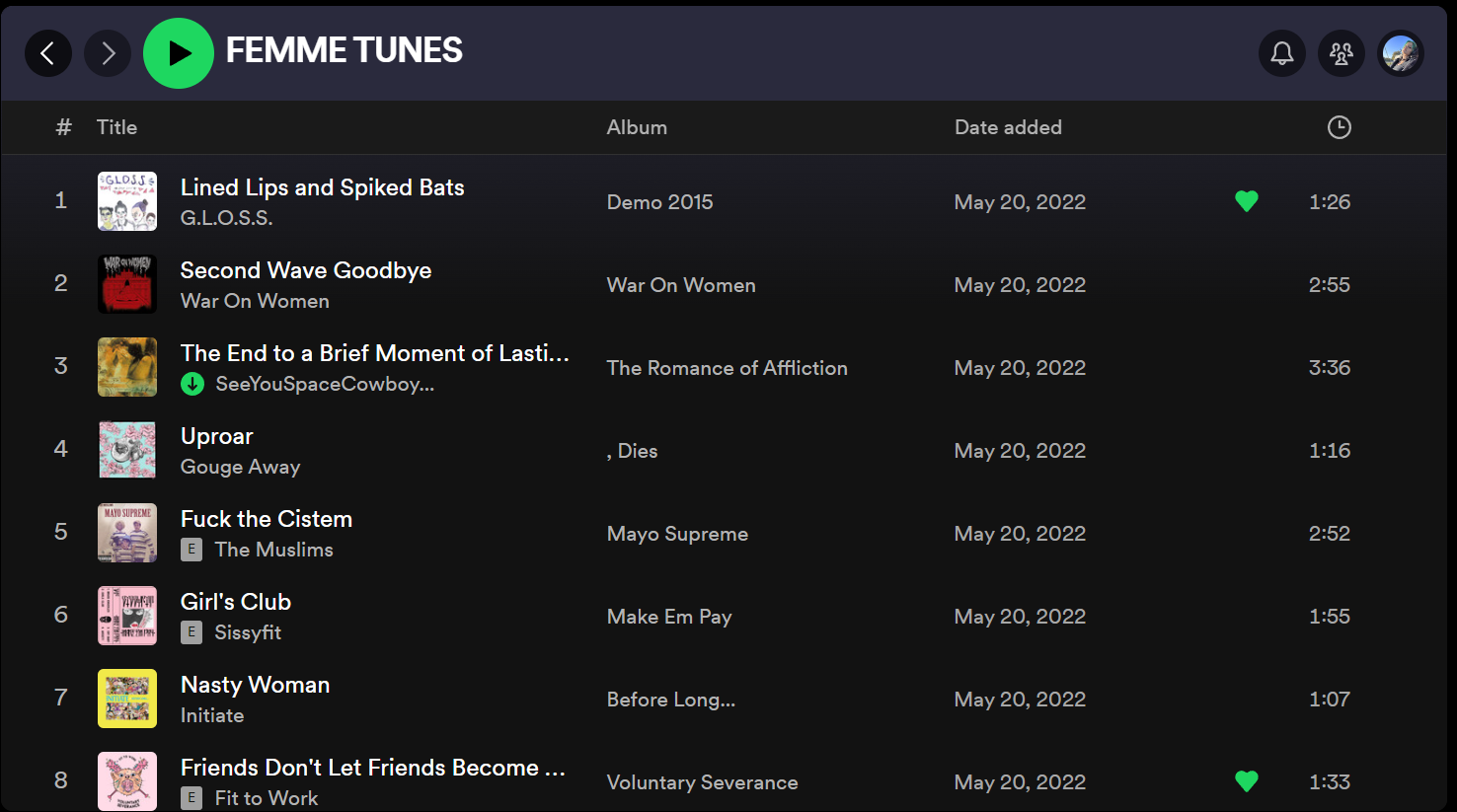
Later on, I understood gender in a different way. I took a class called Transnational Feminisms and I was introduced to Mia Mingus and her idea of “moving towards the ugly.” I became fascinated with the idea of reclaiming ugliness and finding beauty and empowerment in its subversive nature. For my final project in that class I made a zine highlighting queer people in hardcore and how they embody gender through their music.” Many of these people are queer and POC making music about those embodied experiences. As a queer POC myself, I felt recognized myself in this messy and chaotic music because it’s how I feel about my own damn self! As part of my zine I created a Spotify playlist called FEMME TUNES to showcase the liberating hardcore music created by queer and POC femmes. This felt relevant to share since the class made a shared playlist. So I am sharing mine for anyone who is interested:)
I have been in an ABA research lab for almost two years now, and what I’ve learned is that… I don’t really like ABA. At least not some parts. I was very apprehensive to start out because I had an awareness of its ethical implications. From the start I had an issue with the label “problem behavior.” This term essentially refers to behaviors that an autistic kid has that are disruptive to the study or task being conducted. The child might be disruptive, loud, or unable to sit still. To me, problem behavior presumes that autism and autistic traits are inherently bad or troublesome. This has obvious implications for how people view autism. They might see autism as only problematic and challenging. There are also implications for how autistic people, especially kids, view themselves. ABA is usually conducted with toddlers, so imagine being like 3 or 4 and thinking that you are a bad person because of the behaviors you were born with. Imagine thinking your identity is not only different, but disruptive and problematic. Something to be contained and taken control over.
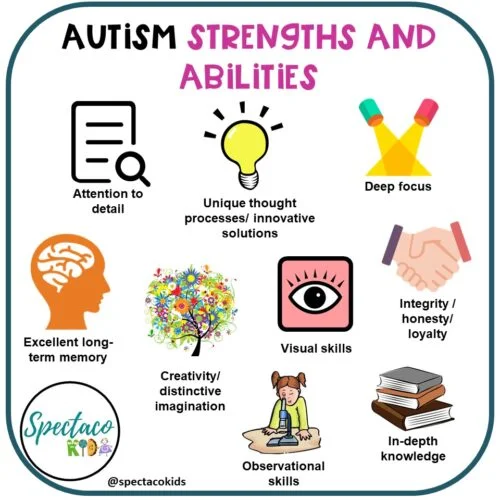
In our lab we thankfully don’t use punishment but we very often implement reinforcements in the form of praise or tangible and edible items. These reinforcements are given when the kiddo has done something correct. For instance, if they answer a question accurately on their own they could have 30 seconds of play time with their preferred toy. In other words, reinforcement is contingent on the researcher’s normative rules. The kiddo gets praised when they behave “correctly.” This teaches autistic kids that they will only be accepted if they suppress their behaviors to achieve a more normative and compliant exterior. They are taught that their autistic traits are just problem behavior that will not be rewarded. I can imagine that this instills a sense of shame in autistic kids simply for existing. I also wonder if autistic kids must develop self-consciousness at an earlier age than neurotypical kids in order to mask and adapt to societal norms. Reinforcement is never given with the intention of validating autistic traits and strengths. In general, ABA emphasizes autistic challenges over autistic skills. I can imagine that ABA would be much more beneficial if there was a value placed on centering autism as something to be celebrated rather than only focusing on a set of behaviors that need to be fixed.
When we as a collective learn to accept autistic behaviors rather than try to change them, we are taking strides in dismantling what it means to behave “normally”. When we understand what autistic people need by listening to them rather than listening to everyone around them, we can create an environment that is accessible for autistic people to safely navigate the world. And when we center autistic strengths rather than continuing to infantilize autistic behaviors, we are reframing autism as a celebratory and lasting aspect of identity, all while acknowledging structural changes that must take place.
Emotional labor is everywhere and it’s important to think about who is engaging in this work. As discussed in class, emotional labor is the management and/or suppression of emotions while performing paid labor. Because of this definition, it is implied that emotional labor refers to domestic, sex, and service work, among other things. Essentially, emotional labor is tied to jobs that require an emotional appeal to others while maintaining one’s own composure.
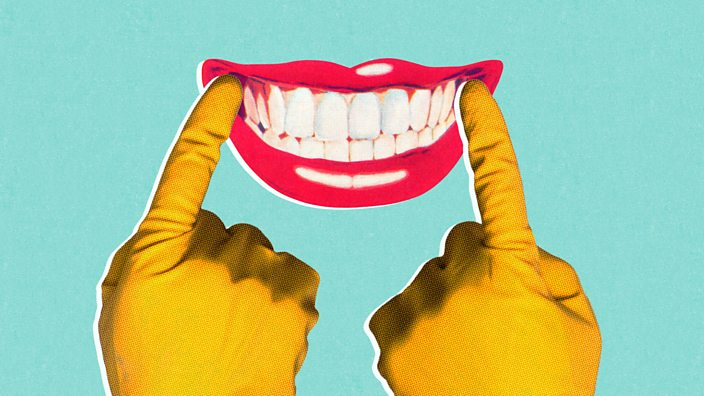
But who is most likely to engage in this form of labor? Lower class women of color. These are the women who have to take up intimate labor jobs such as maidwork and food service. These jobs are hard enough, especially having to deal with rude customers who treat workers like they are undeserving of human respect. Women of color may face racism, classism, and xenophobia while simply doing their jobs. On top of that, workers must put on a smile and just dreadfully make it through their shift. They must feed into a capitalist system and be compliant to protect their jobs even when they are being treated unfairly. For lower class women of color, emotional labor is not only required for their jobs, it is necessary for their lives. Their bodies are used to create profit, and they must operate like perfect machines, else they be easily replaced by someone more obedient.
I also wonder about the emotional labor that disabled workers must face. For disabled people working in intimate labor jobs, their bodies are made to be spectacles. Those with physical disabilities may be infantilized or treated poorly. The worker must manage the anger and frustration and anxiety that comes with this treatment. Those with hidden disabilities may have to work much harder to be a productive and fast worker, likely without accommodations. Of course, there is a layer of exhaustion that comes with this constant overextension of the body without rest.
In both cases, the worker is displayed as a capitalist object whose only purpose is to contribute to mass production and consumerism. Their bodies are strategically put into low wage positions and are then made to be scrutinized. The exhaustion and anxiety that comes with this must be managed by the individual. It is unfortunately their own responsibility to handle the emotions that come with systemic racism, classism, sexism, and ableism.
I’m not lower class or disabled, but in sharing a bit of my own experience as a woman of color, when I worked in a local boutique, this responsibility fell on me. We had a very close-knit and small staff, and while diverse, I felt like I was constantly dealing with microaggressions. This was back in 2020 while the elections were going on, and so you can imagine my fear, confusion, and overall frustration when I found out my seemingly cool boss with a dyed pixie cut was a Trump supporter. Suddenly I began reexamining the way she had been treating me. Every time she would come into work she pretended like she didn’t know I was working that day and she would constantly ignore me in conversations with other staff members. She successfully made me feel like I didn’t belong there. I became increasingly uncomfortable but I still had to maintain my composure and make sure that I wasn’t showing my emotions. I had to suppress my anxiety and fear because I wanted to keep my job and I didn’t want to make my work environment any more uncomfortable than it already was. I thought the more I tried to manage my own emotions while putting on a smile and just working, the better my boss would treat me. Then I ended up quitting because I realized that it should not be my responsibility to put on a good face when I’m being treated poorly…amongst other reasons. But for many lower class women of color and disabled folk quitting is not an option. So what is the answer to this problem? Do we have to just endure and cope? Is there a solution to the harms of emotional labor?
I am constantly policing my body. It’s as if I’m being watched at all times. I’ve been taught to hate my body, even in private. I’ve spent my whole life retransforming my face and my hair and my personality to fit some ideal. When I was younger and getting into hardcore and metal, I began changing my appearance, as one does. I wore intense winged eyeliner every day and never left the house without a band shirt on. Heavy music scenes are dominated by white men and the only other representation I saw was from cis white women. Being brown and queer in that space, I felt uninvited. The way I inserted myself was by constantly presenting myself as belonging. I felt like I had something to prove. Without my gear, I was invisible and my passion for music was unconvincing. I was dressing the way I thought I was supposed to in order to seek that validation. My self-esteem was so reliant on the way I presented myself because I attached so much meaning to my appearance.
It was even more confusing to feel so unaccepted and alienated from my own community for being a “black sheep.” I was being ridiculed by my family and judged by strangers who didn’t think I belonged in the scene. How many times can a teenager be forced to “name 3 songs” by creepy middle aged men? The insecurity and trauma of being a queer POC in the heavy music scene made it necessary for me to police my clothes and my appearance every single day to ensure that I was conforming enough.
Slowly that started getting exhausting to keep up with. For most people who dress alternatively, it feels liberating. For me, it often felt forced. It felt like a loss of self when I slowly transitioned away from that constant performance. It was hard and weird to detach from that. I had aligned my worth to my appearance after fighting so long to prove to myself that I belonged. I had to relearn my passion for music while discovering what it meant to just exist in my body. I still enjoy dressing the part and I will never stop flaunting my collection of band tees, but I no longer feel such pressure to attach my identity and interests to my appearance.
And even as I am just existing, my identities still cause me to police my body. A while ago I was perusing some street shops when I decided it would be funny to walk into a store I had previously had a weird experience in. The first time I went there the owner followed me and my friend around and surveilled us to the point where we felt too uncomfortable to stay. So this time I wanted to see if it was the same. There was an old white guy in there whose eyes would not stop tracing me. My brain was racing trying to figure out why he was staring in disgust. Is he being creepy? Is it because I’m a brown feminine presenting person in a Bad Brains shirt? My intersecting identities made it impossible for me to decipher why this man was making me feel so uncomfortable. My prior experiences with these types of stares instantly brought me fear and confusion and anxiety.
For people like me, it’s hard to navigate self-discovery in a space that doesn’t always accept you. It’s even harder when you do find yourself and still have to reckon with the fear of safety because of it. Finding good representation of queer folk and POC making waves in hardcore was a game changer for me. Seeing myself in them affirmed my new embodiment. All I know is that I have nothing to prove and my body is not an exhibit to be scrutinized.